
Last updated October 24, 2026. We installed CrewAI and all eight alternatives that day, ran the same two agent job in each with every request captured, and checked releases, downloads, advisories, docs, and pricing on GitHub, PyPI, and each vendor’s site.
The best CrewAI alternatives in 2026 are LangGraph for stateful control, the OpenAI Agents SDK for lean handoffs, and Pydantic AI for typed Python, with five more picks for specific stacks. CrewAI is still the most starred multi agent framework on GitHub, with 60,051 stars on October 24, 2026, so most teams leave for concrete reasons such as control, footprint, or data leaving the network.
This list sits in our agent frameworks hub, and our guide to the 12 best AI agent frameworks covers single agent picks too. Here we focus on teams that already run crews of role based agents and want a replacement that handles the same researcher and writer style pipeline in production.
On October 24, 2026 we built one identical two agent pipeline in CrewAI and in each alternative, ran it five times against a scripted local model, and logged every request and every outbound connection. No vendor paid for placement or reviewed this page, per our editorial standards and disclosure policy.
TL;DR
- Pick LangGraph when you need explicit control flow. It led on PyPI with 44.8 million downloads last month, made 0 outside connections, and handed the writer agent only the 252 byte note we passed.
- Pick the OpenAI Agents SDK for handoffs with little code. It installed in 57 MB, but trace export is on by default and tried api.openai.com 3 times per run even with a local model.
- Pick Pydantic AI or AG2 for the smallest, quietest stacks. Both made 0 outside connections, kept the handoff at 252 bytes, and installed in 47 MB and 35 MB.
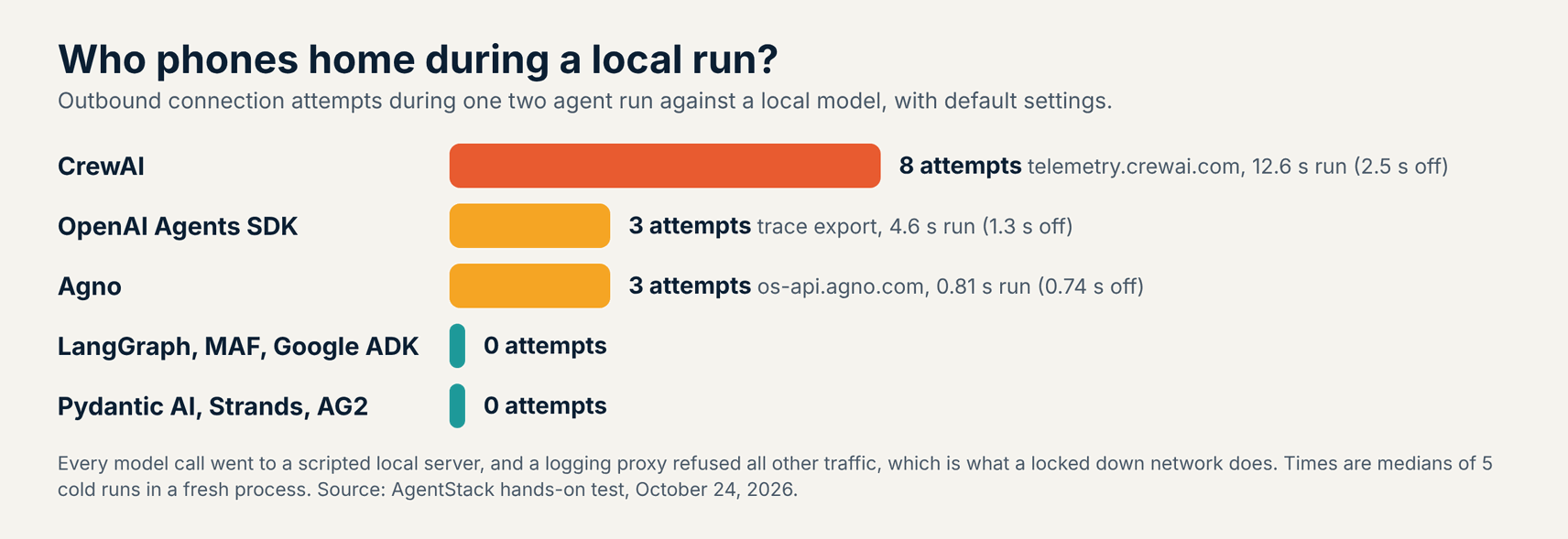
- CrewAI phones home by default. It made 8 connection attempts to its telemetry endpoint per run, and on a blocked network each run took 12.6 seconds instead of 2.5.
- Google ADK sends the most context forward. Its writer agent received 2,266 bytes of shared session history, and
include_contents='none'cut that to 920 bytes. - CrewAI is the heaviest install by far. It pulled 137 packages and 820 MB, including a pinned ChromaDB 1.5.9 with 4 open advisories in pip-audit.
CrewAI Alternatives at a Glance
Every one of the eight CrewAI alternatives finished the same two agent job in 3 model calls and 1 tool call, so the real differences are telemetry, context handoff, and install weight. The table compares fit, defaults, footprint, and adoption from GitHub, PyPI, vendor docs, and our test on October 24, 2026.
| Framework | Best for | Outside calls by default | Bytes sent to agent 2 | Install, our test | PyPI downloads, last month |
|---|---|---|---|---|---|
| CrewAI (baseline) | Role based crews and Flows | 8 to telemetry.crewai.com | 638 | 137 packages, 820 MB | 2,442,764 |
| LangGraph | Stateful graphs with checkpoints | 0 | 252 | 46 packages, 77 MB | 44,769,952 |
| OpenAI Agents SDK | Handoffs and agents as tools | 3 to api.openai.com | 237 | 38 packages, 57 MB | 12,449,784 |
| Microsoft Agent Framework | Azure and .NET shops | 0 | 622 | 22 packages, 37 MB | 1,005,851 |
| Google ADK | Gemini and Google Cloud teams | 0 | 2,266 | 48 packages, 71 MB | 10,109,331 |
| Pydantic AI | Typed Python agents | 0 | 252 | 26 packages, 47 MB | 23,908,854 (slim) |
| Agno | Fast teams plus a control plane | 3 to os-api.agno.com | 237 | 38 packages, 87 MB | 1,779,568 |
| Strands Agents | AWS and Bedrock workloads | 0 | 551 | 54 packages, 88 MB | 37,112,498 |
| AG2 | Conversation style agents, formerly AutoGen | 0 | 252 | 20 packages, 35 MB | 164,672 |
Verdict: Choose LangGraph for long running, branching work that needs checkpoints and human approval. Choose the OpenAI Agents SDK or Pydantic AI for lean pipelines in plain Python, and pick Microsoft Agent Framework, Google ADK, or Strands Agents when your cloud already decides for you.
Why Teams Look for CrewAI Alternatives
Teams rarely leave CrewAI because it fails to run, and they usually leave because its defaults clash with production rules on data, dependencies, or control. CrewAI ships fast, with 65 stable releases and 308 versions in total on PyPI over the last 12 months, and its company now sells a hosted platform on top of the open source core.
- Telemetry on by default: the CrewAI telemetry docs say the library collects tool names and agent roles, and you turn it off with
CREWAI_DISABLE_TELEMETRY=true. Platform tracing is a separate switch,CREWAI_TRACING_ENABLED=false. - Heavy dependency tree: our clean install pulled 137 packages, more than twice any alternative, which slows image builds and widens what security teams must review.
- Manager overhead: the hierarchical process needs a
manager_llmormanager_agent, which adds model calls that a fixed pipeline does not need. - Opinionated memory:
memory=Truestores facts in LanceDB under./.crewai/memoryand uses OpenAI embeddings unless you set an embedder, per the memory docs.
None of these is a reason to rewrite a crew that works. They become reasons when an agent runs behind an egress firewall, inside a slim container, or under an audit that asks where every byte goes, which is what we tested next.
How We Tested CrewAI and Eight Alternatives
To compare frameworks on equal terms, we built the same job in each: a researcher agent calls a get_price tool and writes a note, then a writer agent turns that note into a one line buyer brief. Every framework pointed at a local server that played the model with fixed replies, so runs were offline, free, and repeatable.
- Native pattern per framework: CrewAI
Process.sequentialwith task context, a LangGraphStateGraph, twoRunner.runcalls in the OpenAI Agents SDK,SequentialBuilderin Microsoft Agent Framework,SequentialAgentin ADK, programmatic hand off in Pydantic AI, an AgnoWorkflow, a StrandsGraphBuilder, and the new AG2Agent.askAPI. - Five runs per setting: defaults for all nine, plus telemetry or tracing switched off for CrewAI, the OpenAI Agents SDK, and Agno, and
include_contents='none'for ADK. - Network check: a logging proxy refused every outbound connection, which is what a locked down production network does, and we recorded each host that a run tried to reach.
- Install and health: a fresh Python 3.12 virtual environment per framework, package count, disk size,
pip-audit, GitHub stars, license, and PyPI downloads, all checked the same day.
What Our October 24 Hands-On Test Found
All nine frameworks returned the correct brief in 5 of 5 runs, so the gaps showed up in what each one sent, and where. Request bytes stayed identical across runs, which means the differences below come from framework design and prompts, and they will grow with real research notes that run to thousands of tokens.
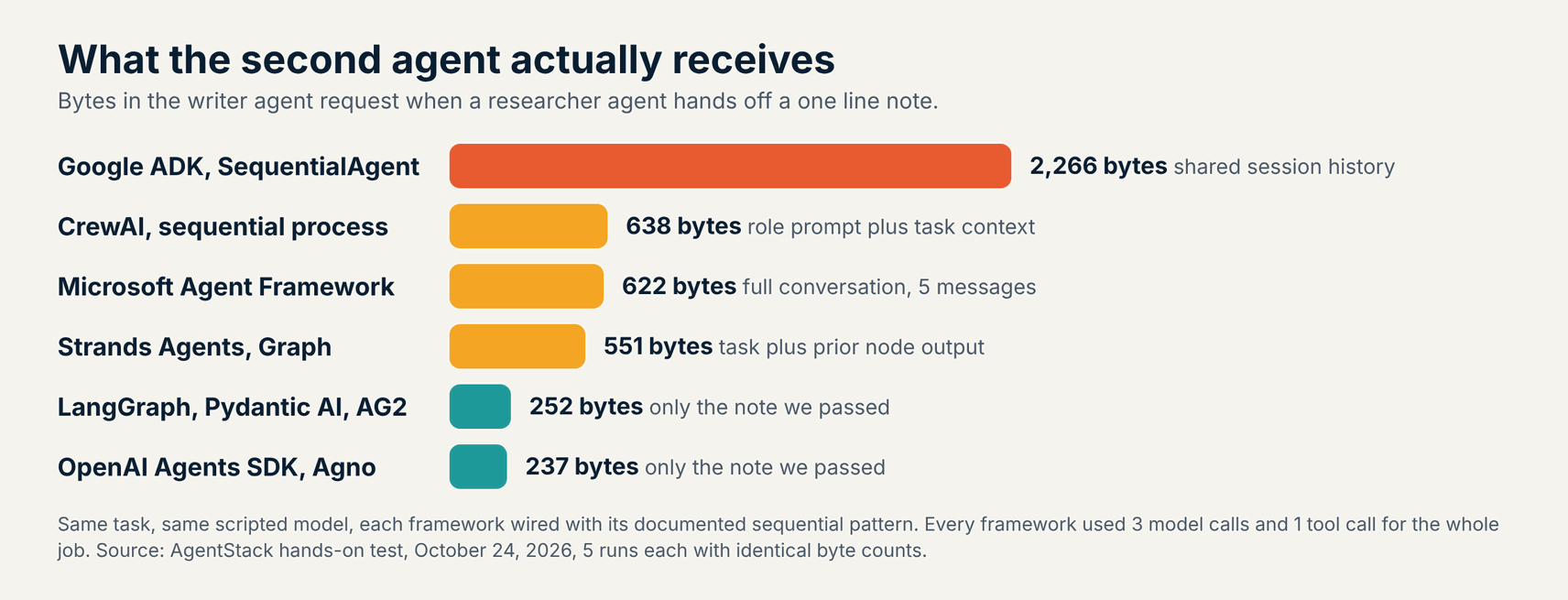
- Shared history costs tokens: ADK passed the whole session to the writer, 2,266 bytes, and Microsoft Agent Framework passed the full 5 message conversation, 622 bytes.
- Explicit handoffs stay small: LangGraph, Pydantic AI, AG2, the OpenAI Agents SDK, and Agno sent the writer only the note, 237 to 252 bytes.
- CrewAI sits in the middle: its writer request carried 638 bytes because CrewAI adds role, goal, and backstory text plus the prior task output.
- Blocked telemetry slows runs: CrewAI took a median 12.6 seconds per cold run with telemetry on and 2.5 seconds with it off, and the OpenAI Agents SDK took 4.6 and 1.3 seconds.
- Quiet by default: LangGraph, Microsoft Agent Framework, Google ADK, Pydantic AI, Strands Agents, and AG2 made 0 outside connection attempts in every run.
A framework that leaks context to the next agent raises both your token bill and the chance that a later agent acts on stale or sensitive text. Track that spend with the LLM cost monitoring tools we tested, and trace handoffs with the AI agent observability tools we reviewed.
1. LangGraph: Best for Stateful Multi-Agent Control
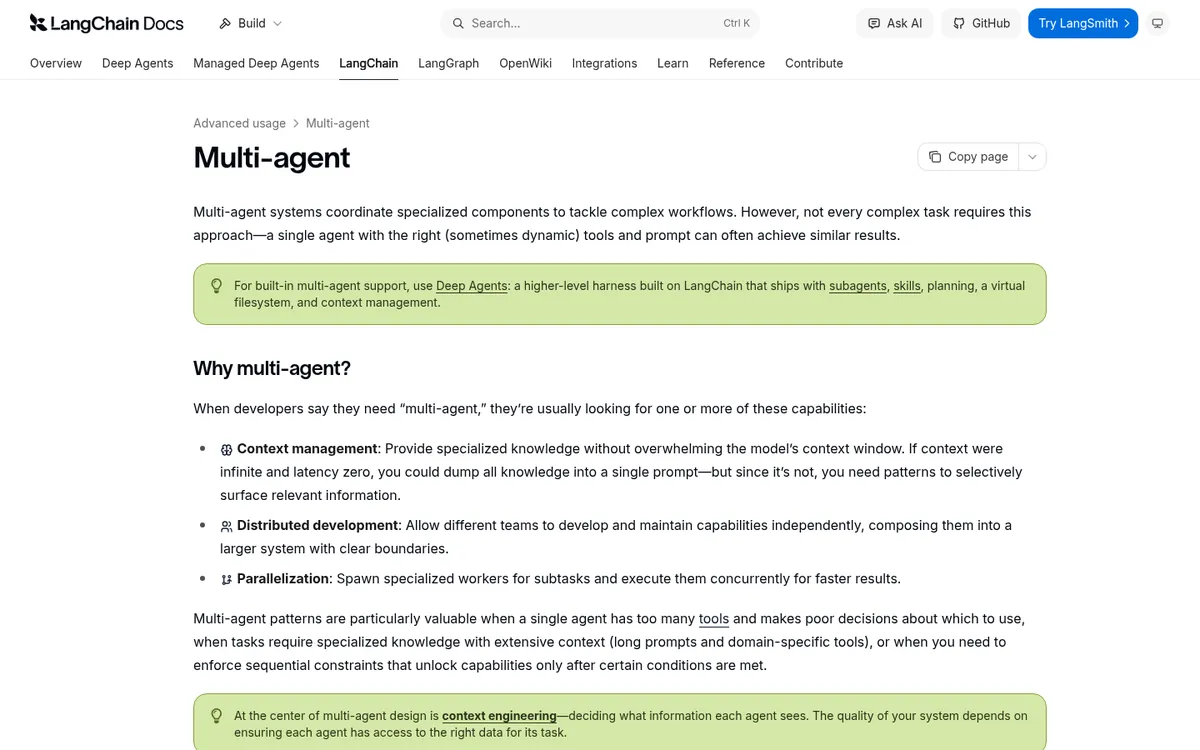
LangGraph is the strongest CrewAI alternative when you need to see and control every step, because each agent is a node and every transition is an edge you write. It is MIT licensed, has 43,806 GitHub stars, and led this list on PyPI with 44,769,952 downloads last month.
In our test the graph sent the writer exactly what we put in state, 252 bytes, and made 0 outside connections. Checkpointers save state per thread, so a paused approval can resume later, and the multi agent docs cover subagents, handoffs, routers, and custom workflows.
- Best for: Branching, long running, or approval heavy pipelines where you want explicit state.
- Pricing (October 2026): Free and open source. LangSmith Developer is $0 for 1 seat and 5K base traces, and Plus is $39 per seat per month with 10K traces and deployment access.
- Watch out for: More code than a crew for a simple linear job, and an in memory checkpointer loses everything on restart.
2. OpenAI Agents SDK: Best for Lean Handoffs
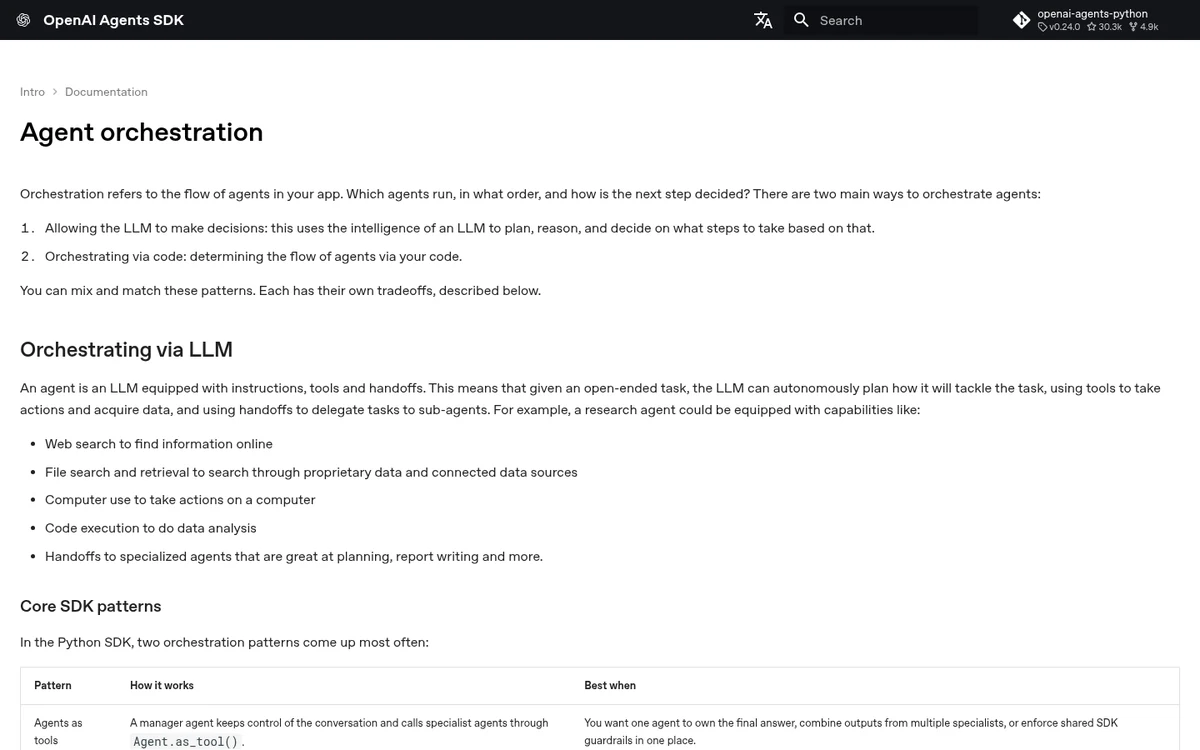
The OpenAI Agents SDK replaces a crew with two simple ideas, handoffs and agents as tools, and it needs the least code of any option here. It is MIT licensed with 30,251 GitHub stars and 12,449,784 PyPI downloads last month, and it works with other model providers too.
Tracing is on by default, per the tracing docs, and in our test it tried to reach api.openai.com 3 times per run even though every model call went to a local server. Set OPENAI_AGENTS_DISABLE_TRACING=1 to stop that, and note that tracing is unavailable for organizations on Zero Data Retention.
- Best for: Teams that want triage and specialist agents with minimal framework code.
- Pricing (October 2026): Free and open source. You pay only for model usage with your chosen provider.
- Watch out for: Default trace export to OpenAI, which matters if your data must stay inside your network.
3. Microsoft Agent Framework: Best for Azure and .NET Teams
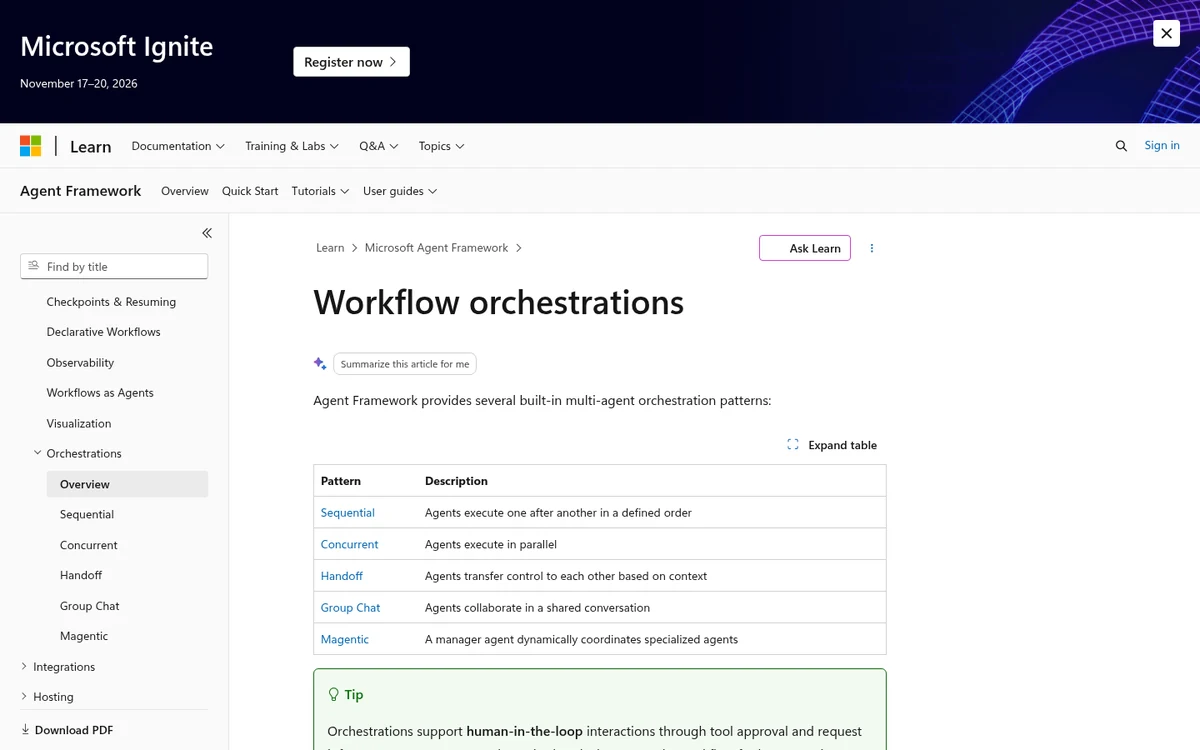
Microsoft Agent Framework is the right CrewAI alternative for teams on Azure, because it ships five ready made multi agent patterns in both Python and .NET. The orchestrations docs list Sequential, Concurrent, Handoff, Group Chat, and Magentic, and tools can require human approval before they run.
It was the second lightest install in our test at 22 packages and 37 MB, and it made 0 outside calls. Its SequentialBuilder passed the full conversation to the writer, 5 messages and 622 bytes, so trim context yourself when early agents produce long output.
- Best for: Azure, Microsoft Foundry, and .NET teams that want supported orchestration patterns.
- Pricing (October 2026): Free and open source under MIT. You pay for Azure model and hosting usage if you deploy there.
- Watch out for: Young packages that version separately, with agent-framework-core at 1.23.0 and orchestrations at 1.4.0 in our install.
4. Google ADK: Best for Gemini and Google Cloud
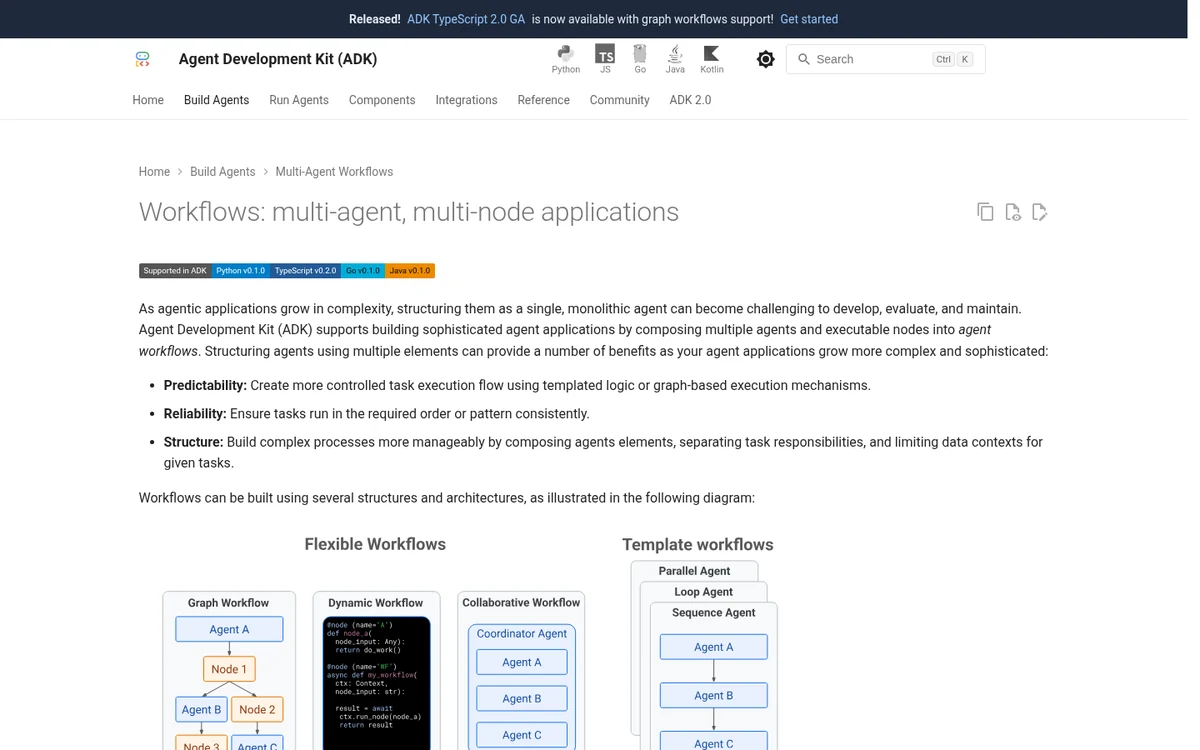
Google ADK fits teams that already build on Gemini and Google Cloud, with graph, collaborative, and template workflows such as sequential, loop, and parallel agents. It is Apache 2.0 licensed with 21,984 GitHub stars and 10,109,331 PyPI downloads last month, and it runs other models through adapters.
In our test SequentialAgent sent the writer 2,266 bytes, the most of any framework, because ADK shares the session history across agents. Setting include_contents='none' on the writer cut that to 920 bytes in 5 of 5 runs with the same correct answer.
writer = Agent(
    name="writer",
    model=model,
    instruction="Turn the research note into a one line brief. Research note: {research_note}",
    include_contents="none",  # do not replay the shared session history
)- Best for: Gemini users and teams that deploy on Google Cloud.
- Pricing (October 2026): Free and open source. You pay for Gemini or other model usage and any Google Cloud hosting.
- Watch out for: pip-audit flagged opentelemetry-api 1.44.0 in our install, fixed in 1.45.1, so pin it upward.
5. Pydantic AI: Best for Typed Python Agents
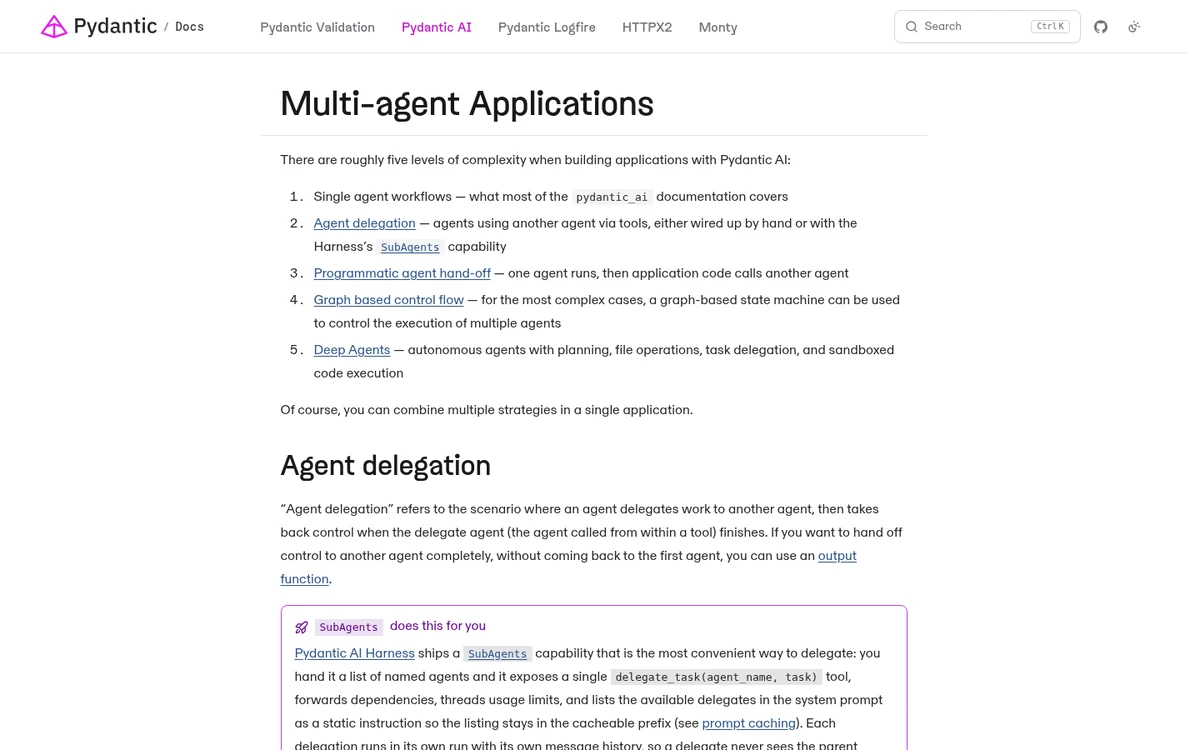
Pydantic AI suits Python teams that want type checked inputs and outputs, and it treats multi agent work as ordinary Python instead of a crew abstraction. Its multi agent guide describes five levels, from a single agent through delegation, programmatic hand off, graphs, and deep agents.
The slim package installed in 26 packages and 47 MB, made 0 outside calls, and handed the writer only the 252 byte note. It is MIT licensed with 20,827 GitHub stars, and pydantic-ai-slim alone drew 23,908,854 PyPI downloads last month.
researcher = Agent(model, instructions=RESEARCHER, tools=[get_price])
writer = Agent(model, instructions=WRITER)

note = researcher.run_sync(task).output
brief = writer.run_sync(note).output- Best for: Teams that want typed outputs, dependency injection, and plain Python control flow.
- Pricing (October 2026): Free and open source. Pydantic Logfire is an optional paid tracing product.
- Watch out for: No role, goal, and backstory scaffolding, so you rebuild crew prompts yourself.
6. Agno: Best for Fast Teams With a Control Plane
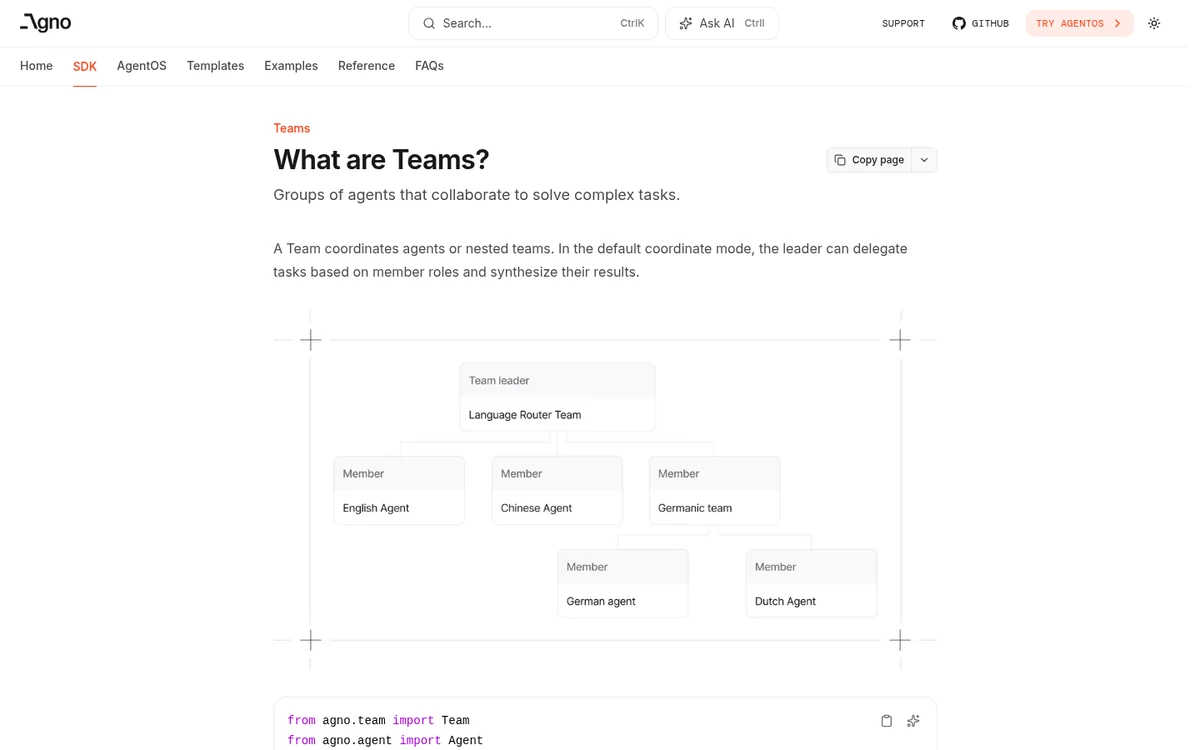
Agno is the closest match to CrewAI in spirit, with Teams that coordinate, route, broadcast, or split tasks across member agents. The Teams docs warn that the leader and members make separate model calls, which adds latency and tokens, so use a Workflow for fixed pipelines.
Our Workflow run handed the writer 237 bytes and finished in a median 0.81 seconds. Telemetry is on by default, and it tried os-api.agno.com 3 times per run, so set AGNO_TELEMETRY=false and note that the telemetry docs say AgentOS and evals ignore that variable.
- Best for: Teams that want CrewAI style teams plus a hosted control plane for live agents.
- Pricing (October 2026): Free for the runtime and local AgentOS. Pro is $150 per month with 1 live AgentOS connection and 3 seats.
- Watch out for: Telemetry switches that differ between agents, AgentOS, and evals.
7. Strands Agents: Best for AWS Workloads
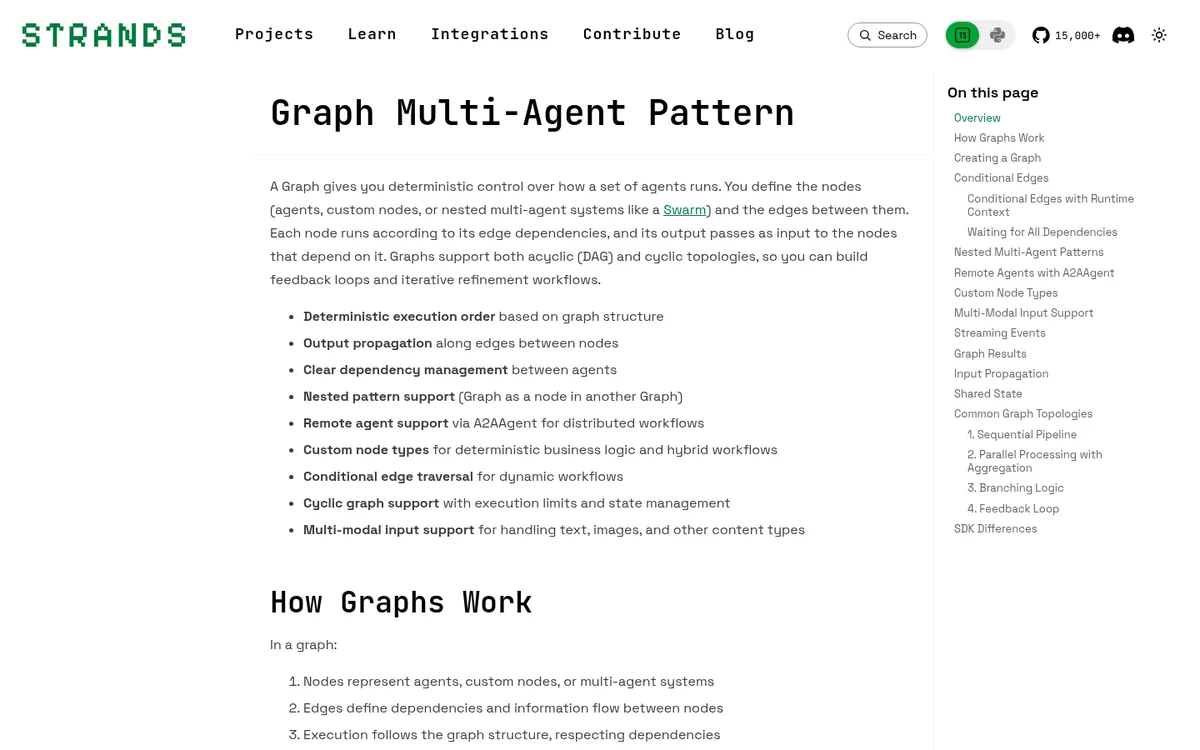
Strands Agents is the natural CrewAI alternative on AWS, with agents as tools, Swarm, Graph, Workflow, and A2A patterns in one SDK. Its Graph pattern supports cycles and saves checkpoints so an interrupted run can resume, which covers most crew designs.
It drew 37,112,498 PyPI downloads last month, second only to LangGraph here. Our Graph run passed the task plus the prior node output to the writer, 551 bytes, and pip-audit flagged mcp 2.1.1, which the advisory fixes in 2.2.0.
- Best for: Teams on Amazon Bedrock and AgentCore that want an AWS supported agent SDK.
- Pricing (October 2026): Free and open source under Apache 2.0. You pay for models and AWS hosting, which our Cloudflare vs Vercel vs AgentCore comparison covers.
- Watch out for: The bundled MCP client version, so pin mcp to 2.2.0 or later.
8. AG2: Best for Teams Coming From AutoGen
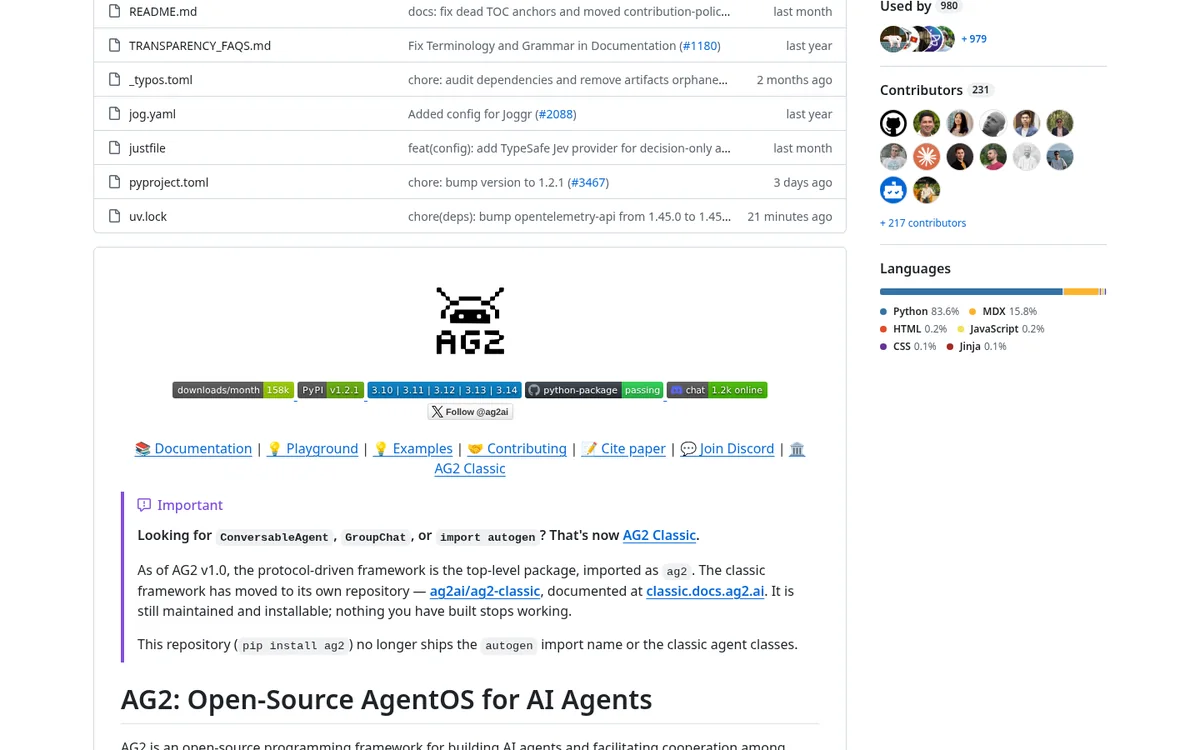
AG2 is the lightest CrewAI alternative we installed, 20 packages and 35 MB, and it suits teams that like conversation style agents. Its README says that since v1.0 the classic autogen import, ConversableAgent, and GroupChat live in a separate ag2-classic project.
Our AG2 1.2.1 run used the new Agent.ask API, handed the writer 252 bytes, and made 0 outside calls in a median 0.71 seconds. Adoption is small, with 164,672 PyPI downloads last month and 5,014 stars on the new repository.
- Best for: Small teams that want minimal dependencies and a conversation first agent model.
- Pricing (October 2026): Free and open source under Apache 2.0.
- Watch out for: API churn, since tutorials written for import autogen now target AG2 Classic.
Install Footprint and Dependency Advisories
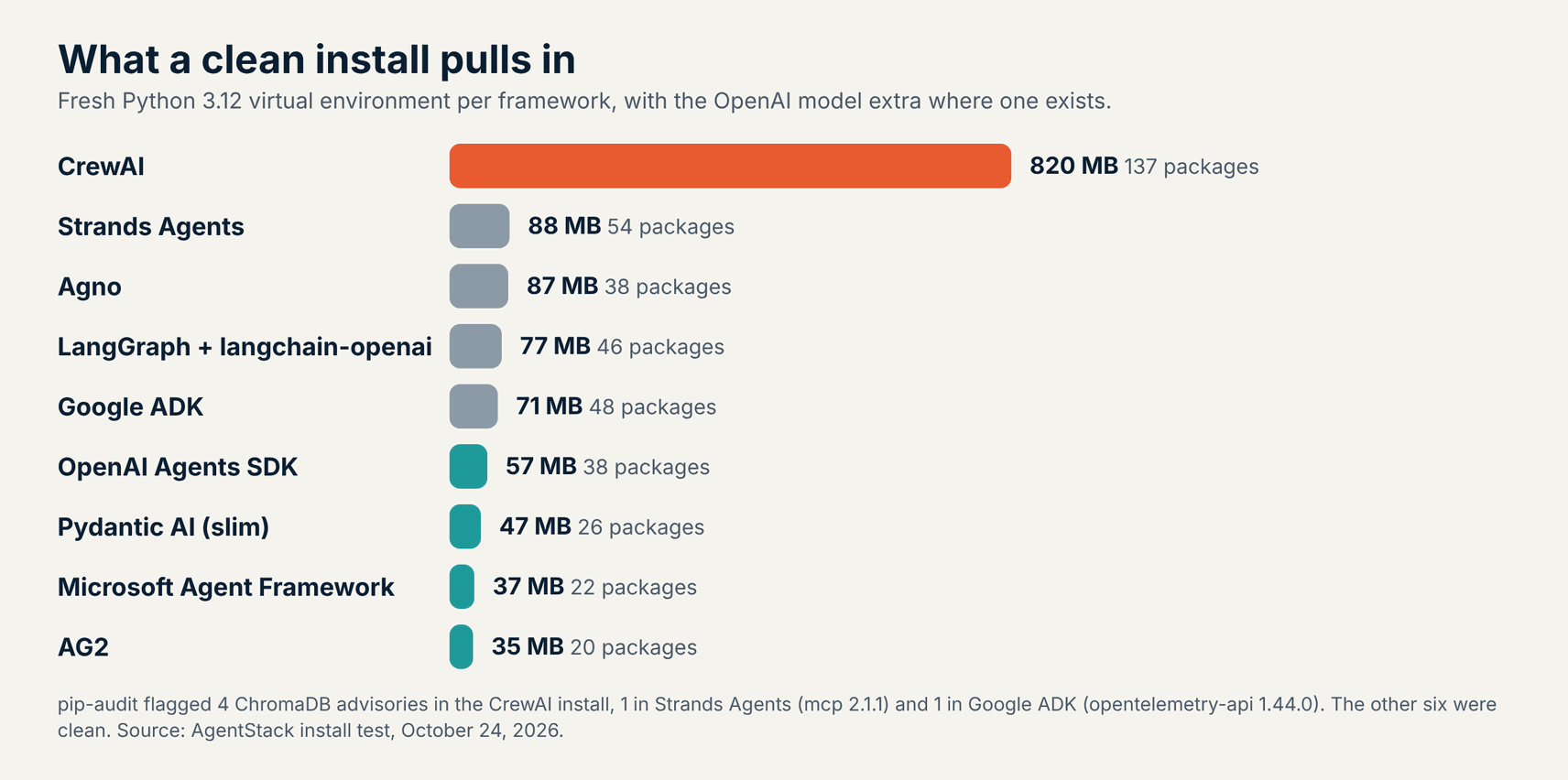
CrewAI installed 820 MB across 137 packages, about nine times the next largest option, and it was the only install with more than one open advisory. The chart shows disk size and package count from clean Python 3.12 environments on October 24, 2026, and the table adds stars, license, and advisories.
| Framework | Version tested | GitHub stars | License | pip-audit findings |
|---|---|---|---|---|
| CrewAI | 1.15.30 | 60,051 | MIT | 4 ChromaDB 1.5.9 advisories |
| LangGraph | 1.2.17 | 43,806 | MIT | 0 |
| OpenAI Agents SDK | 0.24.0 | 30,251 | MIT | 0 |
| Microsoft Agent Framework | 1.23.0 (core) | 14,299 | MIT | 0 |
| Google ADK | 2.13.0 | 21,984 | Apache 2.0 | 1, opentelemetry-api 1.44.0 |
| Pydantic AI | 2.61.0 (slim) | 20,827 | MIT | 0 |
| Agno | 3.1.10 | 42,875 | Apache 2.0 | 0 |
| Strands Agents | 1.62.0 | 8,936 | Apache 2.0 | 1, mcp 2.1.1 |
| AG2 | 1.2.1 | 5,014 | Apache 2.0 | 0 |
The ChromaDB advisories describe the Chroma server, which a default crew does not expose. CrewAI still pins chromadb~=1.5.9, so dependency gates will flag every build until it moves. Our LiteLLM supply chain report shows why large agent dependency trees deserve the same review as any production library.
How to Move a Crew to Another Framework
Most crews map cleanly to another framework, because a role becomes an agent with instructions and a task becomes a step that returns output. Start by switching off CrewAI telemetry so you can measure the current crew without outside calls, then port one pipeline and compare outputs on the same inputs.
# Measure the current crew with telemetry and platform tracing off
export CREWAI_DISABLE_TELEMETRY=true
export CREWAI_TRACING_ENABLED=false

# Turn off default exporters in the alternatives that have them
export OPENAI_AGENTS_DISABLE_TRACING=1
export AGNO_TELEMETRY=false- Map roles to instructions: fold each agent’s role, goal, and backstory into one instruction string, and keep it short.
- Map task context to explicit inputs: pass only the prior output each step needs, as LangGraph state or a function argument.
- Move tools over the Model Context Protocol: MCP servers work in every framework here, so the next migration is cheaper, and our MCP security tools guide covers locking them down.
- Compare with evals: score old and new outputs side by side with the AI agent evaluation tools and AI agent testing tools we reviewed.
What Each Option Costs in October 2026
Every framework on this list is free and open source, so cost comes from models, hosting, and the optional platforms each company sells. Pricing below comes from each vendor’s pricing page on October 24, 2026, and every figure excludes the model tokens you pay your provider for.
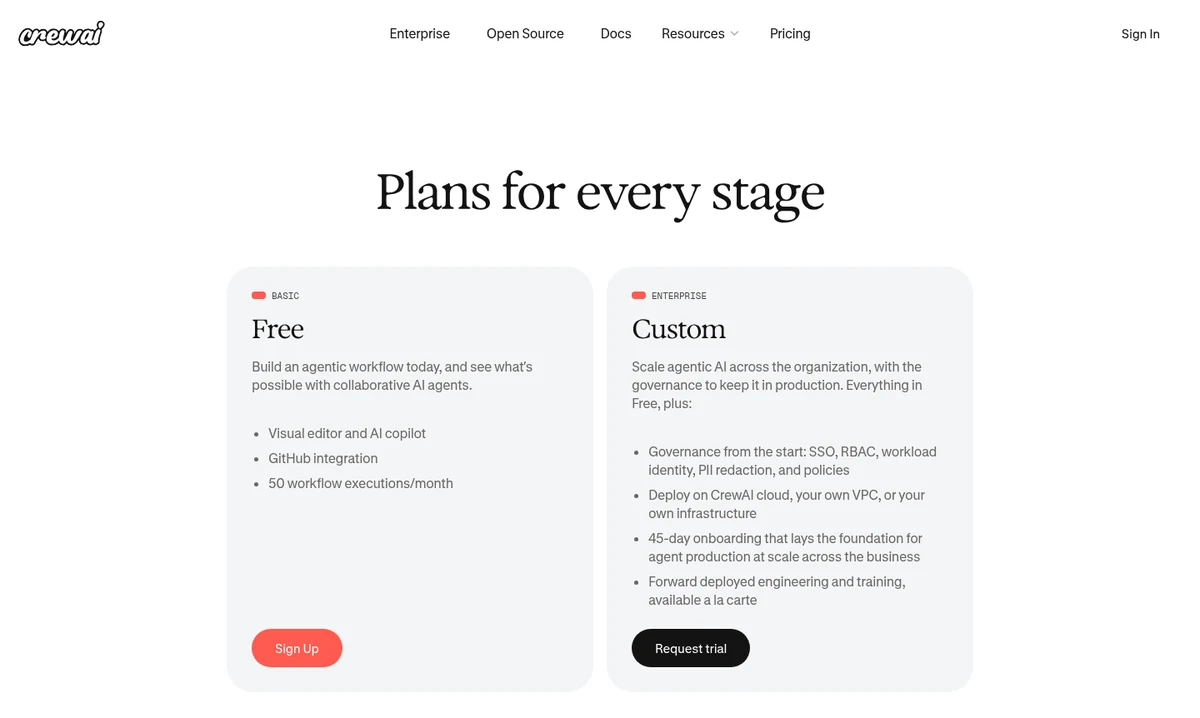
- CrewAI: the Basic plan is free with 50 workflow executions per month, and Enterprise is custom priced with SSO, RBAC, and private cloud deployment.
- LangGraph with LangSmith: Developer is $0 for 1 seat and 5K base traces, Plus is $39 per seat per month with 10K traces, and Enterprise is custom.
- Agno: the runtime and local AgentOS are free, and Pro is $150 per month for 1 live AgentOS connection and 3 seats, with extra seats at $30 per month.
- OpenAI Agents SDK, Microsoft Agent Framework, Google ADK, Pydantic AI, Strands Agents, and AG2: no framework fee, so you pay for models and the cloud you deploy on.
You do not need any vendor platform to run these frameworks in production. Our LangSmith alternatives and open source LLM observability guides cover tracing that works across all of them.
Which CrewAI Alternative Should You Choose?
The right pick depends on your cloud, how long tasks run, and whether data may leave your network. Match your team to a profile below, then rerun our two agent job on your own pipeline with requests logged before you commit to a migration.
Teams with long running or approval heavy crews
- Move to LangGraph with a durable checkpointer such as Postgres or SQLite.
- Keep state small and pass each agent only the fields it needs.
- Trace runs with the agent observability tools we cover.
Teams with strict data and network rules
- Pick Pydantic AI, AG2, LangGraph, or Microsoft Agent Framework, which made 0 outside calls in our test.
- Set the telemetry and tracing variables above in every environment, including CI.
- Route model calls through one of the LLM gateways we reviewed so egress stays in one place.
Teams committed to one cloud
- Azure and .NET shops should start with Microsoft Agent Framework.
- Gemini and Google Cloud teams should start with Google ADK and set include_contents per agent.
- AWS teams should start with Strands Agents and pin its MCP dependency.
Teams that like crews and want less weight
- Try Agno Teams for leader and member coordination with a smaller install.
- Try the OpenAI Agents SDK if handoffs between a triage agent and specialists cover your design.
- Version the role prompts you carry over with the prompt management tools we compared.
Frequently Asked Questions
What is the best alternative to CrewAI?
LangGraph is the best CrewAI alternative for most production teams, because it gives explicit state, checkpoints, and human approval, and it led PyPI downloads in our October 2026 check. Pick the OpenAI Agents SDK or Pydantic AI for lean pipelines, and Microsoft Agent Framework, Google ADK, or Strands Agents if your cloud is already chosen.
Does CrewAI send telemetry by default?
Yes. CrewAI collects anonymous usage data such as tool names and agent roles by default, and in our test it made 8 connection attempts to telemetry.crewai.com during one run. Set CREWAI_DISABLE_TELEMETRY to true to stop it, and set CREWAI_TRACING_ENABLED to false to turn off the separate platform tracing.
Is LangGraph better than CrewAI?
LangGraph is better when you need control over each step, durable state, and approvals that survive restarts. CrewAI is faster to start for role based pipelines, but it installed 820 MB versus 77 MB for LangGraph in our test, and it sent more context to the second agent, 638 bytes versus 252.
Is AutoGen still a good CrewAI alternative?
AutoGen development moved in two directions. Microsoft now points teams to Microsoft Agent Framework, and the community AG2 project took over the AutoGen line, moving the classic import autogen API to AG2 Classic in v1.0. Choose Agent Framework for Azure support or AG2 for a very small conversation style framework.
Which CrewAI alternative is lightest to install?
AG2 was the lightest in our October 24, 2026 test at 20 packages and 35 MB, followed by Microsoft Agent Framework at 22 packages and 37 MB and Pydantic AI slim at 26 packages and 47 MB. CrewAI was the heaviest at 137 packages and 820 MB in the same clean Python 3.12 environment.
Related Guides
For related coverage, see our LangGraph vs CrewAI vs AutoGen comparison, LangGraph alternatives ranking, multi-agent frameworks test, open source AI agent frameworks you can self-host, OpenAI Agents SDK vs Claude Agent SDK vs Google ADK comparison, Microsoft Agent Framework vs Semantic Kernel vs AutoGen comparison and LangChain vs LangGraph vs Deep Agents comparison.
Read the agent frameworks hub, 12 best AI agent frameworks, AgentOps hub, AI agent observability tools, open source LLM observability, Langfuse vs LangSmith vs Braintrust, AI agent evaluation tools, AI agent testing tools, prompt management tools, LLM cost monitoring tools, LLM gateways, agent security hub, AI agent security tools, MCP explained, MCP servers, and MCP security tools. Notes on how we work sit on editorial standards, disclosure, and contact.
The Bottom Line
Choose LangGraph for control, the OpenAI Agents SDK or Pydantic AI for lean code, and your cloud vendor framework when Azure, Google Cloud, or AWS already sets the stack. The biggest finding across these CrewAI alternatives was what leaves the process by default, so log outbound traffic and handoff size before you ship.
All nine frameworks release often, so rerun a logged test after each upgrade and check this page for updates. Send corrections or your own results through our contact page.