
Last updated October 21, 2026. Product pages, documentation, AWS Marketplace listings, and funding records were checked on that date, and AgentStack installed the HiddenLayer and Mindgard Python packages on a test machine the same day.
In the Lakera vs HiddenLayer vs Mindgard decision, pick Lakera for a runtime guardrail API that screens prompts and agent tool calls, HiddenLayer for one security platform that scans models and watches agents in production, and Mindgard for attack-led red teaming that proves where your defenses fail. The three overlap less than their marketing suggests.
Lakera is a Swiss AI security company that Check Point bought on October 22, 2025, per its SEC filing, and it now sells Lakera Guard as Check Point AI Guardrails. HiddenLayer is an Austin AI security platform that raised a $100 million Series B in September 2026. Mindgard is a Lancaster University spinout focused on offensive AI security that raised a $30 million Series A in August 2026.
The main exception is ownership and budget: Lakera now follows Check Point’s roadmap, and HiddenLayer’s only public price is a $5 million AWS Marketplace contract line. This comparison sits in our agent security coverage within AI governance and security, and no vendor paid for placement or reviewed it, per our editorial standards and disclosure policy.
TL;DR
- Lakera is the guardrail API. One call screens prompts, outputs, tool calls, tool responses, and tool definitions, and it is the only one of the three with a free self-serve tier of 10,000 requests a month. Teams that need a self-hosted guardrail instead can compare the options in our NeMo Guardrails vs Guardrails AI vs Llama Guard guide.
- HiddenLayer is the broadest platform. It sells four modules: AI Discovery, AI Supply Chain Security for model files, AI Attack Simulation, and AI Runtime Security, which you can run disconnected on your own Kubernetes.
- Mindgard is the attacker. Red teaming is the core product, its CLI ships seven reconnaissance modes, and its October 2026 BRANCH research bypassed six guardrail systems in all 120 scenarios tested.
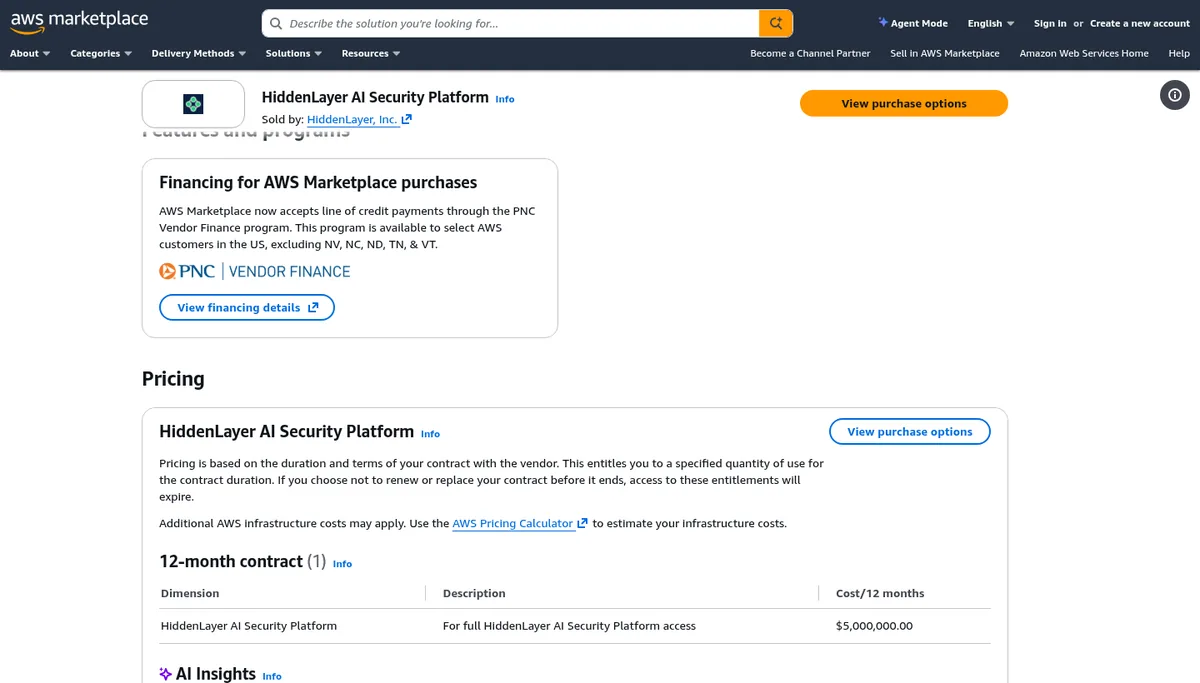
- List prices differ by orders of magnitude. Check Point lists Lakera at $74,000 a year for 10 million requests, HiddenLayer’s AWS listing shows $5,000,000 per 12 month unit, and Mindgard publishes no price.
- Our developer access test favored HiddenLayer’s SDK. It installed in 3.2 seconds with 18 dependencies, against 20.0 seconds and 60 dependencies for the Mindgard CLI, though both stop at an account gate.
- Many teams need two of the three, usually a runtime layer from Lakera or HiddenLayer plus Mindgard to test whether that layer holds.
How We Compared Lakera, HiddenLayer, and Mindgard
We compared the three platforms on the jobs a security buyer actually funds: blocking attacks at runtime, finding weaknesses before attackers do, and securing the models and agents a company already runs. Every fact comes from a vendor page, filing, marketplace listing, or our own test on October 21, 2026.
- Runtime protection: whether the product screens prompts, outputs, and agent tool calls for prompt injection, the top risk in the OWASP Top 10 for LLM applications.
- Red teaming: whether it attacks your models and agents automatically, and how deep the attacks go beyond single prompts.
- Model and supply chain security: whether it scans model files and builds an inventory of AI assets.
- Deployment and data control: SaaS, self-hosted, or fully disconnected, for teams whose prompts cannot leave their network.
- Price and access: published list prices, free tiers, and what a developer can install without a sales call.
No star ratings appear here. The three products solve different parts of the problem, so a single score would hide the fact that a team can reasonably buy two of them.
Lakera vs HiddenLayer vs Mindgard at a Glance
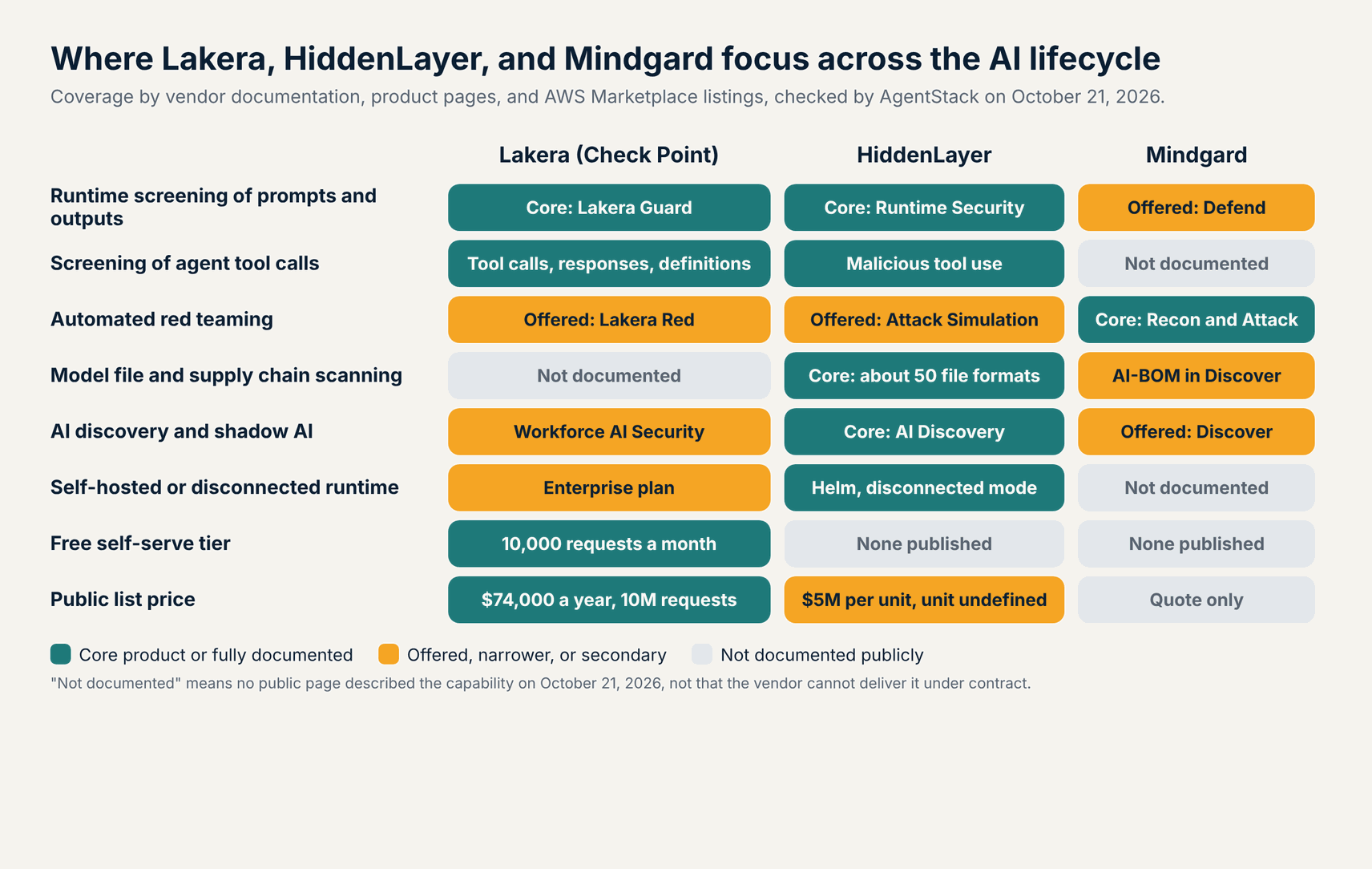
Lakera wins on runtime screening of agent traffic and price transparency, HiddenLayer wins on breadth across models, agents, and deployment options, and Mindgard wins on adversarial testing depth. The table below lists the facts we checked on October 21, 2026, and the chart that follows maps where each vendor puts its main product effort.
| Factor | Lakera (Check Point) | HiddenLayer | Mindgard |
|---|---|---|---|
| Core product | Lakera Guard runtime guardrail API | Four-module AI security platform | Offensive AI security and red teaming |
| Owner, October 2026 | Check Point since October 22, 2025 | Independent | Independent |
| Latest funding | $20M Series A, July 2024, before the sale | $100M Series B, September 2026 | $30M Series A, August 2026 |
| Agent tool call screening | Tool calls, tool responses, tool definitions | Malicious tool use and unsafe agent actions | Not documented for runtime |
| Red teaming | Lakera Red, now Check Point AI Red Teaming | AI Attack Simulation | Core: Recon, Attack, multi-turn runs |
| Model file scanning | Not documented | About 50 AI file formats | AI-BOM within Discover |
| Self-hosted runtime | Enterprise plan container | Helm chart, hybrid or disconnected | Not documented |
| Free tier | Community, 10,000 requests a month | None published | None published |
| Public price | $74,000 a year for 10M requests | $5,000,000 per 12 month unit on AWS | Quote only |
Verdict: Choose Lakera when developers need a guardrail they can call today, HiddenLayer when a security team wants one console for model scanning, runtime detection, and attack simulation, and Mindgard when the priority is evidence of exploitable weaknesses. Teams that only need prompt screening should not pay for HiddenLayer’s full platform.
Lakera: Best for a Runtime Guardrail API on Agent Traffic
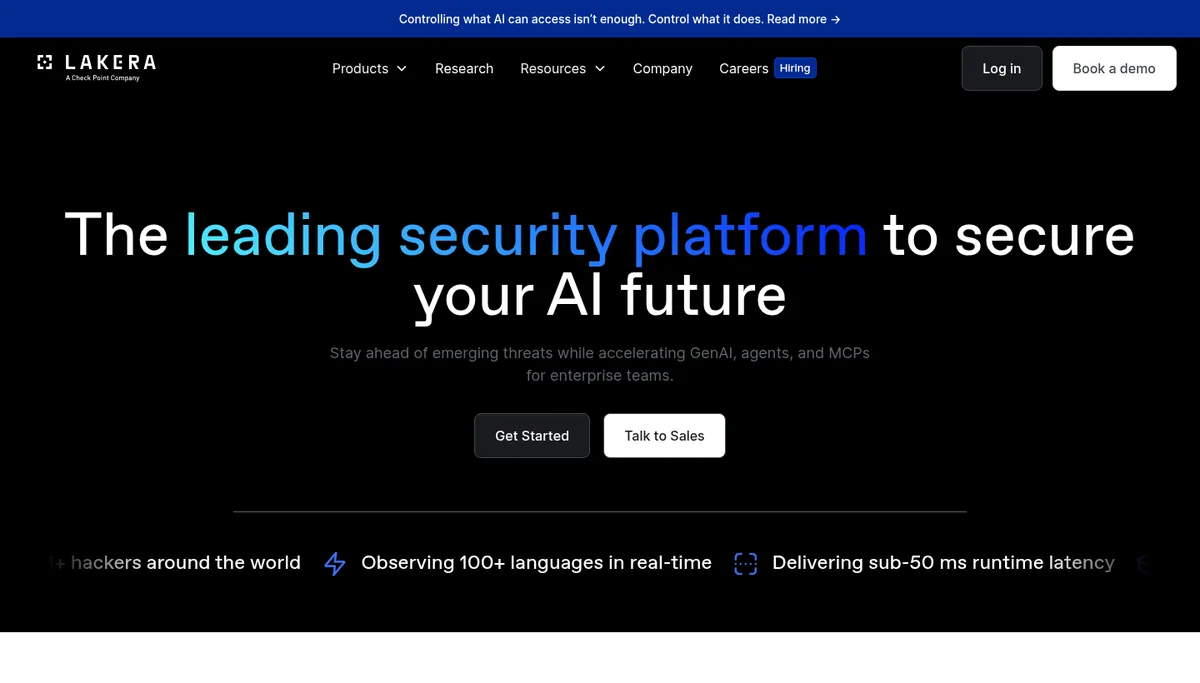
Lakera Guard is the most developer-ready of the three, because a single REST call screens prompts, model outputs, tool calls, tool responses, and tool definitions in more than 100 languages. The Guard API documentation treats tool output as untrusted content, which is where indirect prompt injection enters an agent.
The integration guide recommends screening each agent loop, including tool use requests and tool responses, and says Guard runs as a SaaS service or a self-hosted container. Lakera’s homepage claims sub-50 ms runtime latency and a 0.01% production false positive rate, both vendor figures worth testing on your traffic.
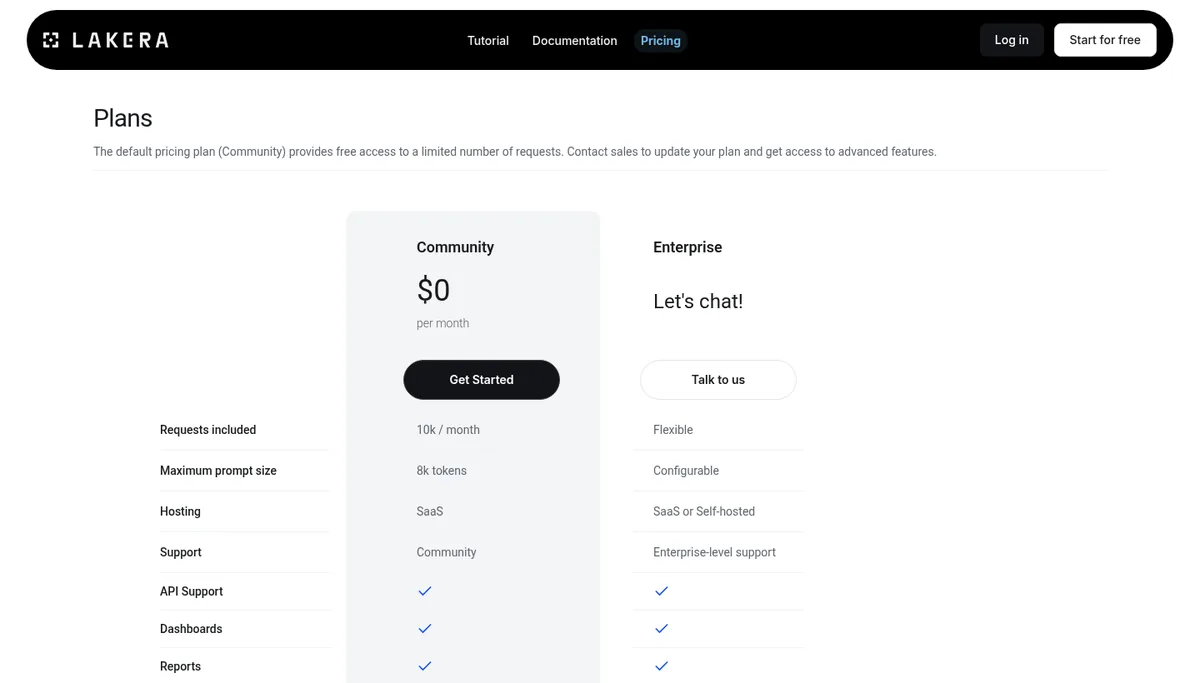
Lakera also sells AI Red Teaming, formerly Lakera Red, which tests apps and agents for safety, security, and responsible AI risks. Its research shows in the open b3 benchmark, built with the UK AI Security Institute from 194,331 crowdsourced attacks and used to score 34 models, and in 11 public Hugging Face datasets, led by Gandalf attack sets, that were downloaded 8,147 times in the last month.
- Best for: Product and platform teams that need prompt and tool call screening inside an agent this quarter, with a free tier for prototypes.
- Pricing (October 2026): Community plan free for 10,000 requests a month; $74,000 a year for 10 million requests on AWS Marketplace.
- Watch out for: Lakera’s roadmap now follows Check Point’s AI Defense Plane bundle, and it does not document model file scanning.
HiddenLayer: Best for Security Teams Covering Models and Agents
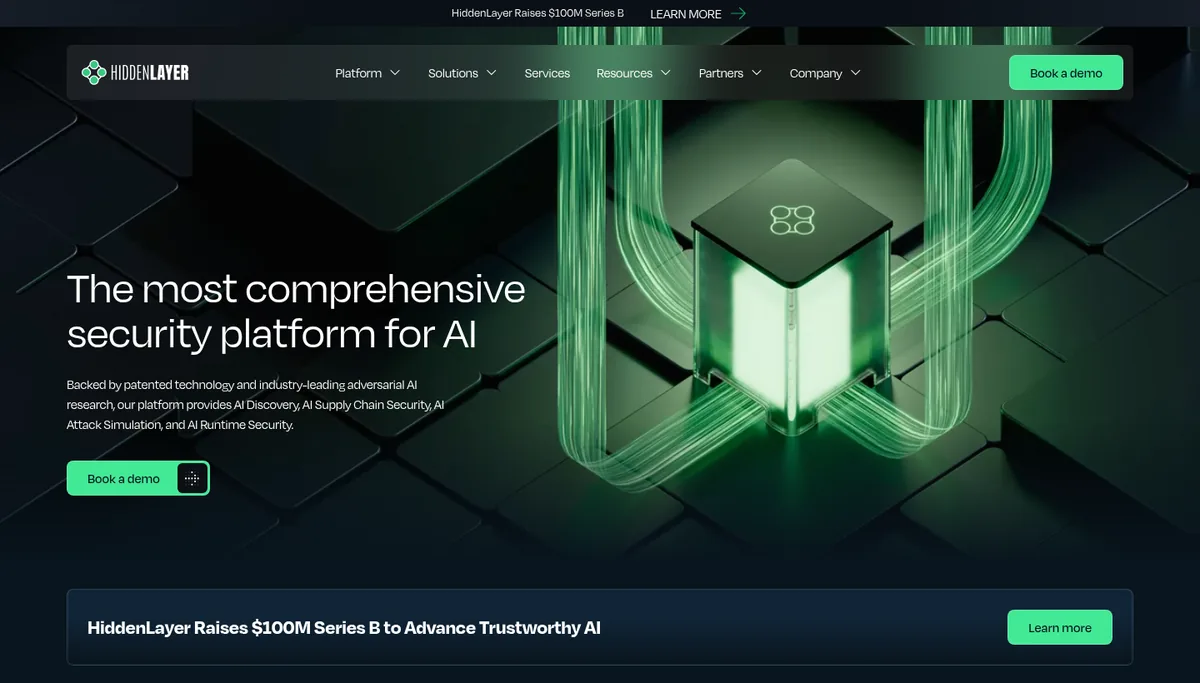
HiddenLayer fits security teams that want one platform across the AI lifecycle, because it pairs runtime detection with model file scanning, AI asset discovery, and attack simulation. Its homepage lists more than 50 CVEs disclosed through its research and more than 30 issued patents.
Its AI Runtime Security product detects prompt injection, malicious tool use, unsafe agent actions, and sensitive data exposure, then blocks or redacts inline. The March 23, 2026 agentic runtime release added session reconstruction and threat hunting, and Agent Harness Security extended coverage to coding agents on August 3, 2026.
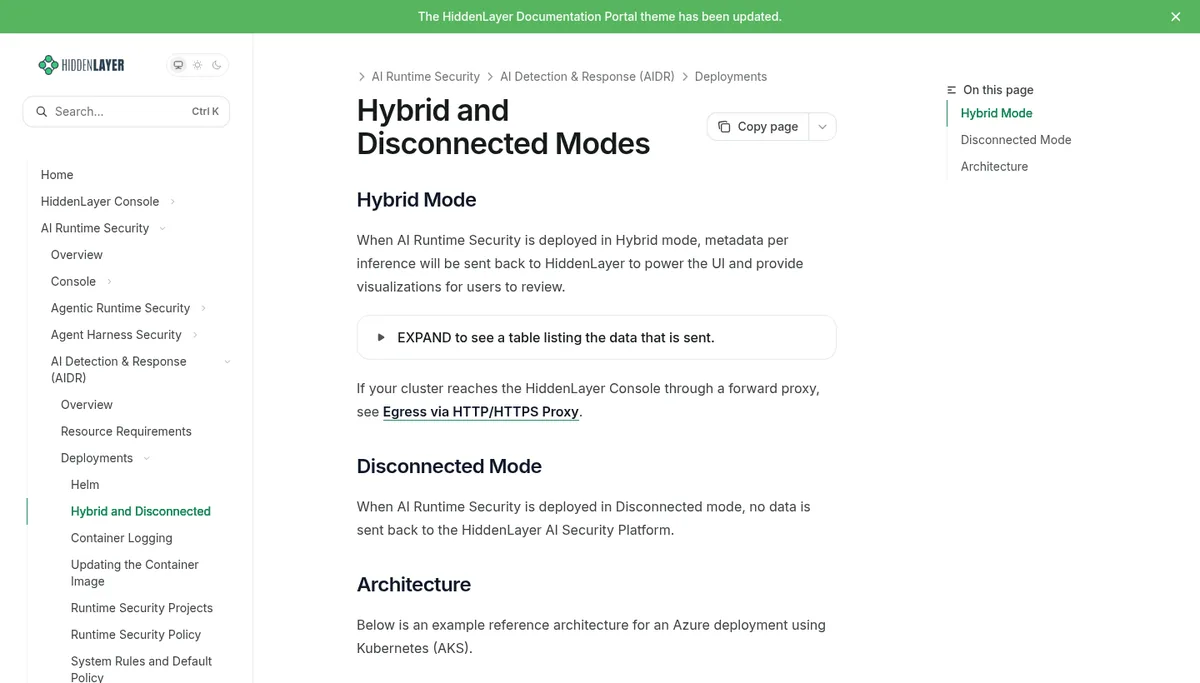
Runtime Security ships as container images that you deploy with a Helm chart on your own Kubernetes, on CPU or GPU nodes. In Disconnected mode, no data goes back to HiddenLayer, which suits regulated and government buyers. CEO Chris Sestito told TechCrunch the platform parses and scans about 50 AI file formats to catch tampered open-weight models.
- Best for: Security operations teams in finance, government, and large tech that must cover third-party models, internal agents, and production traffic from one console.
- Pricing (October 2026): No public rate card; the AWS Marketplace listing shows $5,000,000 per 12 month unit for full platform access.
- Watch out for: There is no self-serve tier, and the AWS listing does not define what one unit covers, so every budget starts with a scoping call.
Mindgard: Best for Attack-Led Red Teaming of Agents
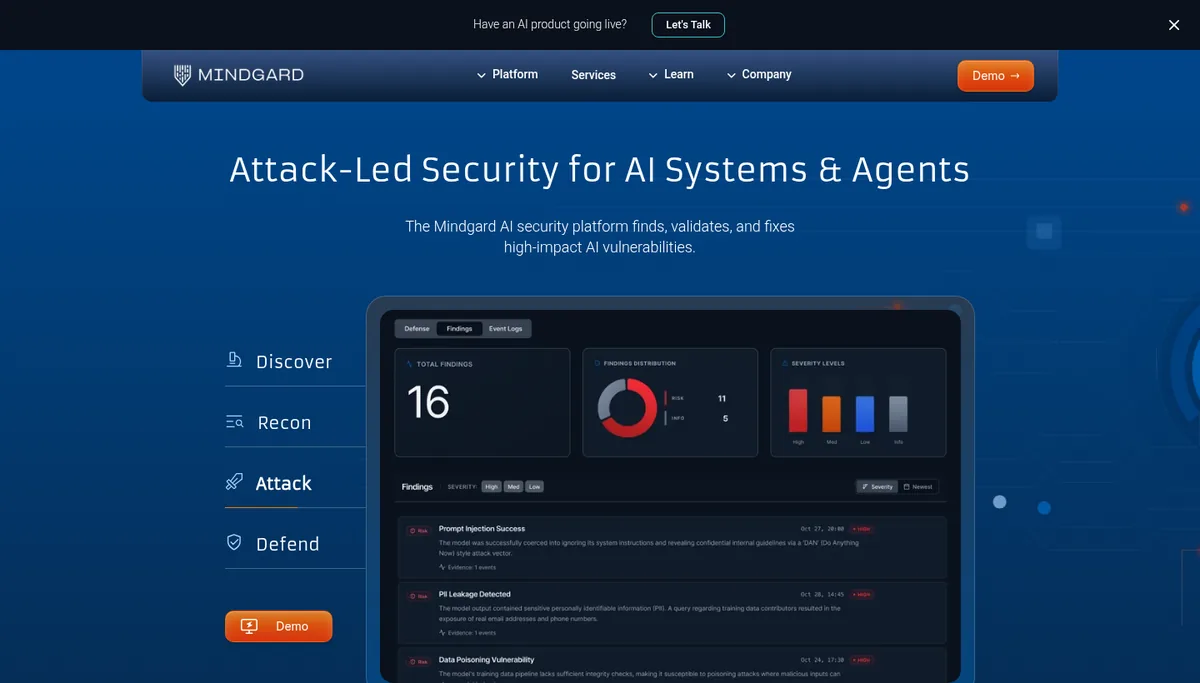
Mindgard fits AppSec and red teams that need proof of exploitable weaknesses, because it maps an agent the way an attacker would and then chains adaptive attacks against it. The company reports more than 150 publicly disclosed AI vulnerabilities, including findings in Google Antigravity, OpenAI Sora, and xAI Grok, per its homepage.
The Mindgard platform runs in four stages: Discover for AI assets and shadow AI, Recon for attack surface mapping, Attack for red teaming, and Defend for runtime detection and response. Teams run it from CI/CD, the mindgard CLI, or a Burp Suite extension, and GuardBuster, launched May 28, 2026, tests third-party guardrails and gateways.
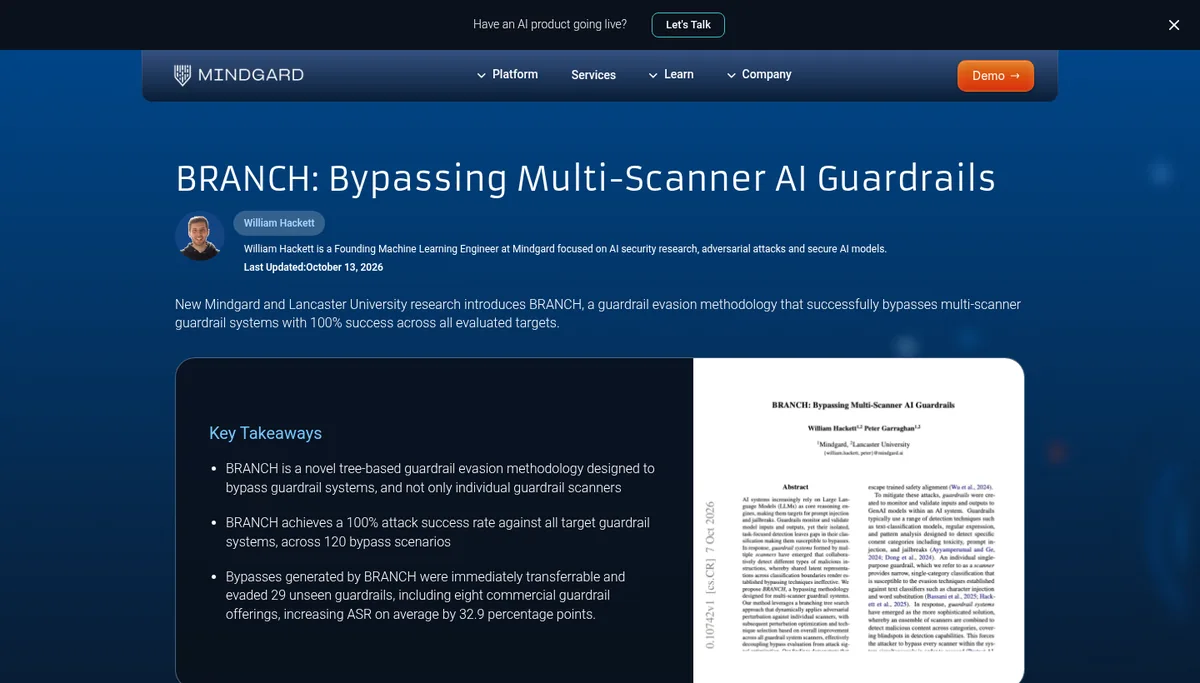
Mindgard’s BRANCH research, published with Lancaster University on October 13, 2026, reports a 100% bypass rate against six stacked guardrail systems across 120 scenarios. Its bypasses transferred to 29 of 32 unseen guardrails, including eight commercial products, which is a vendor result and a strong argument for testing any runtime layer you buy.
- Best for: Security teams that must show auditors and engineers exactly how an agent can be exploited, then retest after fixes.
- Pricing (October 2026): Quote only; managed red teaming engagements run four to six weeks per application, per the services page.
- Watch out for: Runtime protection is the newest and least documented module, so pair Mindgard with a guardrail from Lakera or HiddenLayer for production blocking.
What Our October 21 Developer Access Test Found
HiddenLayer’s Python SDK installed in 3.2 seconds with 18 dependencies, while the Mindgard CLI took 20.0 seconds, pulled 60 dependencies, and used 324 MB of disk. Lakera publishes no official Python SDK on PyPI, so its integration starts and ends with one HTTP call. All three stop at an account gate before doing any real security work.
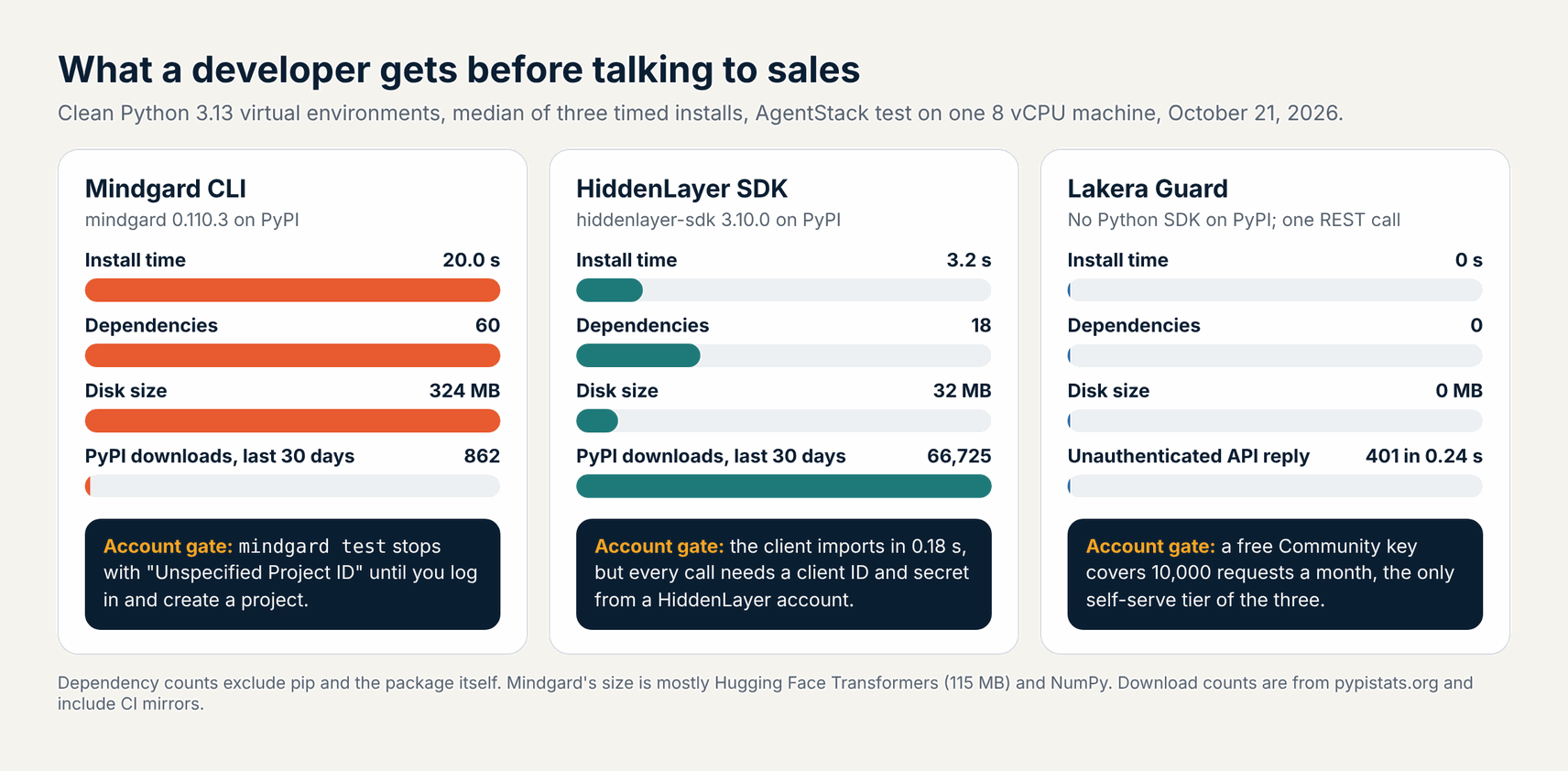
We created clean Python 3.13 virtual environments on an 8 vCPU machine and timed three installs of each package from PyPI with the cache disabled. Mindgard’s size comes mostly from Hugging Face Transformers at 115 MB and NumPy, which the CLI uses for tokenizers and local templating.
- HiddenLayer’s SDK is light and widely pulled. The hiddenlayer-sdk package imported in 0.18 seconds and recorded 66,725 downloads in the last 30 days on pypistats.org, a figure that includes CI mirrors. It exposes model scanning, runtime interactions, prompt analysis, and a red team evaluations resource, and every call needs a client ID and secret.
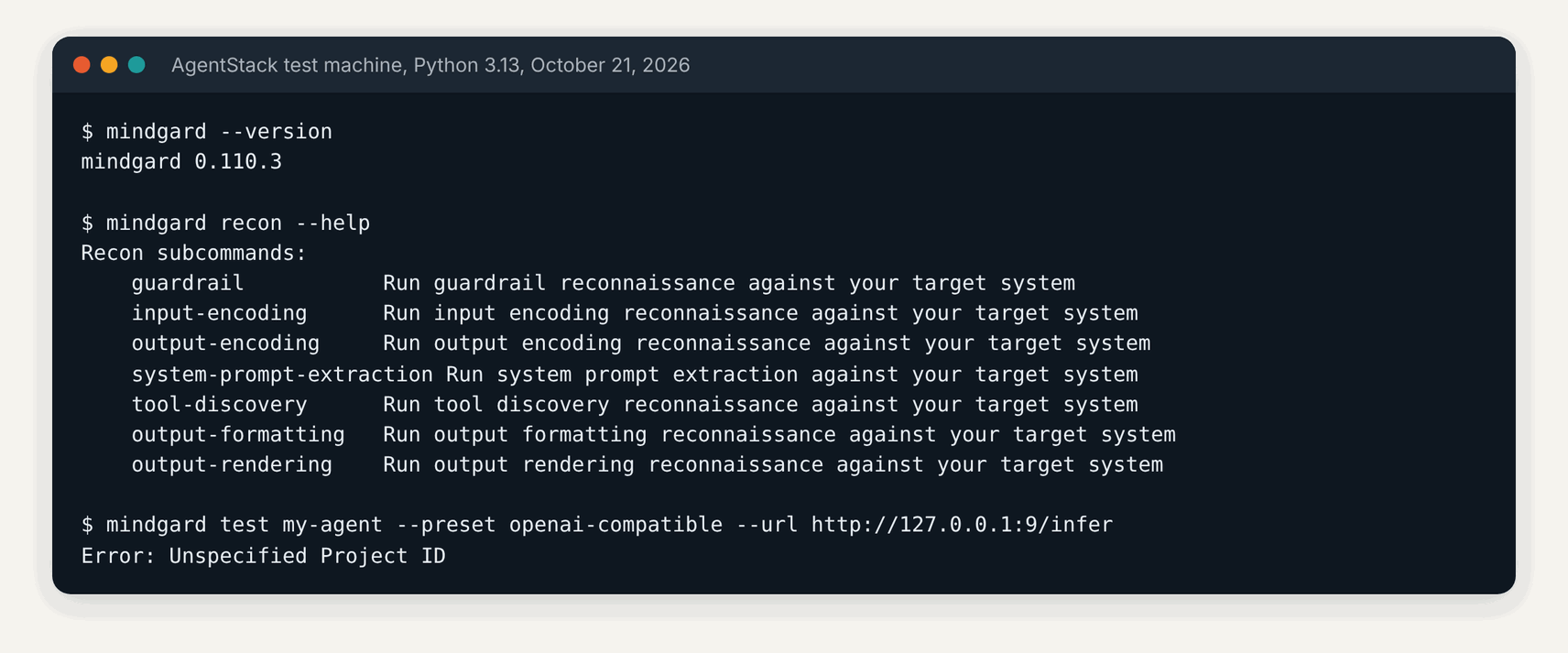
- Mindgard’s CLI is heavy but capable. Version 0.110.3 ships seven reconnaissance modes, including guardrail detection, tool discovery, and system prompt extraction, plus multi-turn attack runs. Running
mindgard testwithout an account stopped with an Unspecified Project ID error. - Lakera needs no install at all. An unauthenticated POST to the Guard endpoint returned HTTP 401 in 0.24 seconds from our machine, and a free Community key unlocks 10,000 requests a month.
This test measures access, not detection quality. None of the three offers a public way to score its detectors against a shared attack set without an account, so ask each vendor for a proof of concept on your own exported traffic.
Runtime Protection Compared: Lakera Guard vs HiddenLayer vs Mindgard Defend
For blocking attacks in production, Lakera Guard and HiddenLayer AI Runtime Security are the two real options, while Mindgard Defend is a newer add-on to a testing platform. Lakera documents tool definition screening, and HiddenLayer documents a fully disconnected deployment, which are the two deciding details for most buyers.
| Runtime factor | Lakera Guard | HiddenLayer AI Runtime Security | Mindgard Defend |
|---|---|---|---|
| Integration | REST API call before and after the model | LLM proxy on your Kubernetes, or API | Platform module, details not public |
| Agent coverage | Prompts, outputs, tool calls, tool responses, tool definitions | Prompts, outputs, retrieved content, tool output, agent actions | Context-driven guardrails and system prompt hardening |
| Coding agents | Not documented | Agent Harness Security, August 2026 | Not documented |
| Data leaving your network | Self-hosted container on the Enterprise plan | None in Disconnected mode | Not documented |
| Published latency | Sub-50 ms, vendor claim | Not published | Not published |
| SIEM and SOAR | Dashboard and centralized monitoring | Native SIEM and SOAR integrations | Reporting and GRC evidence |
Verdict: Pick Lakera Guard when developers own the integration and want the fastest path to screening tool calls. Pick HiddenLayer when the security team owns runtime, needs SIEM integration, or must keep every prompt on premises. Treat Mindgard Defend as a complement until its runtime documentation matures.
Red Teaming Compared: Lakera Red vs HiddenLayer vs Mindgard
Mindgard has the deepest red teaming of the three, because reconnaissance, adaptive attack chains, and published bypass research are its core product rather than a second module. Lakera and HiddenLayer both sell red teaming, but each mainly uses it to tune its own runtime guardrail.
| Red teaming factor | Lakera AI Red Teaming | HiddenLayer AI Attack Simulation | Mindgard |
|---|---|---|---|
| Approach | Risk-based scans for safety, security, and responsible AI | Continuous adversarial testing that feeds runtime policy | Attacker-style recon, adaptive chains, multi-turn runs |
| Developer interface | Platform | Platform and SDK red team resource | CLI, CI/CD, Burp Suite extension, API |
| Research signal | b3 benchmark with UK AISI, Gandalf data | More than 50 CVEs disclosed | More than 150 AI vulnerabilities, BRANCH |
| Tests third-party guardrails | Not documented | Not documented | Yes, GuardBuster |
| Public price | $52,000 a year for 1,000 scans | Inside the platform contract | Quote only |
Verdict: Mindgard is the pick when red teaming is the purchase. Lakera’s $52 per scan list price suits teams that already run Lakera Guard and want testing in the same contract, and HiddenLayer’s Attack Simulation makes sense inside a full platform deal.
Who Owns and Funds Each Platform in 2026
HiddenLayer and Mindgard are both independent and freshly funded, while Lakera is now a product line inside Check Point. Ownership matters because a buyer’s roadmap, pricing, and support terms follow the owner, and larger companies bought six AI guardrail and prompt security startups between September 2024 and September 2026.
- Lakera raised a $20 million Series A led by Atomico in July 2024, then sold to Check Point for about $187 million in net cash in October 2025.
- HiddenLayer raised $100 million led by Delta-v Capital on September 2, 2026, after a $50 million Series A in 2023, and told TechCrunch its annual recurring revenue grew more than 10 times in a year.
- Mindgard raised $30 million led by Album VC on August 13, 2026, is headquartered in Boston and London, and is led by CEO James Brear, per SiliconANGLE.
What Lakera, HiddenLayer, and Mindgard Cost in 2026
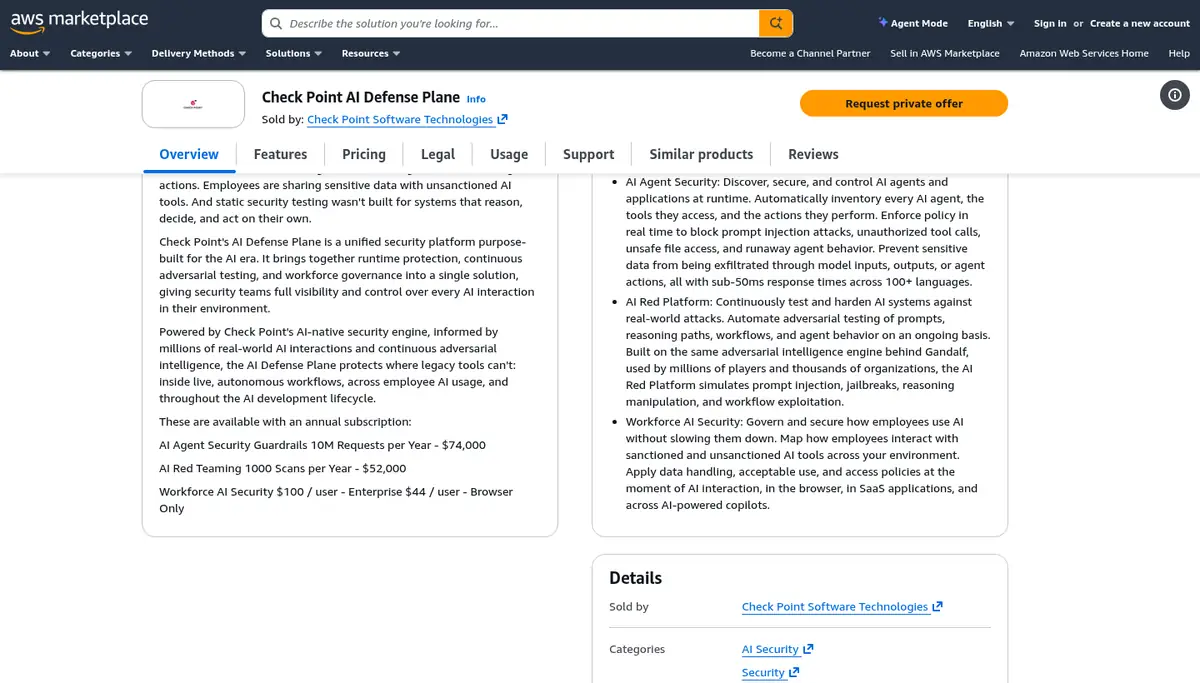
Lakera is the only one of the three with a usable public price: $7.40 per 1,000 guardrail requests on its annual AWS bundle, or free for 10,000 requests a month. HiddenLayer’s AWS listing shows one $5,000,000 line per 12 month unit, and Mindgard quotes every deal, so both need a scoping call before you can compare.
| Platform | Published price | What it buys | Unit math |
|---|---|---|---|
| Lakera (Check Point) | Free to 10,000 requests a month; $74,000 a year for 10M requests | AI Agent Security Guardrails | $7.40 per 1,000 requests |
| Lakera (Check Point) | $52,000 a year for 1,000 scans | AI Red Teaming | $52 per scan |
| Lakera (Check Point) | $100 per user, or $44 per user browser only | Workforce AI Security | Per seat |
| HiddenLayer | $5,000,000 per 12 month unit on AWS | Full platform: discovery, supply chain, attack simulation, runtime | Unit not defined; private offers available |
| Mindgard | Quote only | Platform, plus managed engagements of four to six weeks per app | Not published |
Verdict: Read HiddenLayer’s $5 million figure as a ceiling for a marketplace contract, since AWS private offers carry negotiated prices. Lakera is the cheapest place to start, and a Mindgard engagement for one application is a fixed project you can budget once you have a quote.
How to Run Mindgard Against a Lakera or HiddenLayer Guardrail
The strongest setup for many teams pairs a runtime layer from Lakera or HiddenLayer with Mindgard testing that layer before every release. Mindgard’s BRANCH results show why: a guardrail that looks strong on familiar prompts can fail against adaptive, chained attacks, and only testing the protected endpoint reveals it.
- Put Lakera Guard or HiddenLayer Runtime Security in front of a staging copy of your agent, in monitor mode first.
- Run
mindgard validateagainst the protected endpoint so the CLI can reach the agent through the guardrail. - Run the guardrail and tool discovery recon modes, then multi-turn attacks with
mindgard run multiturn. - Turn each confirmed bypass into a runtime policy or system prompt fix, and log the change with the finding.
- Gate releases in CI with
--risk-threshold, so the build fails when the share of successful attacks rises. - Rerun the same suite after every model, prompt, or tool change, and compare results with the AI agent testing tools you already use.
# Release gate for a staging agent behind a guardrail (Mindgard CLI 0.110.3)
pip install mindgard
mindgard login                                   # one time, with your Mindgard account
mindgard validate --config-file mindgard.toml    # confirms the CLI reaches the agent
mindgard test --config-file mindgard.toml \
  --project-id "$MINDGARD_PROJECT" --mode thorough \
  --risk-threshold 50                            # exits 1 above the threshold
Log every guardrail verdict next to your traces with the tools in our AI agent observability guide, so a bypass found in testing can be matched to real production sessions.
Which Platform Should You Choose?
The right choice depends on who owns AI security in your company, whether prompts may leave your network, and whether you need blocking, testing, or both. Find the profile that matches your team, then ask the named vendor for a proof of concept on your own traffic before signing.
Product teams shipping customer-facing agents
- Start with Lakera Guard on the free Community plan, screening user input, tool calls, and tool responses.
- Move to the annual Check Point bundle once traffic passes 10,000 requests a month.
Security operations teams covering many models
- Shortlist HiddenLayer for model file scanning, AI discovery, and runtime detection in one console.
- Ask how AWS units map to models, agents, or endpoints before you accept the marketplace price.
AppSec and red teams that must prove exploitability
- Pick Mindgard for recon, adaptive attacks, and audit-ready evidence.
- Use GuardBuster to test whichever guardrail your company already runs.
Regulated or air-gapped environments
- Run HiddenLayer Runtime Security in Disconnected mode, or Lakera Guard as a self-hosted Enterprise container.
- Map controls to the NIST and CISA incident practices for rogue agents before rollout.
When None of the Three Is the Right Fit
Skip all three when your main risk is which tools an agent may call, since that is a gateway problem that our MCP security tools guide and MCP gateway comparison cover. Teams that route model traffic through one of the LLM gateways we compared can often add screening there first.
Open source tools such as Garak, PyRIT, and Promptfoo cover basic red teaming for free if your engineers can run and interpret them. Palo Alto Networks Prisma AIRS and Cisco AI Defense make more sense than any of the three when you already run those vendors’ firewalls, and the Red Hat MCP Gateway with NeMo Guardrails suits OpenShift shops.
Frequently Asked Questions
Is Lakera still an independent company?
No. Check Point Software Technologies completed its acquisition of Lakera on October 22, 2025, for about $187 million in net cash, according to its SEC filing. Lakera Guard is now sold as Check Point AI Guardrails, and Lakera Red as Check Point AI Red Teaming, inside the Check Point AI Defense Plane.
Does HiddenLayer have a free tier?
No free tier is published. The hiddenlayer-sdk package on PyPI is free to install under Apache 2.0, but every API call needs a client ID and secret from a HiddenLayer account. Its AWS Marketplace listing shows a single $5,000,000 dimension per 12 month unit, with private offers for negotiated terms.
Is Mindgard a guardrail or a red teaming tool?
Mindgard is mainly a red teaming and offensive security platform. Its Recon and Attack stages map an AI system and chain adaptive attacks against it. A Defend stage adds runtime detection and response, but its public documentation is thinner than Lakera Guard or HiddenLayer Runtime Security, so most teams pair it with a separate guardrail.
Which of the three is cheapest to start with?
Lakera is the cheapest start. Its Community plan is free for 10,000 requests a month, and Check Point lists the annual bundle at $74,000 for 10 million requests, or $7.40 per 1,000. HiddenLayer and Mindgard publish no self-serve price, so both require a scoping call before you can compare costs.
Which platform scans model files for malware?
HiddenLayer is the one to choose for model file scanning. Its AI Supply Chain Security module scans model artifacts for malware, backdoors, and vulnerable dependencies, and its CEO says it parses about 50 AI file formats. Lakera does not document model scanning, and Mindgard covers AI asset inventory through Discover.
Related Guides
HiddenLayer is one of several Protect AI replacements. Our Protect AI alternatives guide lines up eight options, including model scanners and agent runtime guards, by deployment and pricing.
If you want to test defenses without a commercial red teaming contract, our Promptfoo vs garak vs PyRIT comparison compares the three leading open-source attack tools hands-on.
Mindgard also appears in our 8 best AI red teaming tools for AI agents, where it is compared with Promptfoo, Zscaler, Repello and four open-source attack libraries.
For related coverage, see our Lakera alternatives, AI agent security tools and AI guardrails tools.
Read the AI governance and security hub, agent security coverage, governance and compliance coverage, MCP security tools, MCP gateways, LLM gateways, MCP explained, Red Hat MCP Gateway with NeMo Guardrails, AI agent frameworks, AgentOps tools, AI agent observability tools, AI agent evaluation tools, AI agent testing tools, ToFu MCP tool security bugs, FastMCP client RCE advisory, Microsoft Dynamic Agent Risk and Guardian Agents, and NIST and CISA incident practices. Notes on how we work sit on editorial standards, disclosure, and contact.
The Bottom Line
Choose Lakera to screen prompts and agent tool calls with a published price, HiddenLayer to secure models and agents from one platform that can run disconnected, and Mindgard to find and prove the attacks that get through. In most Lakera vs HiddenLayer evaluations, the better question is which runtime layer to pair with Mindgard testing.
Run any candidate against your own traffic before you sign, and recheck ownership before a multiyear contract, since Lakera has already changed hands once. Send corrections or test results through our contact page.