
Last updated October 23, 2026. We installed LangGraph and all nine alternatives that day, ran the same tool calling job in each with outbound traffic logged, and checked releases, downloads, licenses, and advisories.
The best LangGraph alternatives in 2026 are CrewAI for role based teams of agents, Microsoft Agent Framework for .NET and Azure shops, and Pydantic AI for typed Python agents with real durable execution. The right pick depends on which part of LangGraph you want to keep: its explicit graphs, its checkpoints, or its managed deployment on LangSmith.
Most teams look for a LangGraph alternative for one of three reasons: the graph API feels heavy for simple agents, they want a different language such as TypeScript or C#, or they want hosting outside LangSmith. This page sits in our agent frameworks hub, and our guide to the 12 best AI agent frameworks covers the wider field if you are not starting from LangGraph.
On October 23, 2026 we installed LangGraph and nine alternatives into clean environments, scanned their dependencies, and ran one identical job five times in each against a scripted local model, with every outbound connection logged and refused. No vendor paid for placement or reviewed this page, per our editorial standards and disclosure policy.
TL;DR
- Every framework finished the same job correctly in 5 of 5 runs with exactly 2 model calls, so the real differences are defaults, install weight, and how each one handles long running state.
- Three alternatives contacted their vendor by default. CrewAI tried 8 connections to
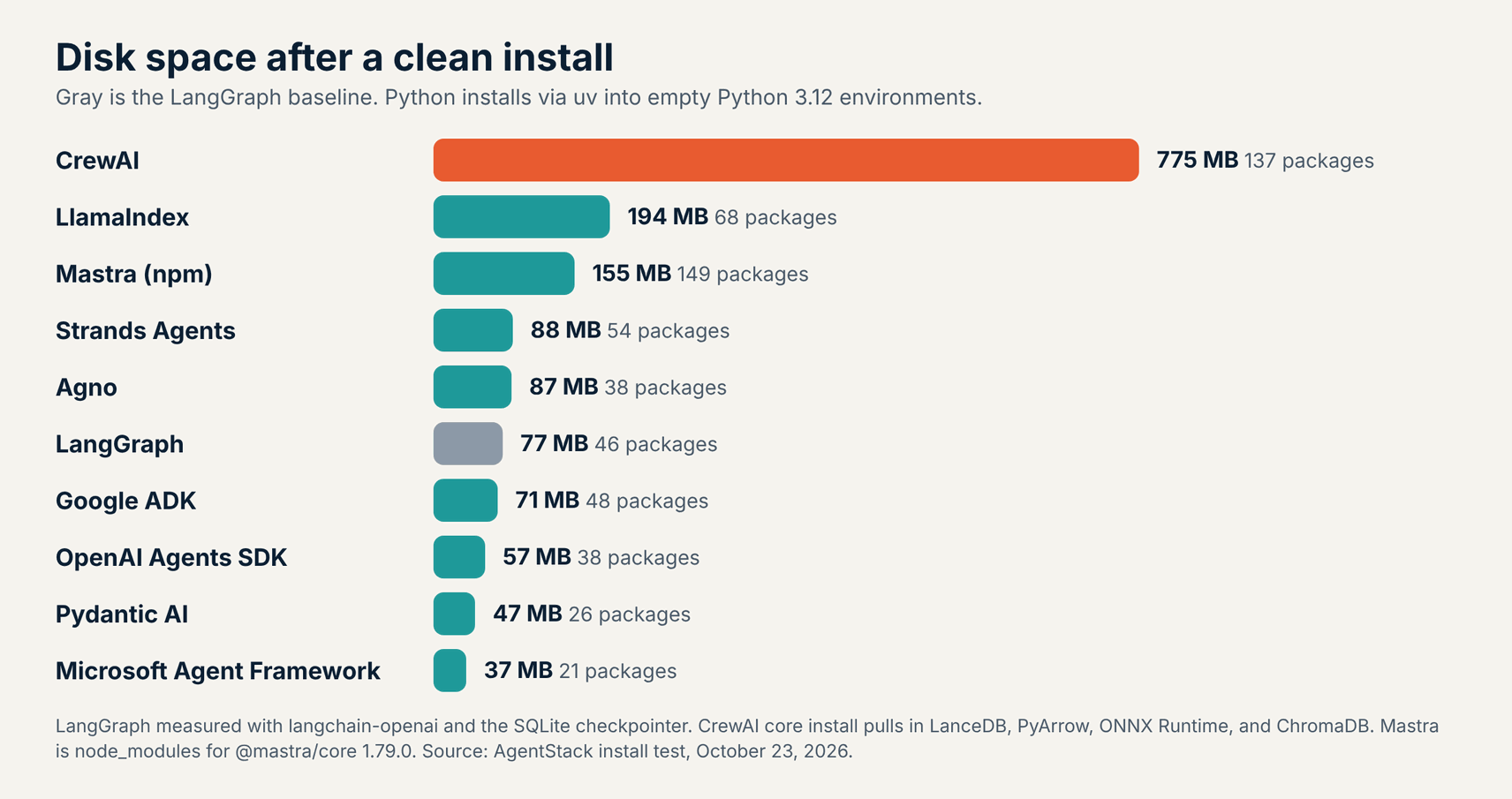
telemetry.crewai.comper run, OpenAI Agents SDK tried 3 trace uploads, and Agno sent 1 telemetry call. LangGraph and the other six sent nothing. - CrewAI is the heaviest install at 775 MB and 137 packages, ten times LangGraph’s 77 MB, and its pinned ChromaDB and MCP versions carry open advisories. Microsoft Agent Framework was the lightest at 37 MB.
- For LangGraph style checkpoints, look at Microsoft Agent Framework, Pydantic AI, and Mastra. Each documents resumable workflows, and Pydantic AI plugs into eight durable execution engines including Temporal and DBOS.
- Mastra is the strongest TypeScript option, with 8 million npm downloads last month, suspend and resume workflows, and a hosted platform that starts free.
LangGraph Alternatives at a Glance
Five of the nine alternatives are independent projects, and four come from model or cloud vendors that steer you toward their own hosting. The table compares fit, language, license, the managed option each one offers, and install size, using each project’s repository, documentation, and our own test on October 23, 2026.
| Framework | Best for | Language | License | Managed option | Install size |
|---|---|---|---|---|---|
| LangGraph (baseline) | Explicit graphs with checkpoints | Python, TypeScript | MIT | LangSmith Deployment | 46 packages, 77 MB |
| CrewAI | Role based teams of agents | Python | MIT | CrewAI platform, free tier | 137 packages, 775 MB |
| Microsoft Agent Framework | .NET and Azure teams leaving AutoGen | Python, .NET, Go | MIT | Microsoft Foundry | 21 packages, 37 MB |
| OpenAI Agents SDK | Light agents with handoffs | Python, TypeScript | MIT | None, bring your own host | 38 packages, 57 MB |
| Google ADK | Structured agents on Google Cloud | Python, TypeScript, Java, Go | Apache 2.0 | Agent Platform, Cloud Run | 48 packages, 71 MB |
| Pydantic AI | Typed Python agents with durable runs | Python | MIT | Logfire for tracing | 26 packages, 47 MB |
| LlamaIndex Workflows | Agents over documents and data | Python, TypeScript | MIT | llamactl deploys | 68 packages, 194 MB |
| Agno | Agents run as a service you own | Python | Apache 2.0 | AgentOS control plane | 38 packages, 87 MB |
| Strands Agents | Model driven agents on AWS | Python, TypeScript | Apache 2.0 | Bedrock AgentCore | 54 packages, 88 MB |
| Mastra | TypeScript agents and workflows | TypeScript | Apache 2.0, enterprise folders excepted | Mastra Platform, free tier | 149 npm packages, 155 MB |
Verdict: Stay on LangGraph if you rely on its checkpointer and time travel debugging. Move to CrewAI for fast multi agent prototypes, Microsoft Agent Framework or Google ADK if your company already runs on Azure or Google Cloud, Pydantic AI for typed Python services, and Mastra if your stack is TypeScript.
How We Chose and Tested These Alternatives
We started from frameworks that can replace LangGraph for the same job: an agent that calls tools in a loop and can grow into a multi step workflow. Each one had to be open source, released in the last month, and able to run against any model endpoint, which ruled out no code builders and model locked SDKs.
- Same job everywhere: a shop assistant calls one price lookup tool, then writes a one line summary. A local server played the model’s part with fixed replies, so every model request was counted and every run was free and repeatable.
- Network check: all traffic went through a logging proxy that recorded and refused every connection to the internet, so anything a framework sent home showed up in the log.
- Defaults first: five runs per framework with default settings, then five more with the documented telemetry switch off for CrewAI, Agno, and OpenAI Agents SDK.
- Install and dependency scan: package count and disk size after a clean
uv pip install, ornpm installfor Mastra, then a pip-audit or npm audit scan of each environment. - Project health: GitHub stars, releases in the last 12 months, and last month’s PyPI or npm downloads, all checked the same day.
What Our October 23 Hands-On Test Found
All ten frameworks, LangGraph included, made the same 2 model calls and 1 tool call, so none of them adds hidden model spend on this job. The gaps were in run time, outbound traffic, and install weight, and those are the numbers that matter when you package agents into containers or run them behind a strict corporate firewall.
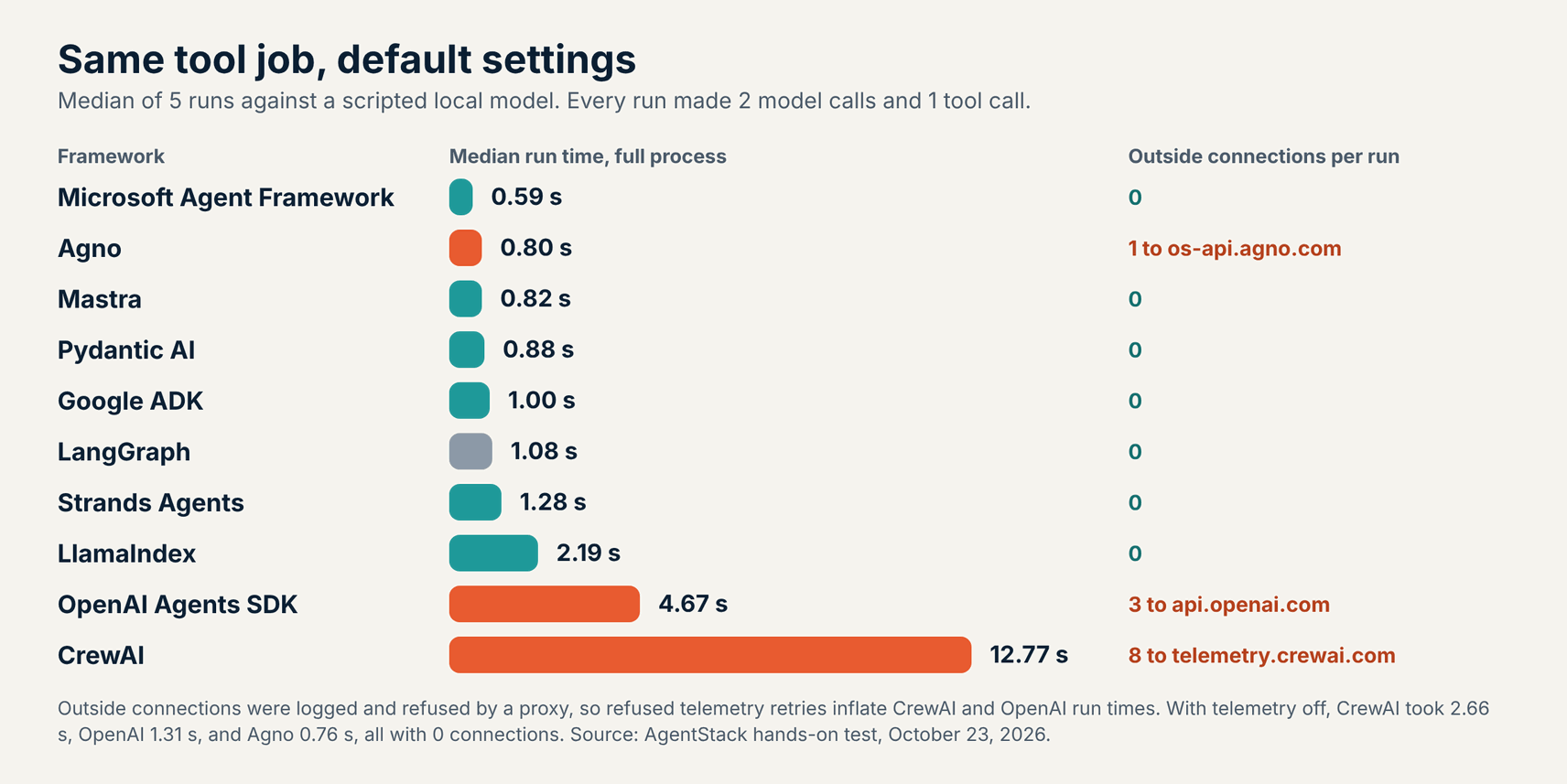
- Fastest full runs: Microsoft Agent Framework at 0.59 seconds, Agno at 0.80, Mastra at 0.82, and Pydantic AI at 0.88, against 1.08 seconds for LangGraph. Times include process start and exit.
- CrewAI: 12.77 seconds by default, because it kept retrying refused uploads to
telemetry.crewai.comon port 4319. WithCREWAI_DISABLE_TELEMETRY=trueit took 2.66 seconds with 0 connections. - OpenAI Agents SDK: 3 refused trace uploads to
api.openai.comper run and 4.67 seconds, dropping to 1.31 seconds with tracing off. - Agno: 1 call to
os-api.agno.comper run, gone withAGNO_TELEMETRY=false. Pydantic AI sent nothing but printed a startup banner suggesting its Logfire service.
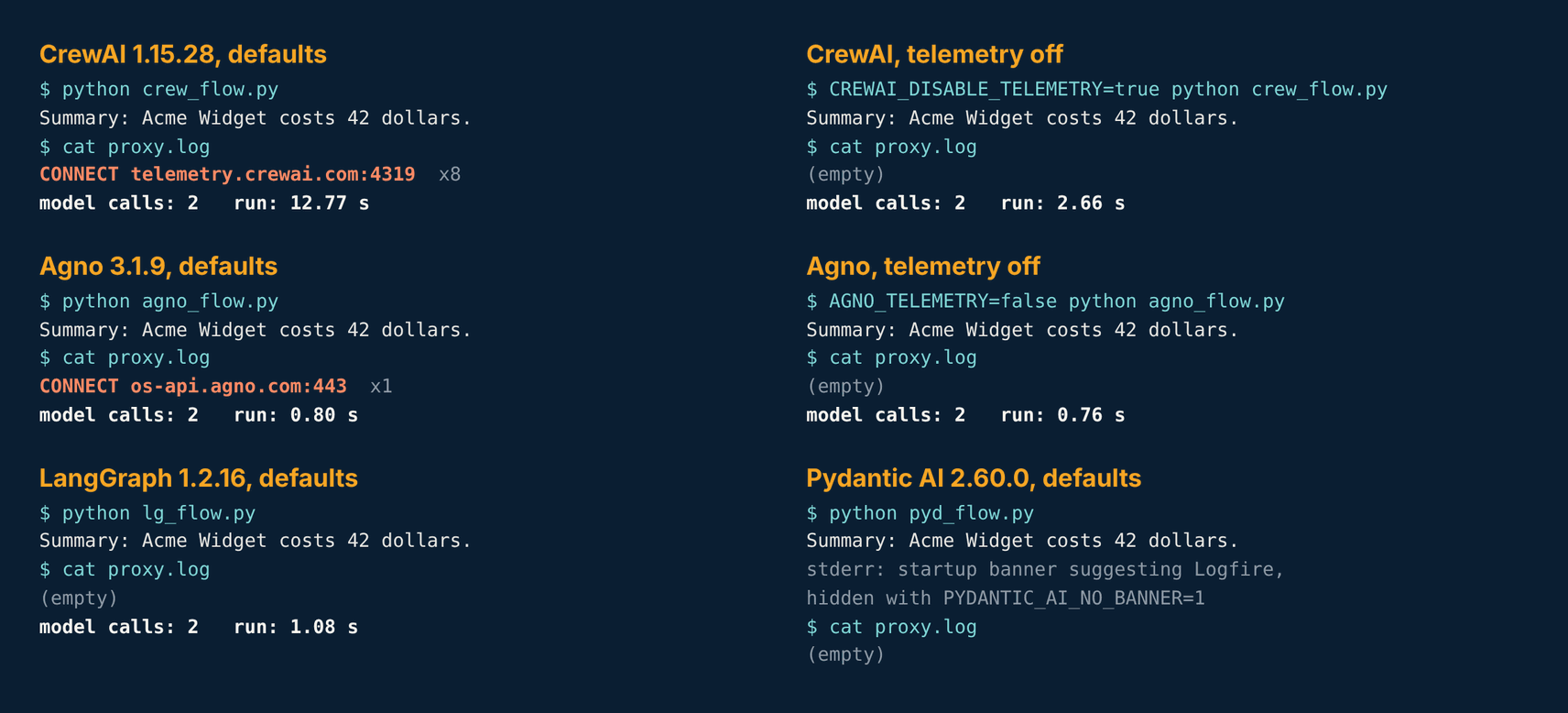
Telemetry that fails silently still costs time: in a locked down network, CrewAI spent about 10 extra seconds per run waiting on blocked uploads. If your agents run behind a strict firewall, set the off switches in your base image, then confirm with a proxy log as we did.
LangGraph Itself: What You Would Be Leaving
LangGraph is still the most downloaded framework in this comparison, at 44.8 million PyPI downloads last month, and it sent no telemetry in our test. Its README describes a low level orchestration framework for long running, stateful agents, with durable execution, human in the loop checks, and memory. Version 1.2.16 shipped on October 16, 2026.
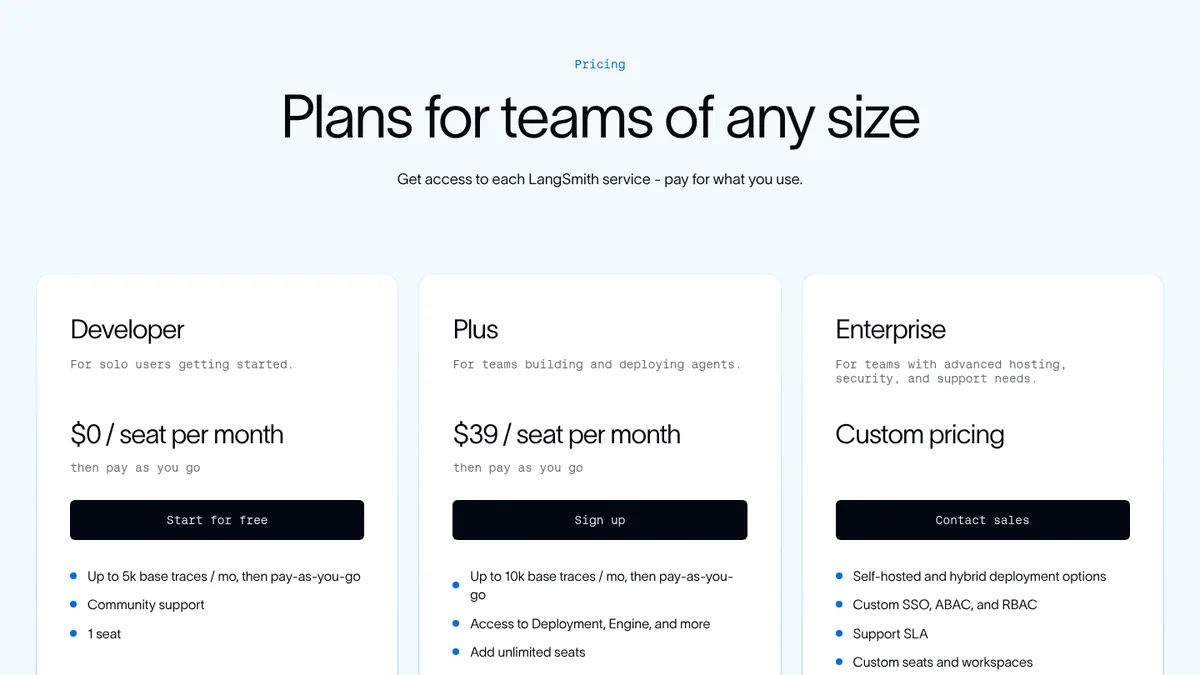
The parts that are hard to replace are the persistence layer, which saves a checkpoint at every step of a thread, and the time travel and interrupt features built on it. Managed hosting lives in LangSmith: the pricing page lists a free Developer plan with 5,000 base traces, and Plus at $39 per seat per month with 10,000 traces and access to Deployment, which is metered on top.
If tracing cost or lock in is your real problem, you may not need a new framework. Our LangSmith alternatives guide and LangSmith, Langfuse, and Braintrust pricing breakdown cover keeping LangGraph and swapping the platform around it.
1. CrewAI: Best for Role Based Teams of Agents
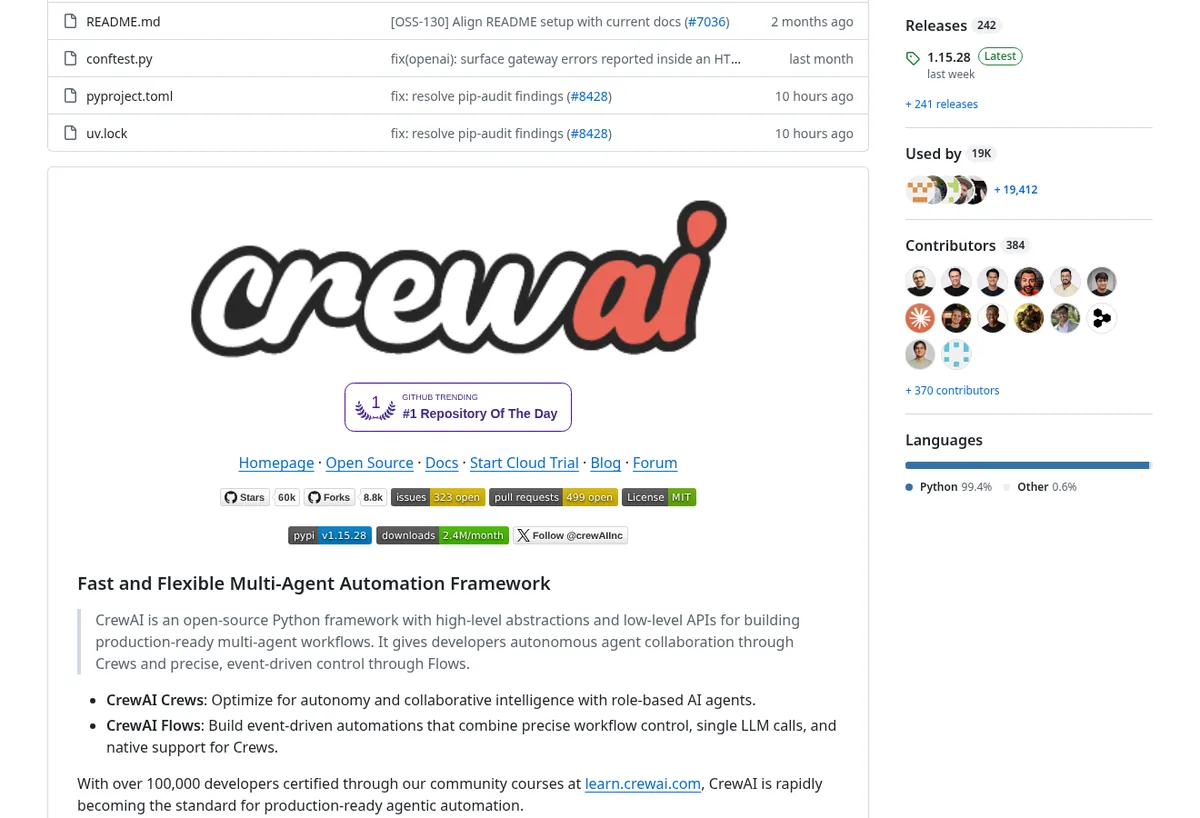
CrewAI is the most popular independent alternative, with 60,004 GitHub stars, and it splits work into Crews of role based agents and Flows for event driven control. The repository describes it as a standalone Python framework, and version 1.15.28 shipped on October 14, 2026. It tagged 304 releases in the last 12 months, the fastest pace of any Python project here.
Flows are the closest match to a LangGraph graph: you decorate methods with start, listen, and router steps and keep typed state, per the Flows docs. The managed side is the CrewAI platform, whose pricing page lists a free Basic plan with 50 workflow executions a month and a custom Enterprise plan that deploys to CrewAI cloud, your own VPC, or your own servers.
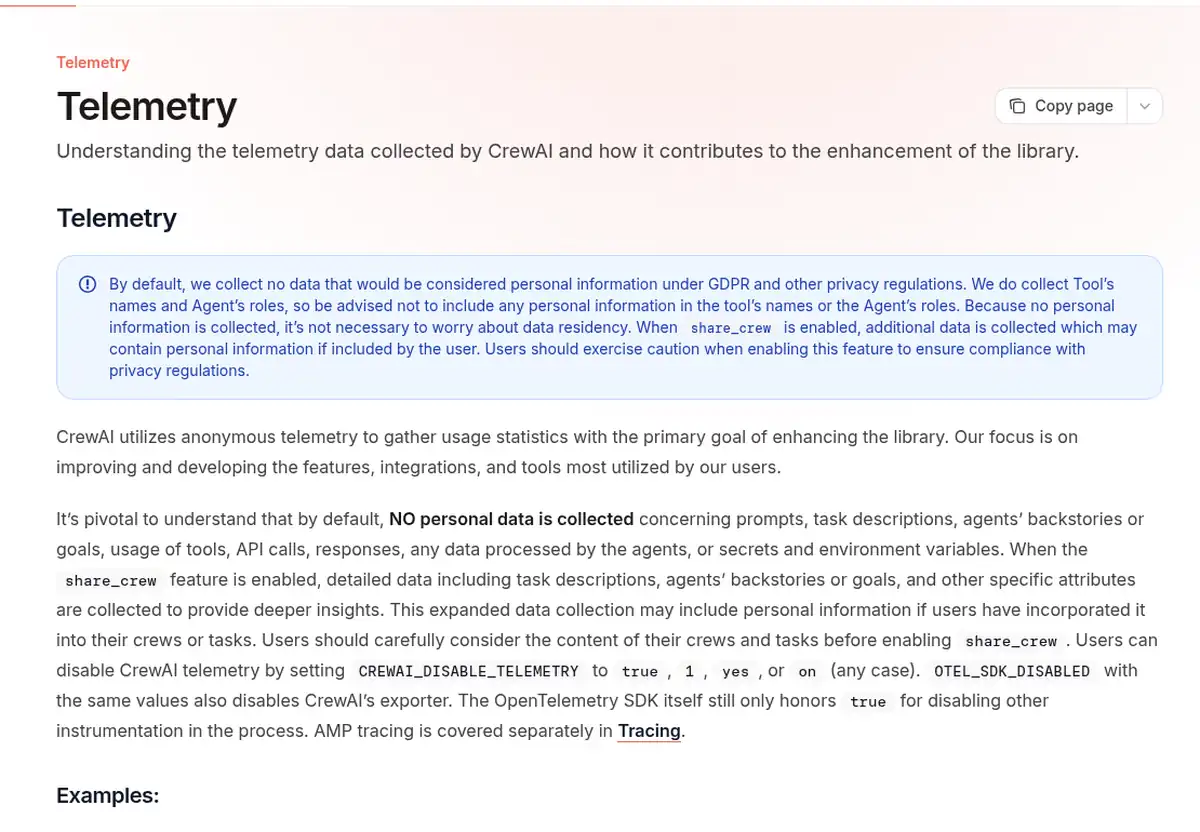
CrewAI sends anonymous telemetry by default and was the heaviest install we measured. Its telemetry docs say tool names and agent roles are collected, and that CREWAI_DISABLE_TELEMETRY turns it off. The 775 MB install pulls in LanceDB, PyArrow, ONNX Runtime, and ChromaDB, and pip-audit flagged 6 advisories across ChromaDB 1.5.9, MCP 1.28.1, and uv, both of the first two held back by CrewAI’s own version pins.
- Best for: teams that think in roles and tasks and want a working multi agent prototype in an afternoon.
- Pricing (October 2026): free under MIT. The CrewAI platform has a free Basic tier with 50 executions a month and custom Enterprise pricing.
- Watch out for: default telemetry, a 775 MB footprint in containers, and pinned dependencies that carry open advisories.
2. Microsoft Agent Framework: Best for .NET and Azure Teams
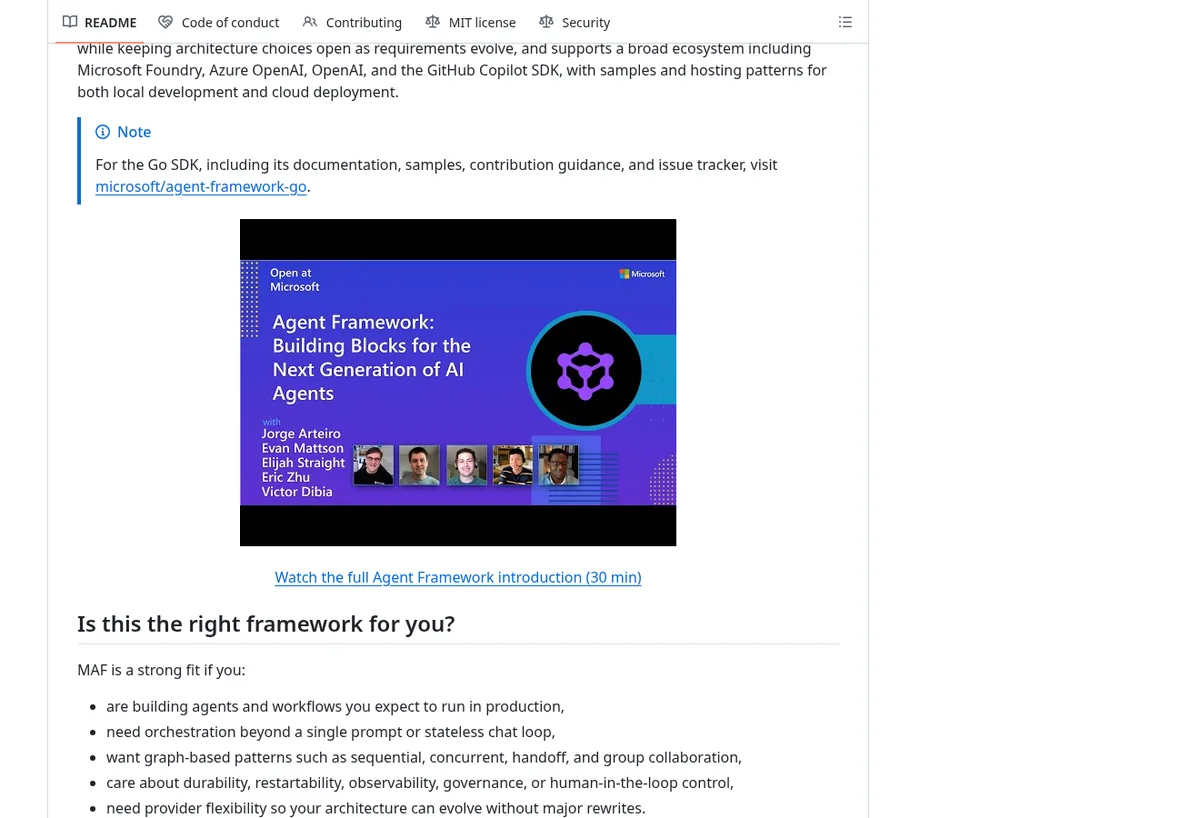
Microsoft Agent Framework is the direct successor to both AutoGen and Semantic Kernel, and it adds graph based workflows with checkpoints, which makes it the closest corporate match to LangGraph. The overview says it combines AutoGen’s agent abstractions with Semantic Kernel’s state, middleware, and telemetry features. It runs in Python, .NET, and Go.
Its checkpoints docs describe saving workflow state at each step and resuming later, which covers the same ground as a LangGraph checkpointer. The repository has 14,282 stars, and agent-framework-core 1.23.0 shipped on October 22, 2026.
It was the lightest and fastest install in our test, at 21 packages, 37 MB, and a 0.59 second median run with no outbound traffic. Hosting usually means Microsoft Foundry or your own Azure services, and the README also lists OpenAI and the GitHub Copilot SDK as supported providers.
- Best for: teams on .NET or Azure, and anyone migrating from AutoGen or Semantic Kernel.
- Pricing (October 2026): free under MIT. You pay for models and any Azure or Foundry hosting at Microsoft’s rates.
- Watch out for: fast moving APIs, with 61 releases in the last 12 months, and docs that assume Azure by default.
3. OpenAI Agents SDK: Best for Light Agents With Handoffs
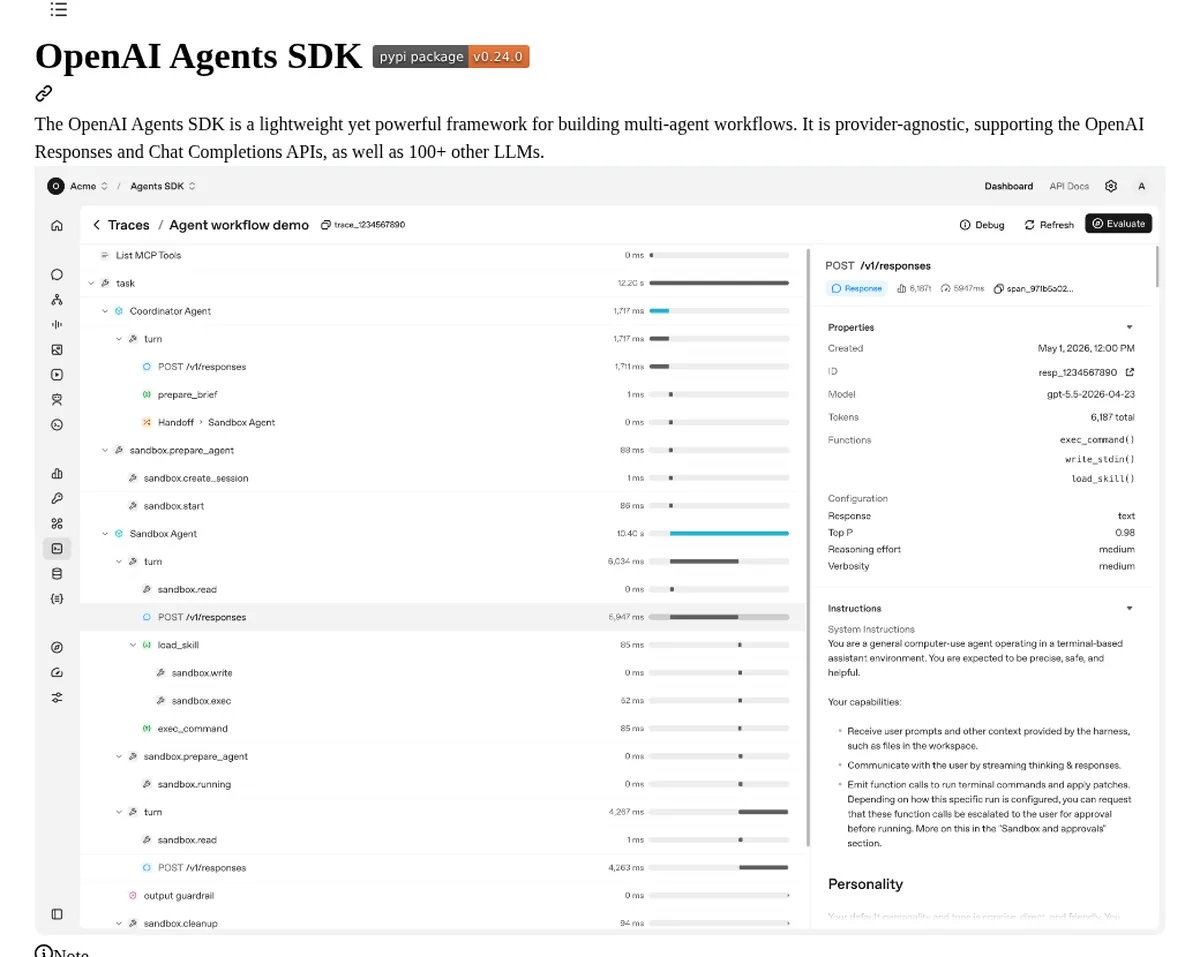
OpenAI Agents SDK is the smallest step down from LangGraph: an agent loop with tools, handoffs, guardrails, and sessions, without a graph to define. Version 0.24.0 has 30,239 GitHub stars and 12.4 million PyPI downloads last month, and it works with other model providers through adapters.
It has no built in checkpointer, but its running agents docs list durable execution integrations with Dapr, Temporal, Restate, and DBOS. Tracing is on by default and uploads to OpenAI, which caused the 3 refused connections per run in our test.
- Best for: teams that want the least code and are happy to add a durable engine only when they need one.
- Pricing (October 2026): free under MIT. You pay model usage at your provider’s rates.
- Watch out for: default tracing to OpenAI, a version still below 1.0, and no graph API for complex branching.
4. Google ADK: Best for Structured Agents on Google Cloud
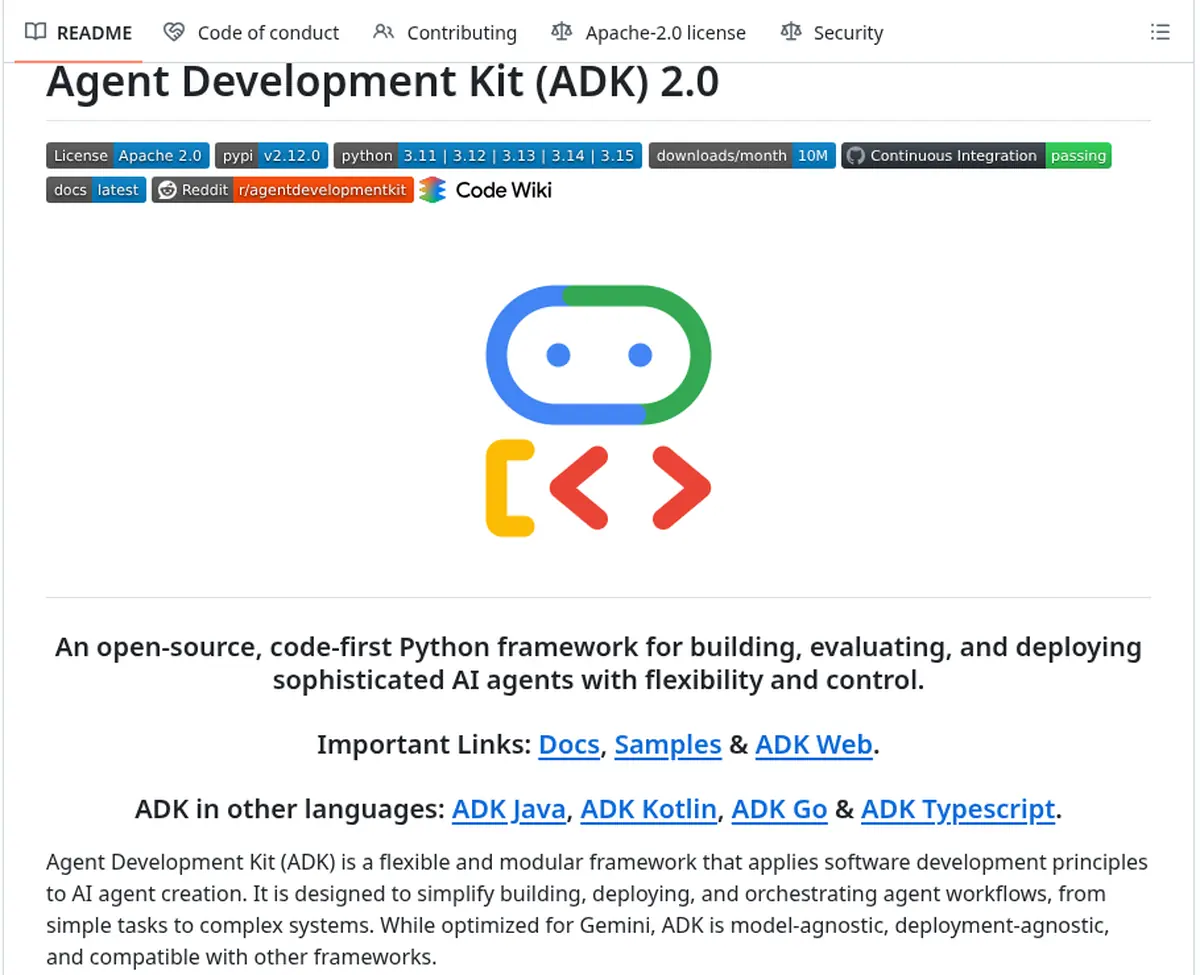
Google ADK 2.x ships its own graph workflow runtime with routing, loops, and resumable runs, so LangGraph users find familiar ideas under different names. The repository has 21,971 stars and the package had 10.1 million downloads last month, and it covers Python, TypeScript, Java, and Go.
Deployment targets in the ADK docs include Agent Platform, Cloud Run, and GKE. ADK made no outside connections in our test, but its pinned opentelemetry-api 1.42.1 carries a moderate advisory fixed in 1.45.1, outside ADK’s allowed range.
- Best for: Google Cloud teams that want graphs, built in evaluation, and several languages in one framework.
- Pricing (October 2026): free under Apache 2.0. You pay for models and any Google Cloud hosting at Google’s rates.
- Watch out for: the OpenTelemetry pin in security scans and a heavier learning curve than the lighter SDKs.
5. Pydantic AI: Best for Typed Python Agents With Durable Runs
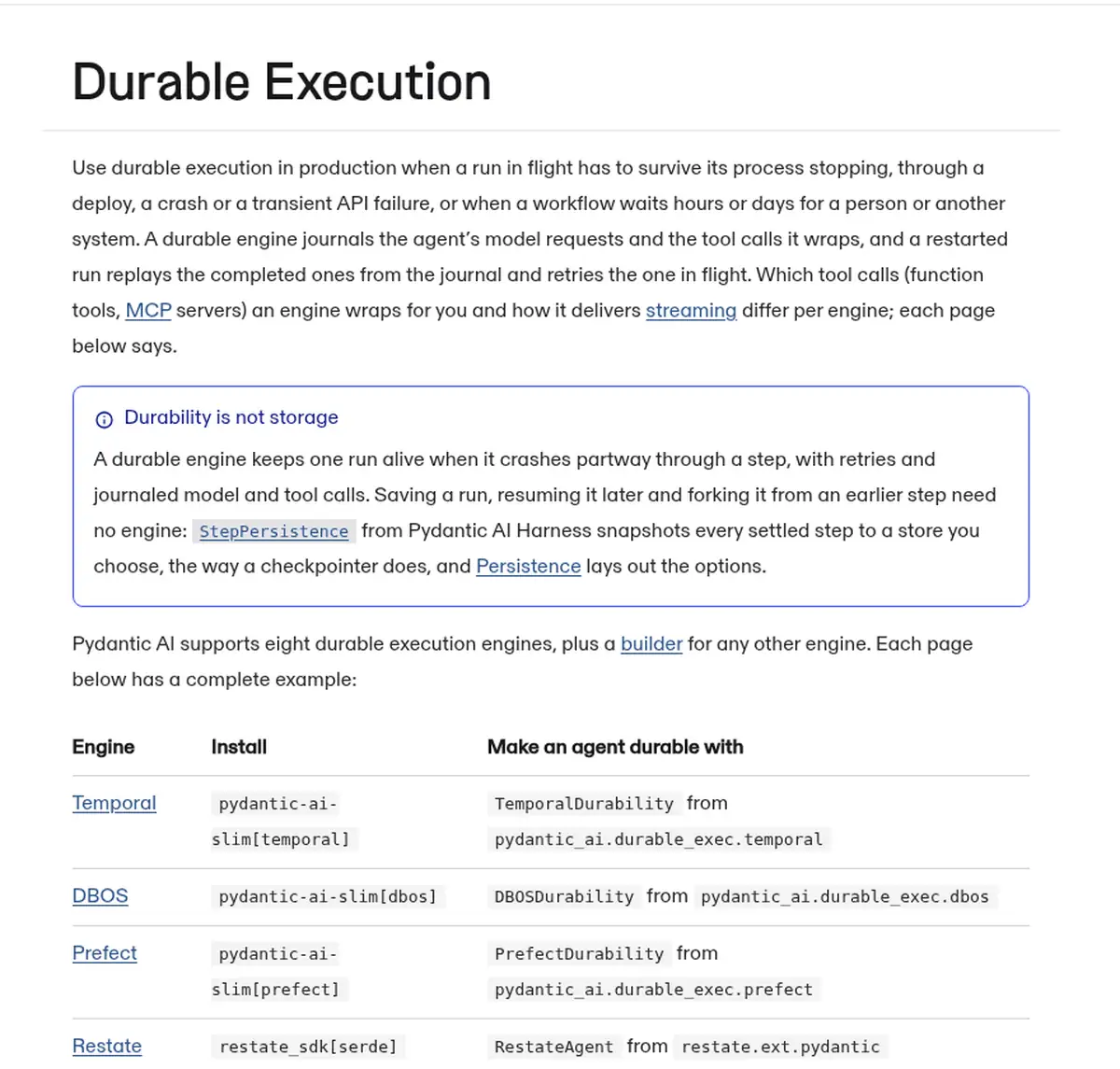
Pydantic AI gives you the widest durable execution choice here: its docs list eight engines, including Temporal, DBOS, Prefect, Restate, and AWS Lambda, plus a builder for others. That lets a long running agent survive crashes and deploys using infrastructure your team may already run, instead of a framework specific checkpointer.
Agents are typed end to end with Pydantic models, which suits teams that already validate data with Pydantic. The repository has 20,803 stars, pydantic-ai-slim had 23.9 million downloads last month, and version 2.60.0 shipped on October 23, 2026, one of 200 releases in 12 months.
It made no outside connections in our test. It did print a startup banner pointing to Logfire, Pydantic’s paid tracing service, which PYDANTIC_AI_NO_BANNER=1 hides. Any OpenTelemetry backend works for traces, per the durable execution docs and its observability pages.
- Best for: Python teams that want type safety and plan to run agents on Temporal, DBOS, or a similar engine.
- Pricing (October 2026): free under MIT. Logfire is optional and billed separately.
- Watch out for: a very fast release pace, so pin versions, and graph features that are lighter than LangGraph’s.
6. LlamaIndex Workflows: Best for Agents Over Documents and Data
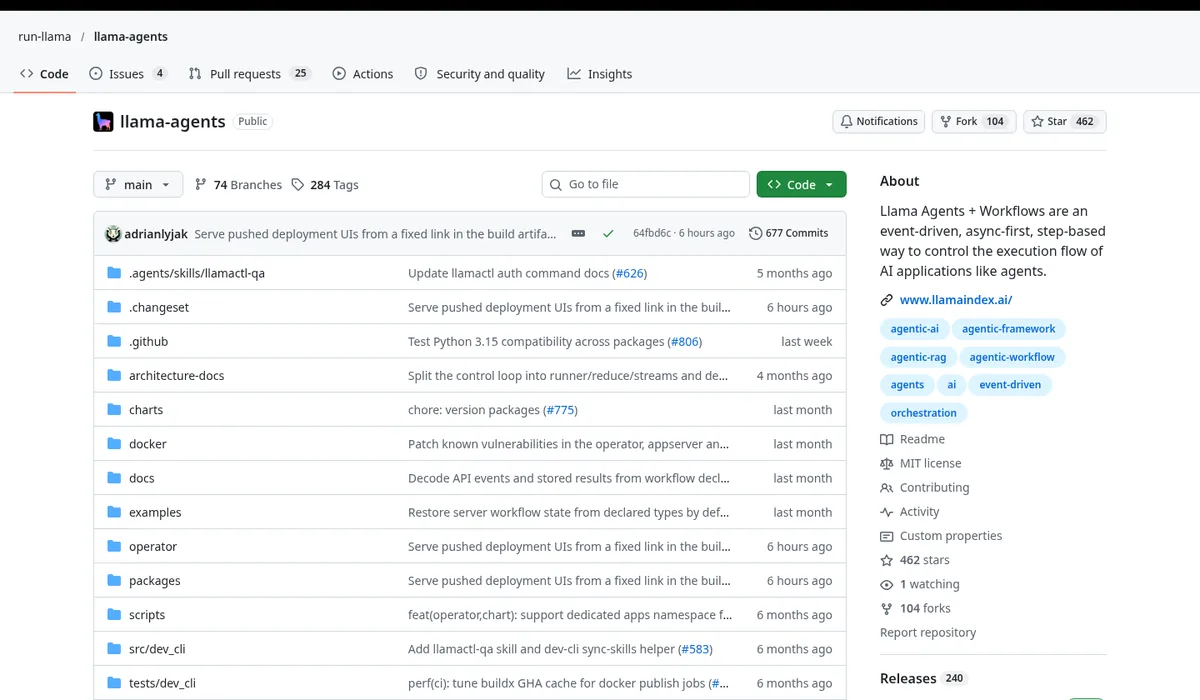
LlamaIndex Workflows are event driven and step based, a different model from LangGraph nodes and edges that many find easier to read for retrieval heavy agents. The workflow engine now lives in the llama-agents repository, and llama-index-workflows 2.26.1 shipped on October 21, 2026.
The main llama_index repository has 52,629 stars but now describes itself as a document processing platform, and llama-index-core had only 19 releases in 12 months. Its llamactl CLI deploys agent apps to LlamaParse, AWS Bedrock AgentCore, or your own servers.
- Best for: teams whose agents mostly read, index, and reason over documents.
- Pricing (October 2026): free under MIT. LlamaIndex cloud products are billed separately.
- Watch out for: a 194 MB install, a split between the core and workflow packages, and a company focus that has moved toward document processing.
7. Agno: Best for Agents Run as a Service You Own
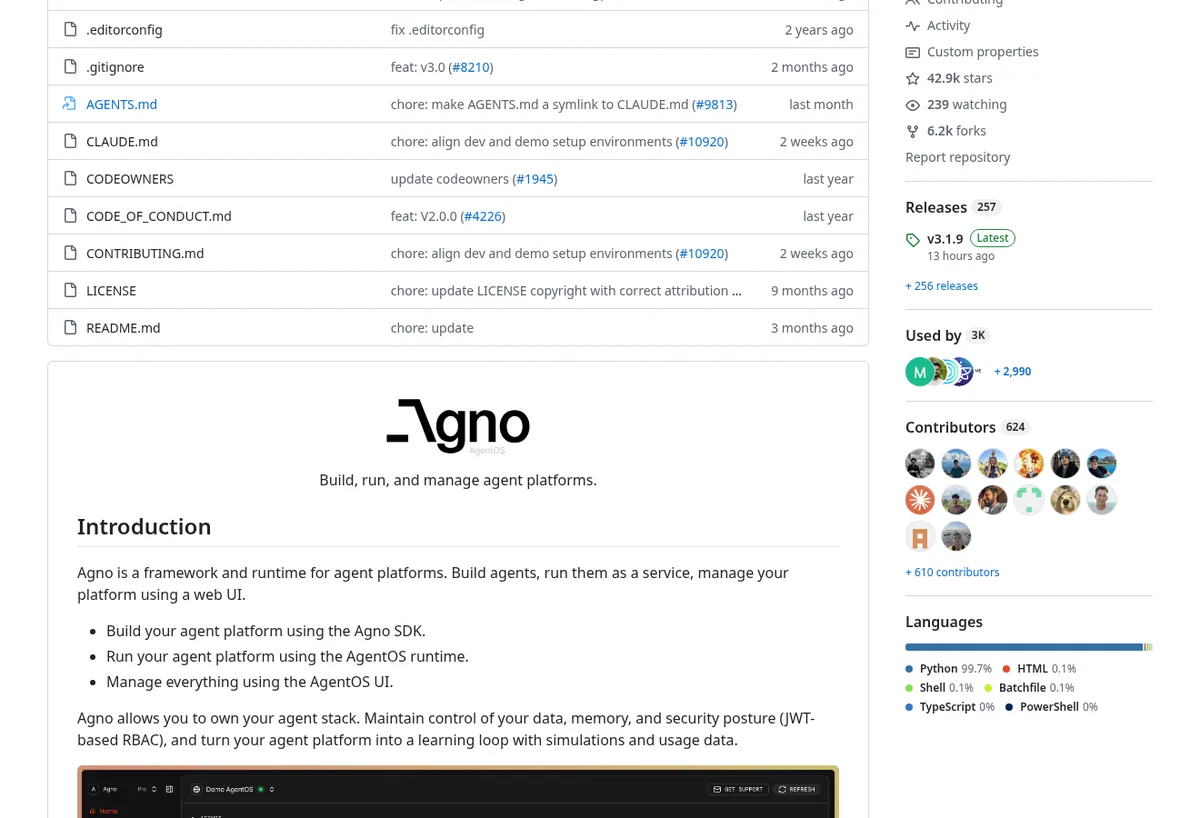
Agno pairs a Python SDK with AgentOS, a runtime that turns agents into a service with sessions, background runs, approvals, and tracing in your own cloud. The AgentOS docs list database backed state, checkpointing, and multi user access control, and the repository has 42,870 stars.
Agno sent one telemetry call per run in our test. Its telemetry docs say AGNO_TELEMETRY=false covers agents, teams, and workflows, but AgentOS and evals ignore that variable and need telemetry=False set on each instance.
- Best for: teams that want a ready made agent API and admin UI without building the service layer.
- Pricing (October 2026): free under Apache 2.0. The hosted AgentOS control plane is optional.
- Watch out for: telemetry on by default with a separate switch for AgentOS, and 142 releases in 12 months.
8. Strands Agents: Best for Model Driven Agents on AWS
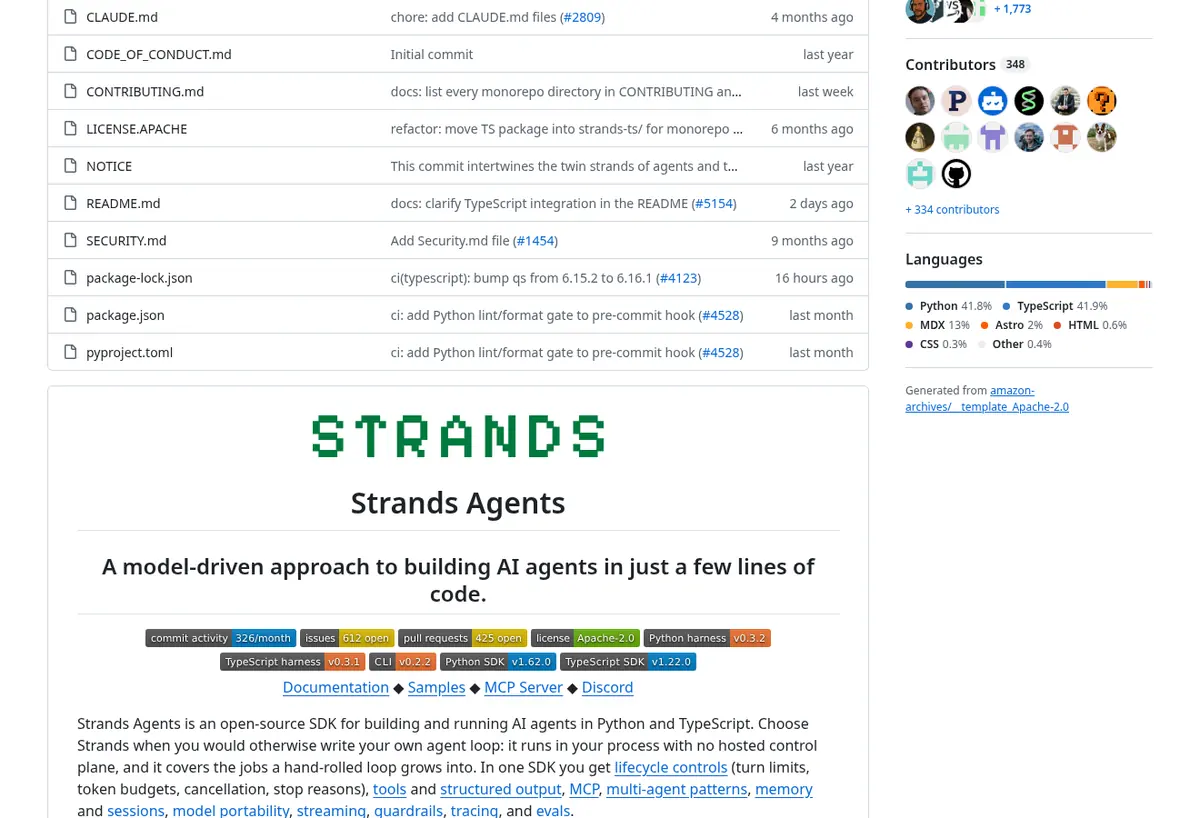
Strands Agents lets the model drive the loop and adds graph and swarm patterns only when you need them, and its docs include a guide for migrating from LangGraph. The project supports Python and TypeScript, and strands-agents had 37.1 million downloads last month, second only to LangGraph here.
Deployment is easiest on Amazon Bedrock AgentCore Runtime, though it runs anywhere and supports many model providers. pip-audit flagged MCP 2.1.1 for a session cleanup advisory in stateful HTTP servers, and Strands’ pin below 2.2 blocks the 2.2.0 fix, so pin the patched 1.30 line if you expose MCP servers.
- Best for: AWS teams and anyone who wants a small agent loop with a migration path from LangGraph.
- Pricing (October 2026): free under Apache 2.0. AgentCore and Bedrock usage are billed by AWS.
- Watch out for: the MCP pin, and a repository that recently moved into a larger harness monorepo.
9. Mastra: Best for TypeScript Agents and Workflows
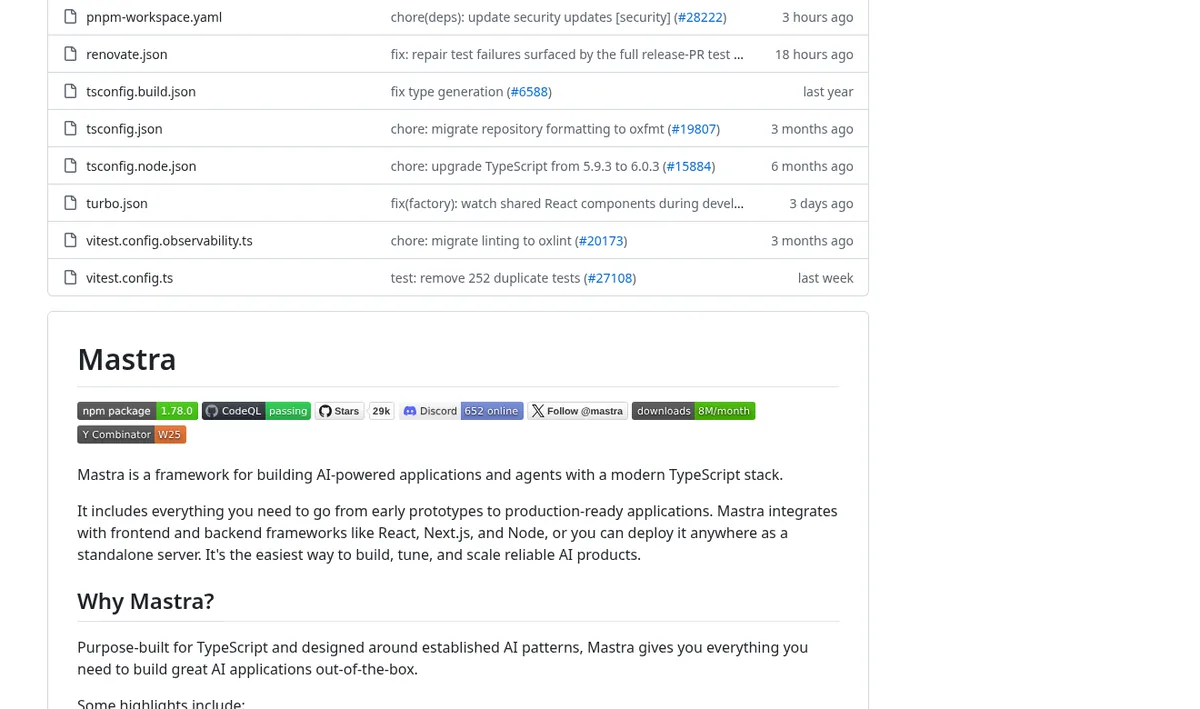
Mastra is the strongest choice if you are leaving LangGraph because your team writes TypeScript, with 8 million npm downloads last month and workflows that can suspend and resume. Its suspend and resume docs cover pausing at any step for human input or callbacks, with snapshots and time travel alongside.
The repository has 29,024 stars, and @mastra/core 1.79.0 shipped on October 21, 2026. The license is Apache 2.0 except for folders named ee, which use an enterprise license, so check which features you import.
The Mastra Platform starts free with 100,000 observability events and 24 CPU hours, and Teams costs $250 a month. Mastra asks for Node 22.13 or later, and npm audit found no vulnerabilities in our install.
- Best for: TypeScript and Next.js teams that want agents, workflows, and tracing in one stack.
- Pricing (October 2026): free framework under Apache 2.0 with enterprise folders excepted. Platform Starter is $0 and Teams is $250 a month.
- Watch out for: more than 1,100 npm versions in 12 months, the enterprise licensed folders, and the Node 22 requirement.
How LangGraph Concepts Map to Each Alternative
Most migrations stall on state and checkpoints, so map those first before rewriting any agent code. The table shows the closest equivalent for LangGraph’s graph, checkpointer, and human in the loop pause, based on each project’s documentation on October 23, 2026.
| Framework | Instead of StateGraph | Instead of a checkpointer | Human in the loop |
|---|---|---|---|
| CrewAI | Flows with start, listen, router | Flow state persistence | Human input on tasks |
| Microsoft Agent Framework | Workflow graph | Workflow checkpoints | Request and response steps |
| OpenAI Agents SDK | Handoffs between agents | Sessions, or Temporal and DBOS | Approval for tool calls |
| Google ADK | Graph workflows | Resumable runs and sessions | Approval steps |
| Pydantic AI | Graphs, or plain Python | Eight durable engines | Deferred tools |
| LlamaIndex Workflows | Event driven steps | Serialized workflow context | Wait for event |
| Agno | Workflows and teams | AgentOS checkpointing | AgentOS approvals |
| Strands Agents | Graph and swarm patterns | Session persistence | Pause for input |
| Mastra | Workflows with steps | Snapshots | Suspend and resume |
Maintenance and Security Compared
LangGraph and Strands lead on downloads, CrewAI and Mastra lead on release pace, and three frameworks ship pinned dependencies with known advisories. The table uses GitHub stars, release counts, and download totals from PyPI and npm, plus our dependency scans, all collected on October 23, 2026.
| Framework | GitHub stars | Releases, last 12 months | Downloads, last month | Known advisories |
|---|---|---|---|---|
| LangGraph | 43,754 | 47 | 44.8 million | 0 |
| CrewAI | 60,004 | 304 | 2.4 million | 6, in ChromaDB, MCP, and uv |
| Microsoft Agent Framework | 14,282 | 61 | 1.0 million | 0 |
| OpenAI Agents SDK | 30,239 | 87 | 12.4 million | 0 |
| Google ADK | 21,971 | 62 | 10.1 million | 1, in opentelemetry-api |
| Pydantic AI | 20,803 | 200 | 23.9 million | 0 |
| LlamaIndex (core) | 52,629 | 19 | 6.6 million | 0 |
| Agno | 42,870 | 142 | 1.8 million | 0 |
| Strands Agents | 8,927 | 56 | 37.1 million | 1, in MCP |
| Mastra | 29,024 | 1,139 npm versions | 8.0 million npm | 0 |
Turning Off Default Telemetry
These are the settings we used to stop outbound traffic in our test. Each comes from the vendor’s own documentation, and each one brought the proxy log to zero connections without changing the job’s output or its two model calls. Put them in your base image or deployment config.
# CrewAI 1.15.28: anonymous usage telemetry
export CREWAI_DISABLE_TELEMETRY=true
export OTEL_SDK_DISABLED=true          # also stops CrewAI's exporter

# Agno 3.1.9: agents, teams, and workflows
export AGNO_TELEMETRY=false
# AgentOS ignores the variable; set it on the instance:
#   AgentOS(..., telemetry=False)

# OpenAI Agents SDK 0.24.0: trace uploads to OpenAI
export OPENAI_AGENTS_DISABLE_TRACING=1

# Pydantic AI 2.60.0: hide the Logfire startup banner
export PYDANTIC_AI_NO_BANNER=1
If you want traces without sending them to a framework vendor, export OpenTelemetry spans to your own backend, using our AI agent observability guide or the open source LLM observability guide. Routing every framework through one of the LLM gateways we compared also gives you one place for keys and limits.
When to Keep LangGraph Instead
Switching frameworks is a rewrite of your agent code, tests, and deployment scripts, so first check whether the problem is the framework itself or the platform around it. These four cases usually point to staying on LangGraph and changing something smaller.
- You depend on checkpoints and time travel: no alternative copies LangGraph’s per step thread history exactly, and Pydantic AI or Microsoft Agent Framework need extra setup to match it.
- Your pain is LangSmith pricing: keep LangGraph and move tracing to another tool, as covered in our Langfuse vs LangSmith vs Braintrust comparison.
- You need tools across frameworks: expose them over the Model Context Protocol so any framework can call them, using ready made MCP servers and checks from our MCP security tools guide.
- You need hosting more than a new framework: compare runtimes in our test of Cloudflare vs Vercel vs AgentCore, and scan dependencies either way, as the LiteLLM supply chain compromise showed.
Which LangGraph Alternative Should You Choose?
The right alternative depends on your language, your cloud, and how long your agents run. Match your team to a profile below, then run your own job behind a logging proxy before you commit. Each profile names a first choice and the check to run next.
Python teams that want less boilerplate
- Start with Pydantic AI for typed agents, and add Temporal or DBOS when runs must survive restarts.
- Use OpenAI Agents SDK as the fallback if handoffs matter more than types.
- Score answers before launch with our AI agent evaluation tools guide.
Teams building multi agent crews quickly
- Pick CrewAI for role based agents and Flows, and set the telemetry switch in your base image.
- Budget for the 775 MB image and track the pinned ChromaDB and MCP advisories.
- Test tool misuse in a sandbox first, using our AI agent testing tools guide.
Enterprise teams on Azure, Google Cloud, or AWS
- Choose Microsoft Agent Framework on Azure, Google ADK on Google Cloud, and Strands Agents on AWS.
- Each one has a managed runtime from the same vendor, which simplifies identity and billing.
- Keep traces in one store you control, as covered on our agent observability hub.
TypeScript and full stack web teams
- Use Mastra for agents, workflows with suspend and resume, and built in tracing.
- Check which
eefolders you import before you ship a commercial product. - Keep one gateway and one trace store, as covered on our AgentOps hub.
Frequently Asked Questions
What is the best alternative to LangGraph?
For most Python teams, CrewAI is the most popular alternative and Pydantic AI is the best for typed agents with durable runs. Microsoft Agent Framework fits .NET and Azure teams, and Mastra is the best TypeScript option. In our test, all of them completed the same tool job with the same two model calls as LangGraph.
Is CrewAI better than LangGraph?
CrewAI is faster to start with for role based teams of agents, while LangGraph gives finer control over state and checkpoints. In our test, CrewAI installed at 775 MB against 77 MB for LangGraph and sent telemetry by default. Turn it off with CREWAI_DISABLE_TELEMETRY before running CrewAI in production.
Which LangGraph alternatives support checkpoints or durable execution?
Microsoft Agent Framework documents workflow checkpoints, Mastra has snapshots with suspend and resume, and Agno’s AgentOS lists checkpointing. Pydantic AI supports eight durable execution engines including Temporal, DBOS, and Prefect, and OpenAI Agents SDK integrates with Temporal, Restate, Dapr, and DBOS for long running agents.
Is there a TypeScript alternative to LangGraph?
Yes. Mastra is the leading TypeScript framework, with 8 million npm downloads last month, agents, workflows that suspend and resume, and a hosted platform with a free tier. OpenAI Agents SDK, Google ADK, Strands Agents, and LlamaIndex also offer TypeScript versions, and LangGraph itself has a JavaScript library.
Do LangGraph alternatives send telemetry by default?
Some do. In our test, CrewAI tried eight connections to its telemetry server per run, OpenAI Agents SDK tried three trace uploads, and Agno sent one telemetry call. LangGraph, Microsoft Agent Framework, Google ADK, Pydantic AI, LlamaIndex, Strands Agents, and Mastra made no outside connections with default settings.
Related Guides
Moving off CrewAI rather than LangGraph? Our CrewAI alternatives comparison covers which framework fits approval-heavy crews, strict network rules and single-cloud teams, plus how to migrate a crew.
If LangGraph alternatives on the TypeScript side are on your shortlist, our Mastra vs Vercel AI SDK vs LangGraph.js comparison tests which option fits lean Next.js apps versus durable, approval-heavy agents.
If Microsoft’s stack is on your shortlist alongside LangGraph alternatives, our Microsoft Agent Framework vs Semantic Kernel vs AutoGen comparison tests which of the three still gets fixes and how tool loops behave out of the box.
Looking past LangGraph into multi-agent orchestration? Our best multi-agent frameworks guide tested ten frameworks on the same pricing-and-writer job with call and traffic logs.
If self-hosting is the main reason you are leaving LangGraph, see our open source AI agent frameworks you can self-host, tested offline with memory, install size and telemetry for each.
Staying inside the LangChain family instead? Our LangChain vs LangGraph vs Deep Agents guide explains when to use the high-level agent API, raw LangGraph, or the Deep Agents harness.
For related coverage, see our LangGraph vs CrewAI vs AutoGen comparison and OpenAI Agents SDK vs Claude Agent SDK vs Google ADK comparison.
Read the agent frameworks hub, 12 best AI agent frameworks, AgentOps hub, agent observability coverage, AI agent observability tools, open source LLM observability, LangSmith alternatives, LangSmith pricing compared, Langfuse vs LangSmith vs Braintrust, AI agent evaluation tools, AI agent testing tools, LLM gateways, MCP explained, MCP servers, MCP security tools, and Cloudflare vs Vercel vs AgentCore. Notes on how we work sit on editorial standards, disclosure, and contact.
The Bottom Line
Choose CrewAI for quick multi agent crews, Pydantic AI for typed Python with durable runs, your cloud vendor framework for Azure, Google Cloud, or AWS, and Mastra for TypeScript. Keep LangGraph if its checkpoints are the reason your agents work, and change only the platform around it.
All of these frameworks release often, so rerun a logged test after each upgrade and check this page for updates. Send corrections or your own results through our contact page.