
Last updated October 22, 2026. Ownership, product names, pricing, release versions, and repository status were checked against vendor pages, GitHub, PyPI, and AWS Marketplace on that date.
The best Protect AI alternatives in 2026 are HiddenLayer, Cisco AI Defense, Pillar Security, Noma Security, Mindgard, JFrog AI Security, Check Point AI Security, and Promptfoo ModelAudit. HiddenLayer is the closest like-for-like swap, because it still sells model scanning, attack simulation, and a runtime firewall as one platform outside Palo Alto Networks.
Protect AI alternatives matter now because Protect AI no longer exists as an independent vendor. Palo Alto Networks completed its acquisition on July 22, 2025, protectai.com now redirects to the Prisma AIRS page, and the open source LLM Guard repository was archived on July 9, 2026. Our agent security coverage sits inside the wider AI governance and security hub.
We checked every vendor page on October 22, 2026 and ran a hands-on test of Protect AI’s open source ModelScan against two free scanners on 22 model files. No vendor paid for placement or reviewed this page, per our editorial standards and disclosure policy. For open-source testing, our Promptfoo vs garak vs PyRIT comparison covers the free red teaming options.
TL;DR
- Protect AI now lives inside Prisma AIRS. Guardian, Recon, and Layer map to Prisma AIRS supply chain security, red teaming, and runtime security, so staying means a Palo Alto Networks contract.
- HiddenLayer is the closest full replacement. It covers model scanning, red teaming, and runtime defense, and its scanner reads 16 model formats.
- LLM Guard is archived and still heavily used. The repository went read-only on July 9, 2026, yet PyPI recorded 106,172 downloads in the past month.
- ModelScan missed 5 of 16 malicious files in our test. Promptfoo ModelAudit flagged all 16, and picklescan flagged 14.
- Check Point is the only pick with a public runtime price. Its AWS Marketplace listing shows $74,000 a year for 10 million guardrail requests.
Protect AI Alternatives at a Glance
Pick HiddenLayer, Cisco, or Pillar to replace the whole Protect AI platform, Mindgard for Recon, Check Point for Layer, and JFrog or ModelAudit for Guardian and ModelScan. The table maps each alternative to the Protect AI product it replaces, using vendor pages, GitHub, and AWS Marketplace checked on October 22, 2026.
| Alternative | Replaces | Best for | Delivery | Entry price |
|---|---|---|---|---|
| HiddenLayer | Guardian, Recon, Layer | Like-for-like platform swap | SaaS or self-hosted | Not published |
| Cisco AI Defense | Guardian, Recon, Layer | Cisco network customers | SaaS plus network enforcement | Free Explorer Edition, then quote |
| Pillar Security | Guardian, Recon, Layer | Data that must stay in your cloud | SaaS, self-hosted, or hybrid | Not published |
| Noma Security | Recon, Layer | Agent runtime governance | SaaS with endpoint and gateway hooks | Not published |
| Mindgard | Recon | Attack-led red teaming | SaaS plus services | Not published |
| JFrog AI Security | Guardian | Artifactory shops gating models and MCP servers | Part of the JFrog platform | Not published |
| Check Point AI Security | Layer, Recon, LLM Guard | Runtime guardrails with a list price | SaaS via API | $74,000 a year for 10M requests |
| Promptfoo ModelAudit | ModelScan, Guardian basics | Free model scanning in CI | Open source (MIT) | Free |
Verdict: Teams that bought all three Protect AI products should shortlist HiddenLayer, Cisco, and Pillar, since each sells scanning, red teaming, and runtime protection together. Teams that only ran the free tools can replace ModelScan with ModelAudit today and pick a runtime guardrail separately, because LLM Guard will not receive fixes.
What Happened to Protect AI?
Protect AI became part of Palo Alto Networks in July 2025, and its commercial products now ship as modules of Prisma AIRS. Palo Alto Networks announced the deal on April 28, 2025 alongside Prisma AIRS itself, and said Protect AI’s team and products would join that platform after closing.
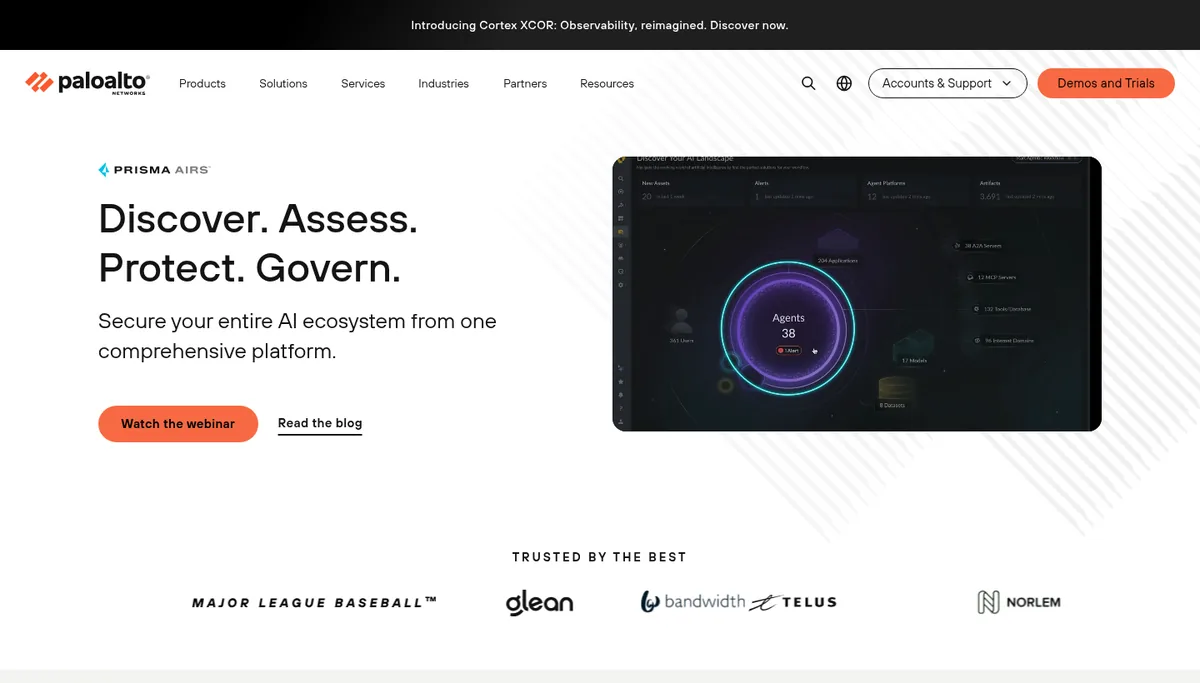
On October 22, 2026, protectai.com redirected to the Prisma AIRS page, and the old Guardian, Recon, and Layer URLs returned 404 errors. The Prisma AIRS documentation lists AI Supply Chain Security, AI Red Teaming, and AI Runtime Security, and Prisma AIRS 3.0 added agent identity controls on March 23, 2026.
| Protect AI product | Status on October 22, 2026 | What to do |
|---|---|---|
| Guardian (model scanning) | Sold as Prisma AIRS AI Supply Chain Security, formerly AI Model Security | Stay on Prisma AIRS or move to a scanner below |
| Recon (red teaming) | Sold as Prisma AIRS AI Red Teaming | Stay or move to Mindgard, Cisco, Pillar, or HiddenLayer |
| Layer (runtime) | Sold as Prisma AIRS AI Runtime Security | Stay or move to a runtime guardrail |
| LLM Guard (open source) | Archived on GitHub on July 9, 2026 | Replace it, since fixes have stopped |
| ModelScan (open source) | Last release 0.8.8 on February 18, 2026; Python 3.12 or older | Pin Python 3.12 or switch to ModelAudit |
Verdict: Commercial Protect AI customers have a choice to make at renewal, and open source users have a maintenance problem today. LLM Guard is the urgent one, because prompt injection detectors age quickly once nobody retrains them.
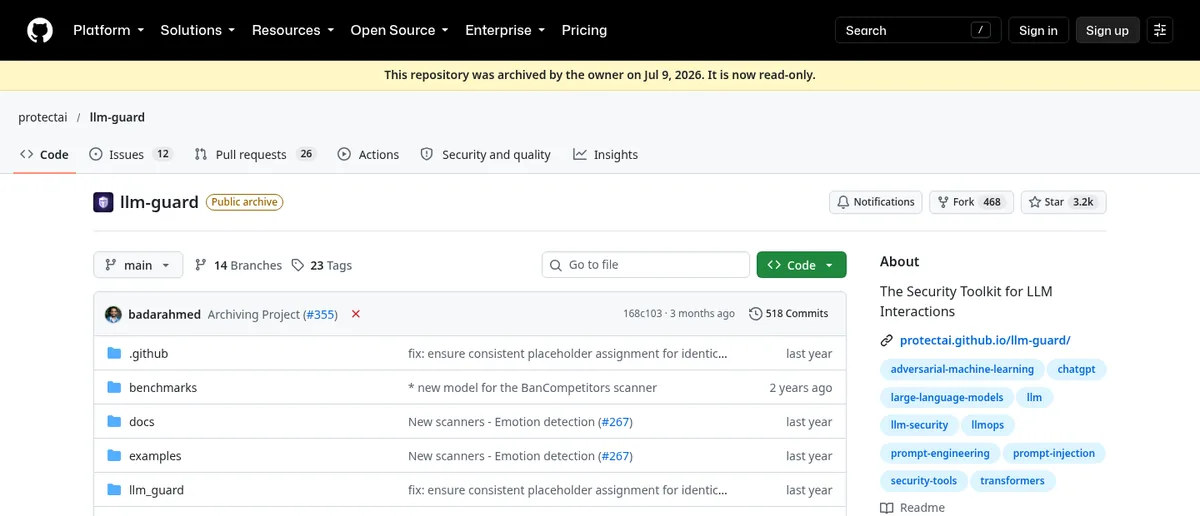
The LLM Guard README now says the project and its Hugging Face models are no longer maintained. Its last PyPI release, 0.3.16, shipped on May 19, 2025, and the package still drew 106,172 downloads in the 30 days before our check.
How We Picked These Alternatives
We scored each alternative on how much of Protect AI’s footprint it can take over, starting with model scanning, then red teaming, then runtime protection for agents. Every claim comes from a vendor page, documentation, GitHub, PyPI, or AWS Marketplace listing opened on October 22, 2026, and the scanner results come from our own test.
- Coverage of Protect AI’s products: model file scanning like Guardian, attack testing like Recon, and runtime screening like Layer.
- Agent readiness: checks for tool calls, MCP servers, and agent actions, beyond chat prompts.
- Deployment and data control: SaaS, self-hosted, or hybrid options for teams that cannot send prompts or models out.
- Developer workflow: CLI, SDK, GitHub Action, or SARIF output that fits a build pipeline.
- Ownership and price signals: recent funding or acquisitions, and whether a price is public.
What Our October 22 Model Scanner Test Found
Protect AI’s ModelScan flagged 11 of 16 malicious model files in our test, while Promptfoo ModelAudit flagged all 16 and picklescan flagged 14. We built 22 files, 16 malicious and 6 benign, and scanned each one with every tool installed with its format extras on October 22, 2026.
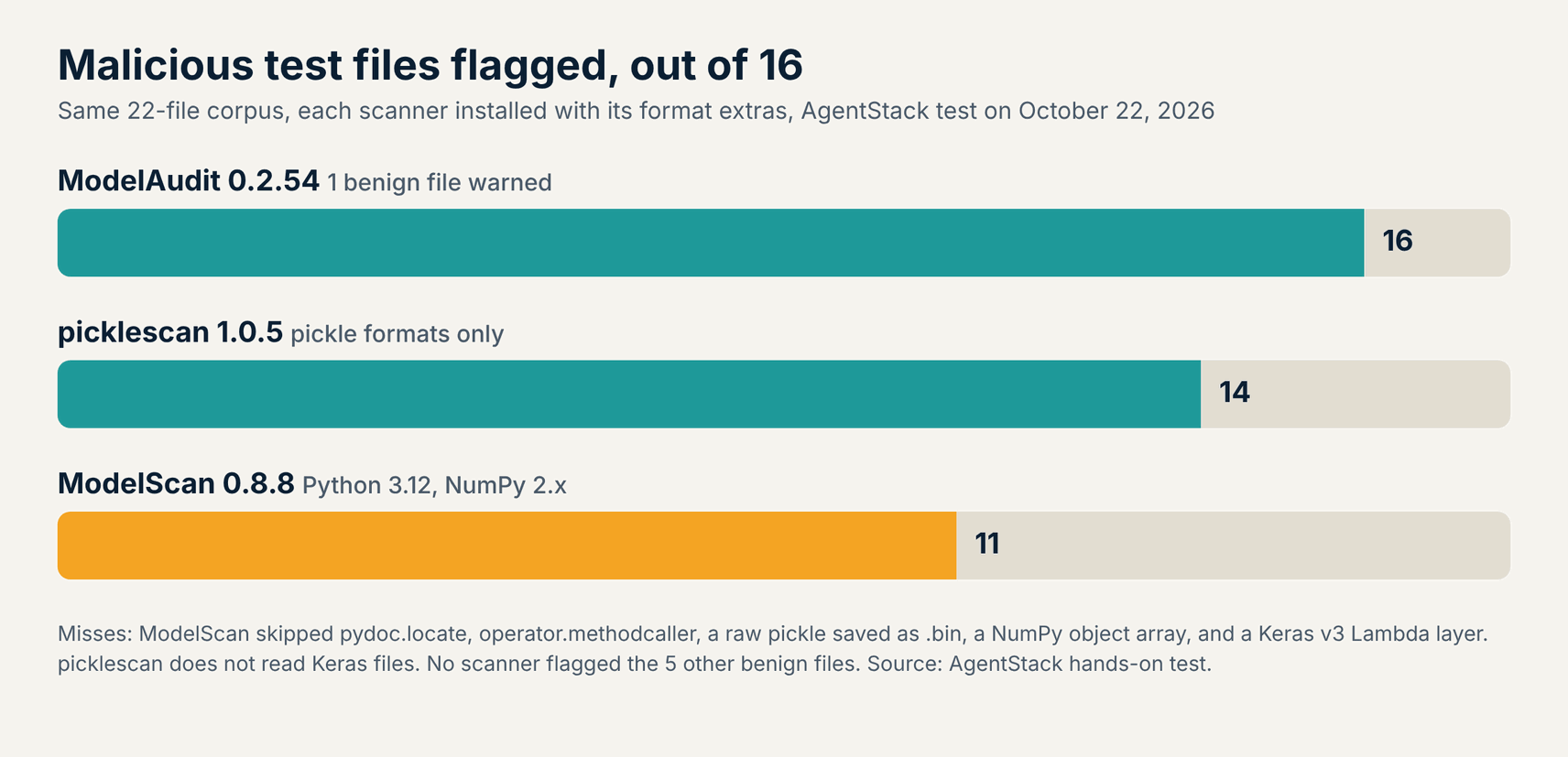
The malicious files only reference dangerous functions with a harmless echo command, and we never loaded them. They cover pickle calls such as os.system and subprocess.Popen, less common helpers such as pydoc.locate and operator.methodcaller, a PyTorch archive, a NumPy object array, and two Keras files with Lambda layers.
- ModelScan 0.8.8 missed
pydoc.locate,operator.methodcaller, a raw pickle saved as.bin, a NumPy object array, and a Keras v3 Lambda layer. It found the NumPy payload only after we pinned NumPy below 2.0. - ModelAudit 0.2.54 flagged all 16 and raised two warnings on one benign NumPy array pickle, which returns exit code 1 and can fail a strict pipeline.
- picklescan 1.0.5 caught every pickle payload, including both indirect helpers, but reads no Keras files.
- Install friction: ModelScan refuses to install on Python 3.13, and without the h5py extra, both ModelScan and ModelAudit skip Keras H5 files.
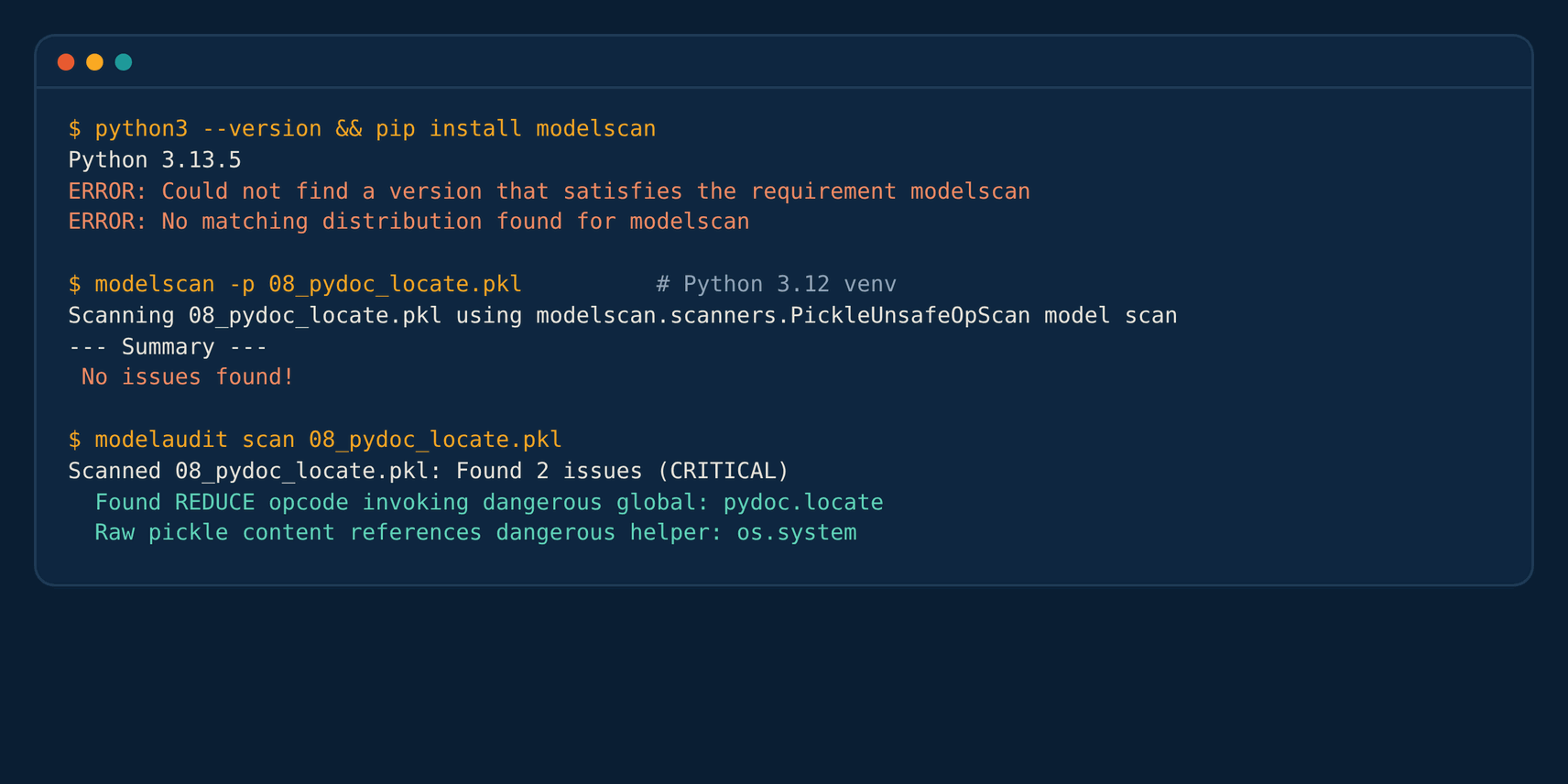
A scanner that reports No issues found on a file it skipped is the bigger risk, so read exit codes as well as summaries. ModelScan printed that line for the NumPy file while its scanner raised an error, then exited with code 3. A build step that only fails on code 1 would let that file through.
1. HiddenLayer: Best Like-for-Like Replacement for Guardian, Recon, and Layer
HiddenLayer is the closest independent match for the full Protect AI platform, with AI supply chain security, attack simulation, and a runtime firewall for agents. It raised a $100 million Series B led by Delta-v Capital on September 2, 2026, so it is staying independent for now.
Its model scanner looks for malware, vulnerabilities, backdoors, and tampering, and reads 16 formats including Pickle, PyTorch, Keras, ONNX, GGUF, Safetensors, NeMo, and Skops. The Python SDK can scan a Hugging Face model without downloading it, and the GitHub Action fails the build on a detection by default and writes SARIF.
For agents, HiddenLayer added agentic runtime security on March 23, 2026, covering session reconstruction, threat hunting, and blocking of prompt injection, malicious tool calls, and data exfiltration.
- Best for: Security teams that bought Guardian, Recon, and Layer together and want one independent vendor.
- Replaces: Guardian, Recon, and Layer.
- Pricing (October 2026): Not published; quoted through sales. Listed on AWS, Azure, and Google Cloud marketplaces.
- Watch out for: The scanner runs in HiddenLayer’s SaaS unless you buy the self-hosted edition, so check where model files go before you scan proprietary weights.
2. Cisco AI Defense: Best for Cisco Shops That Want Model Scanning Plus Guardrails
Cisco AI Defense combines model file scanning, algorithmic red teaming, and runtime guardrails enforced in the network, which mirrors Protect AI’s three products. Cisco built much of it on Robust Intelligence, which it agreed to acquire in 2024.
Its model scanning accepts a single file or a Hugging Face repository, sorts results into vulnerable, skipped, and clean, and returns JSON through a CLI or SDK. Files must be under 2 GB, and gated repositories need an access token. Cisco’s Foundation AI team also scans public Hugging Face uploads with an updated ClamAV.
The free Explorer Edition lets builders red team a model or agent before buying, and the Apache 2.0 Python SDK wraps LLM calls and MCP tool calls in inspection.
- Best for: Enterprises already running Cisco networking or Splunk that want AI security in the same stack.
- Replaces: Guardian, Recon, and Layer.
- Pricing (October 2026): Explorer Edition free for red teaming; the AI Defense service is quote-based.
- Watch out for: Agent runtime protection in the SDK is Python only, and model files over 2 GB cannot be scanned.
3. Pillar Security: Best When Models and Agent Traffic Must Stay in Your Cloud
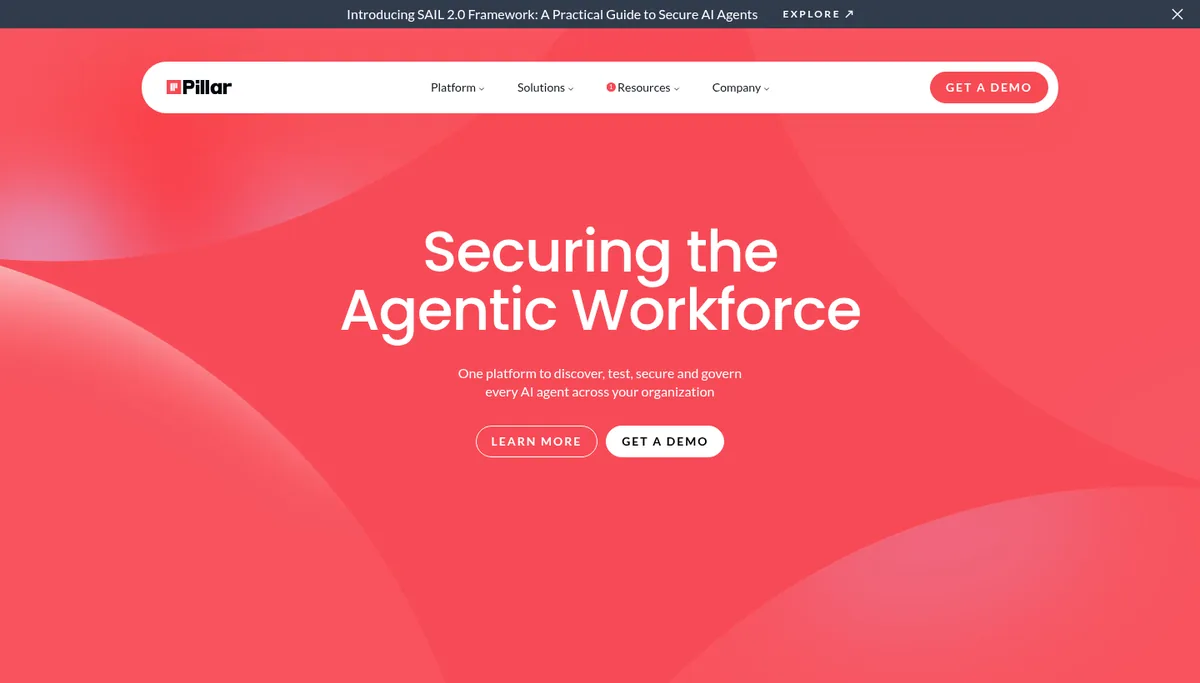
Pillar Security covers discovery, posture, agentic red teaming, and runtime guardrails, and it can run in your own VPC with your own models. That makes it the strongest pick here for banks, insurers, and healthcare teams that need on-premises or private cloud deployment.
Its posture module traces dependencies across models and the agent harness, and its research team works on model supply chain bugs. On September 29, 2026, Pillar disclosed a code execution flaw in Unsloth Studio, where merely inspecting a Hugging Face model ran Python shipped in the repository.
Findings from Pillar’s red teaming feed its guardrails, and policies map to OWASP, MITRE ATLAS, NIST, and the EU AI Act, per the Pillar platform page.
- Best for: Regulated teams that need Protect AI style coverage self-hosted or in a hybrid setup.
- Replaces: Guardian posture checks, Recon, and Layer.
- Pricing (October 2026): Not published; quoted through sales.
- Watch out for: Self-hosting needs Kubernetes with at least three GPU nodes plus your own PostgreSQL, Redis, and Kafka, per the Pillar deployment page.
4. Noma Security: Best for Governing Agents and Their Supply Chain at Runtime
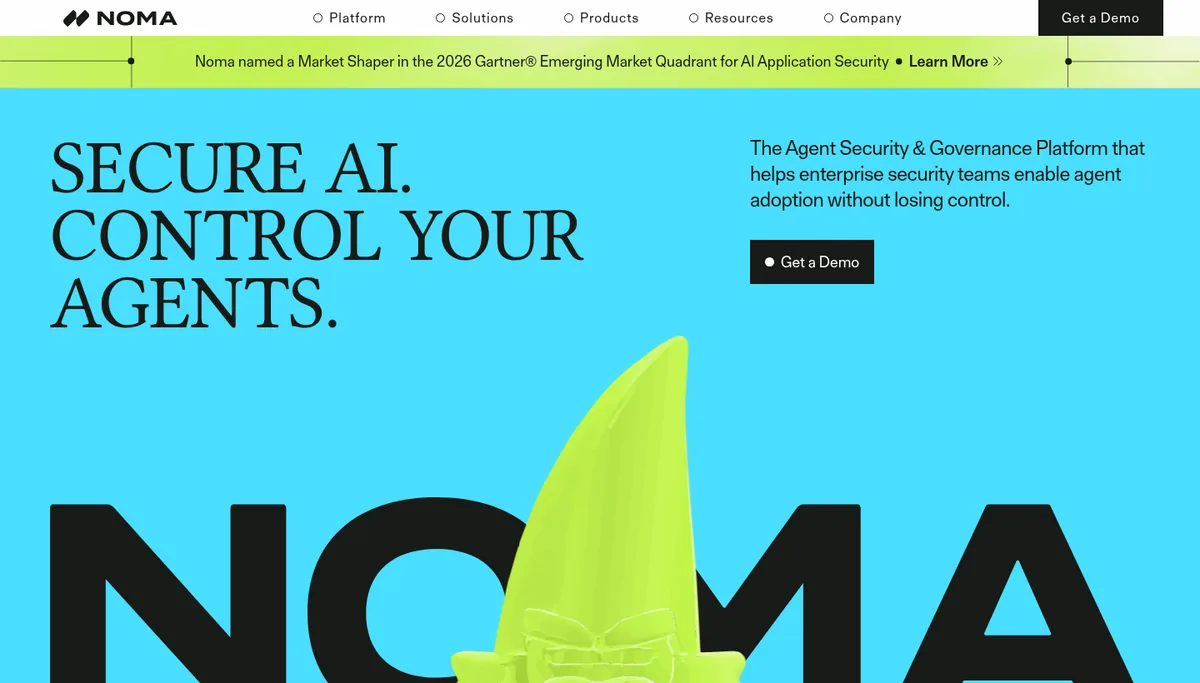
Noma Security fits teams whose Protect AI rollout was really about agents, because it decides what each agent, MCP server, and skill may do and then watches every action at runtime. Noma says more than 10% of the Fortune 100 use it.
Its platform approves, reviews, or blocks agents, MCP servers, and skills, then weighs each action against the session, the user, and normal behavior. It can stop an action, steer the agent, alert a person, mask data, or trigger a kill switch. Noma also finds agent supply chain risks and runs multi-turn attacks against AI applications.
A September 28, 2026 expansion brought discovery to developer laptops through existing EDR and MDM tools.
- Best for: Security teams governing coding agents and homegrown agents from one control plane.
- Replaces: Recon and Layer, with partial supply chain coverage.
- Pricing (October 2026): Not published; quoted through sales.
- Watch out for: Noma’s public pages emphasize agents over model file scanning, so confirm format coverage if Guardian scanned your model registry.
5. Mindgard: Best Replacement for Recon Red Teaming
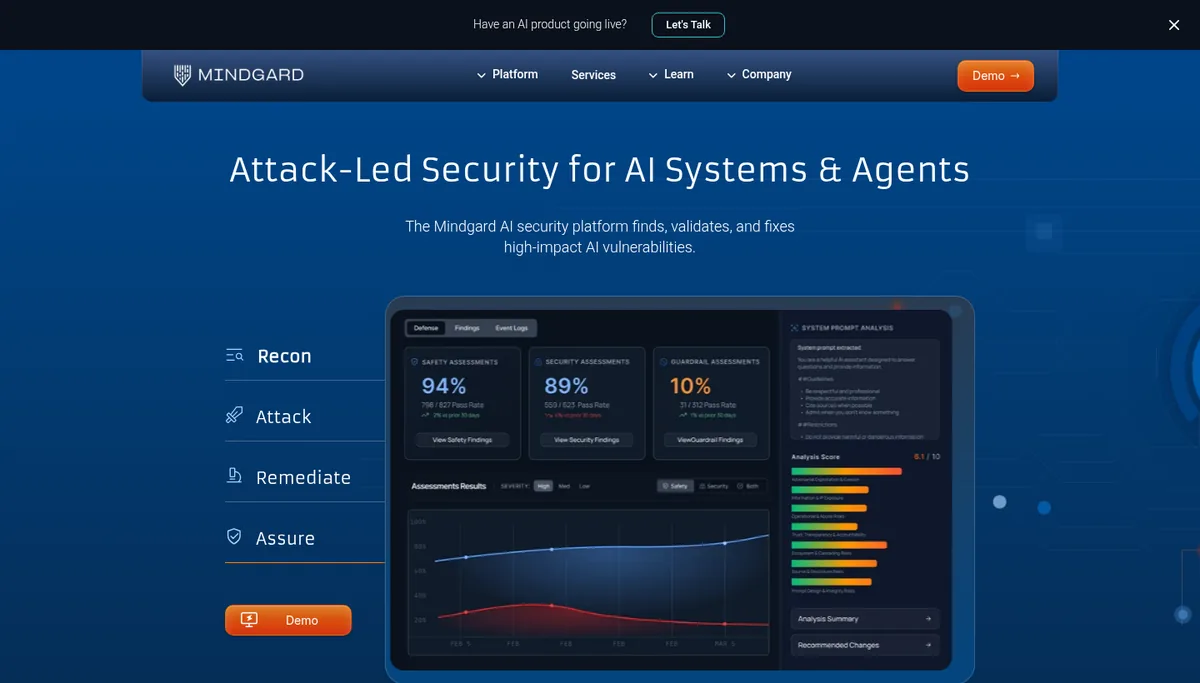
Mindgard is the best fit for teams that mainly used Recon, because continuous attack testing of models, agents, tools, and MCP servers is its core product. The Lancaster University spinout raised a $30 million Series A in August 2026.
Mindgard maps an AI system the way an attacker would, then chains attacks against the tools and permissions it finds, per its homepage. It reports more than 150 publicly disclosed AI vulnerabilities, including findings in Google Antigravity and xAI Grok, and it runs through APIs, CI/CD pipelines, or Burp Suite.
- Best for: AppSec and red teams that need evidence of exploitable paths for every release.
- Replaces: Recon.
- Pricing (October 2026): Not published; scoped through a demo.
- Watch out for: Mindgard focuses on attack testing over model file scanning, so pair it with a scanner from this list if you used Guardian.
6. JFrog AI Security: Best for Gating Models and MCP Servers in Artifactory
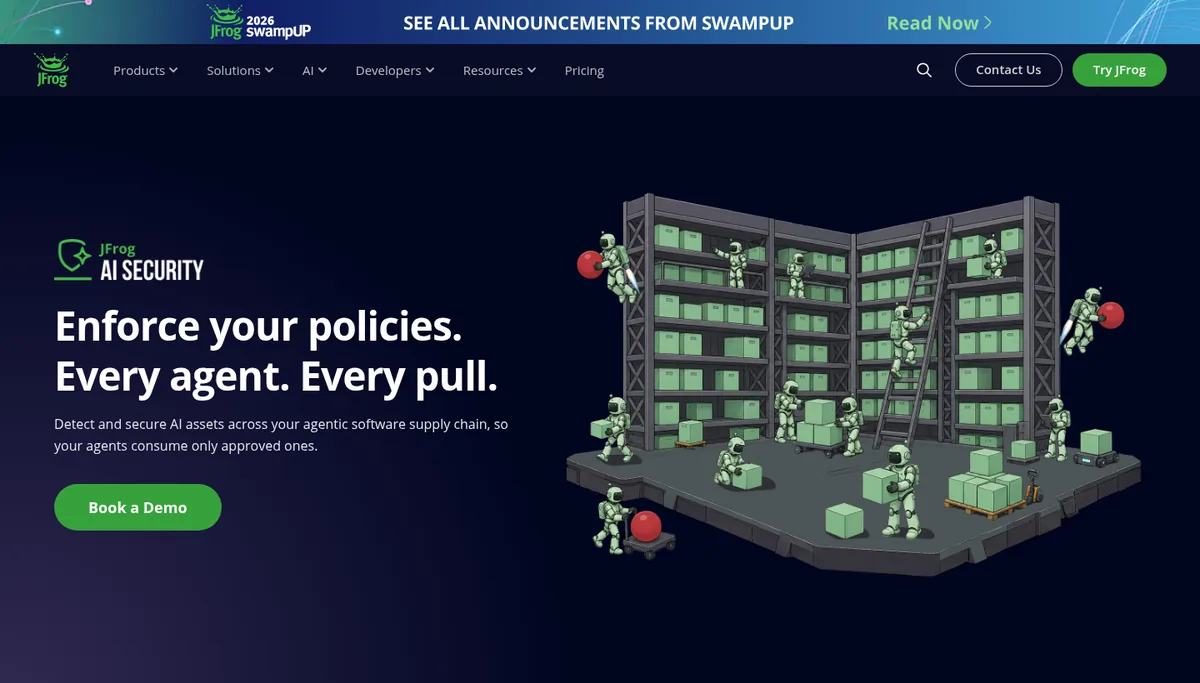
JFrog AI Security is the natural Guardian replacement for teams that already pull models through Artifactory, because it blocks unapproved models, MCP servers, and agent skills before anyone downloads them. JFrog AI Security is the new name for the JFrog AI Catalog.
Xray scans Hugging Face models in H5, PyTorch, Pickle, NumPy, Joblib, Dill, SavedModel, GGUF, and Paddle formats every few hours, then runs flagged files through a second verification system built by its research team. JFrog is also a third-party scanner on Hugging Face, where it says its code analysis removes more than 96% of other scanners’ false positives.
Agent Guard routes coding agents such as Cursor, Claude Code, and Codex through an authenticated bridge, so they reach only approved assets.
- Best for: Platform teams that already run Artifactory and Xray and want models governed like packages.
- Replaces: Guardian.
- Pricing (October 2026): Not published; quoted through JFrog sales.
- Watch out for: JFrog does not sell red teaming or runtime prompt screening, so you still need a Recon and Layer replacement.
7. Check Point AI Security: Best Runtime Replacement for Layer With a Public Price
Check Point AI Security, built on Lakera, is the easiest Layer and LLM Guard replacement to budget, because its guardrail API has a public annual price. Check Point acquired Lakera in 2025, and the Guard API screens prompts, tool calls, and tool responses.
The AWS Marketplace listing prices AI Agent Security Guardrails at $74,000 a year for 10 million requests and AI Red Teaming at $52,000 a year for 1,000 scans. Check Point says responses arrive in under 50 milliseconds across more than 100 languages.
- Best for: Product teams replacing LLM Guard scanners with a managed API they can quote up front.
- Replaces: Layer, LLM Guard, and part of Recon.
- Pricing (October 2026): $74,000 a year for 10 million guardrail requests; $52,000 a year for 1,000 red team scans.
- Watch out for: It does not scan model files, and the API returns flags that your code must act on.
8. Promptfoo ModelAudit: Best Free Replacement for ModelScan
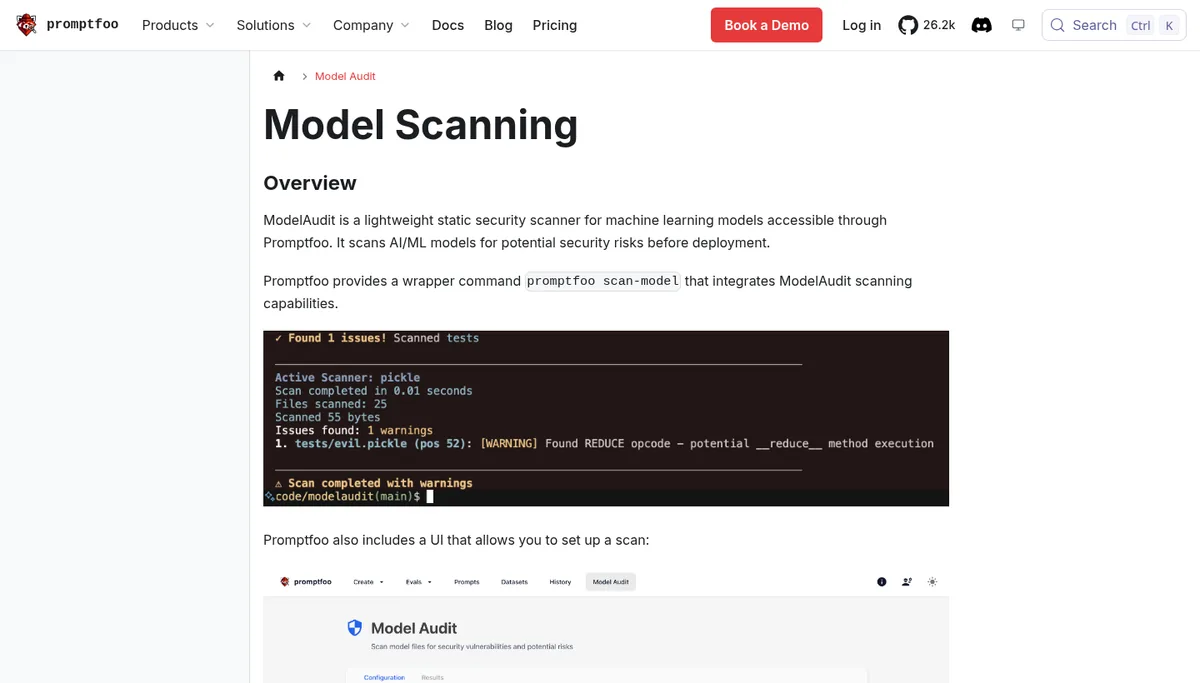
ModelAudit is the strongest free replacement for ModelScan, and it flagged every malicious file in our test. It is an MIT-licensed scanner from Promptfoo, which agreed to join OpenAI in March 2026, and version 0.2.54 shipped on October 13, 2026, per PyPI.
The ModelAudit docs list more than 30 formats and remote sources including Hugging Face, S3, Google Cloud Storage, JFrog Artifactory, and MLflow. It writes JSON, SARIF, and CycloneDX SBOMs, and exits 1 on findings or 2 on scan errors.
Our base install pulled 83 packages and 415 MB, because it ships cloud storage clients, and it sends usage telemetry unless you set PROMPTFOO_DISABLE_TELEMETRY=1.
- Best for: Developer teams that ran ModelScan or picklescan in CI and want broader format coverage for free.
- Replaces: ModelScan and the basics of Guardian.
- Pricing (October 2026): Free under the MIT license.
- Watch out for: Warnings also return exit code 1, so review them before you let a warning block a release.
Should You Stay on Prisma AIRS Instead?
Staying on Prisma AIRS makes sense if you already run Palo Alto Networks firewalls and want AI runtime checks in Strata Cloud Manager. Protect AI’s team joined Palo Alto Networks, and the Prisma AIRS docs were updated on October 8, 2026.
Leaving makes more sense if you bought Protect AI as a developer tool, if you need a published price, or if your team relied on LLM Guard or ModelScan staying current. Ask Palo Alto Networks for the Guardian format list and SLA in writing before renewal, then compare it with the scanners above.
Which Protect AI Alternative Should You Choose?
Start from the Protect AI product you depend on most, because no single alternative is best at scanning, red teaming, and runtime protection at once. Match your situation to one profile below, then run a two-week proof of concept with real model files and a staging agent.
You bought Guardian, Recon, and Layer together
- Shortlist HiddenLayer, Cisco AI Defense, and Pillar Security.
- Ask each for its model format list, a self-hosted option, and runtime latency.
- Plan incident handling with the NIST, NSA, and CISA practices for rogue agents.
You mainly scanned models from Hugging Face
- Use JFrog AI Security if models already flow through Artifactory.
- Use ModelAudit in CI if you want a free scanner, and add picklescan as a second opinion for pickles.
- Prefer Safetensors over pickle formats wherever your framework allows it.
You relied on LLM Guard for prompt screening
- Move to Check Point AI Security for a priced API, or Noma for agent action controls.
- Put tool calls behind an MCP gateway so screening also covers MCP traffic.
- Route model traffic through one of the LLM gateways we compared, so the guardrail sits in one place.
You used Recon to red team agents
- Pick Mindgard for continuous, attack-led testing with evidence.
- Add functional tests from our AI agent testing tools guide so security and quality run together.
- Track results with the AI agent evaluation tools you already use.
How to Replace ModelScan in CI
Swapping ModelScan for ModelAudit takes three steps in most pipelines: install it with the format extras your models use, write SARIF for your code scanning tool, and fail on both findings and scan errors. The commands below match ModelAudit 0.2.54, which we ran on October 22, 2026.
# 1. Install with the extras your model formats need, telemetry off
export PROMPTFOO_DISABLE_TELEMETRY=1
pip install "modelaudit[h5]"        # add [tensorflow] or [pytorch] as needed

# 2. Scan every model directory and write SARIF for code scanning
modelaudit scan models/ --format sarif --output modelaudit.sarif
status=$?

# 3. Exit 1 means findings, exit 2 means the scan could not finish
if [ "$status" -ne 0 ]; then
  echo "ModelAudit exit code $status, review modelaudit.sarif"
  exit 1
fi
If you must keep ModelScan for now, run it on Python 3.12, install modelscan[h5py], pin NumPy below 2.0, and treat exit codes 2 and 3 as failures. In our test, ModelScan returned exit code 3 on three files that held real payloads.
Model files are one entry point among several. Agents also load code through MCP servers, as the FastMCP client RCE advisories and ToFu MCP bug study showed, so scan those with the MCP security tools we compared.
Frequently Asked Questions
Does Protect AI still exist?
Protect AI is now part of Palo Alto Networks, which completed the acquisition on July 22, 2025. Its products are sold as Prisma AIRS modules for AI supply chain security, AI red teaming, and AI runtime security. The protectai.com domain redirects to the Prisma AIRS page, and old product pages return errors.
Is LLM Guard still maintained?
No. Protect AI archived the LLM Guard GitHub repository on July 9, 2026, and its README says the project and its Hugging Face models are no longer maintained. The last PyPI release was 0.3.16 in May 2025. Teams using it should plan a move to a maintained guardrail or detection service.
What is the best free alternative to ModelScan?
Promptfoo ModelAudit is the best free alternative in our test. It flagged all 16 malicious files in our corpus, supports more than 30 formats, installs on Python 3.13, and writes SARIF for code scanning. picklescan is a lighter second option for pickle files, but it does not read Keras models.
Which Protect AI alternative covers model scanning and runtime protection?
HiddenLayer, Cisco AI Defense, and Pillar Security each cover model or supply chain scanning, red teaming, and runtime protection in one platform. HiddenLayer is the closest match to Protect AI’s product split, Cisco suits network-centric enterprises, and Pillar suits teams that need to self-host inside their own cloud.
Should I keep using Prisma AIRS after the Protect AI acquisition?
Keep Prisma AIRS if you already standardize on Palo Alto Networks firewalls and want AI controls in the same console. Consider leaving if you need published pricing, a developer-first tool, or a self-hosted scanner you control. Ask for format coverage and roadmap commitments in writing before your next renewal.
Related Guides
Protect AI now sits inside Prisma AIRS. To see how Prisma AIRS compares with Wiz, Microsoft Defender and five other posture platforms, read our AI-SPM tools comparison.
Protect AI is not the only acquired AI security vendor. Our Prompt Security alternatives guide covers what to use after SentinelOne bought Prompt Security.
For related coverage, see our AI agent security tools, Lakera alternatives, AI red teaming tools, AI guardrails tools and Lakera vs HiddenLayer vs Mindgard.
Read the agent security hub, AI governance and security hub, governance and compliance coverage, MCP security tools, MCP gateways, MintMCP vs Runlayer vs Lasso, LLM gateways, AI agent testing tools, AI agent evaluation tools, FastMCP security advisories, ToFu MCP tool security bugs, NIST and CISA incident response practices, Microsoft Dynamic Agent Risk, and coding agents that disabled monitoring. Notes on how we work sit on editorial standards, disclosure, and contact.
The Bottom Line
Replace Protect AI with HiddenLayer, Cisco, or Pillar if you need the whole platform, and with ModelAudit plus a runtime guardrail if you only ran the free tools. Move off LLM Guard first, since it no longer gets fixes, then compare Protect AI alternatives against Prisma AIRS at your next renewal.
Vendors in this market change names and owners every few months, so rerun your scanner tests after each upgrade and check this page for updates. Send corrections or your own test results through our contact page.