

Last updated October 21, 2026. Pricing, metering rules, app counts, and MCP endpoint behavior were checked against each vendor’s public pages on that date.
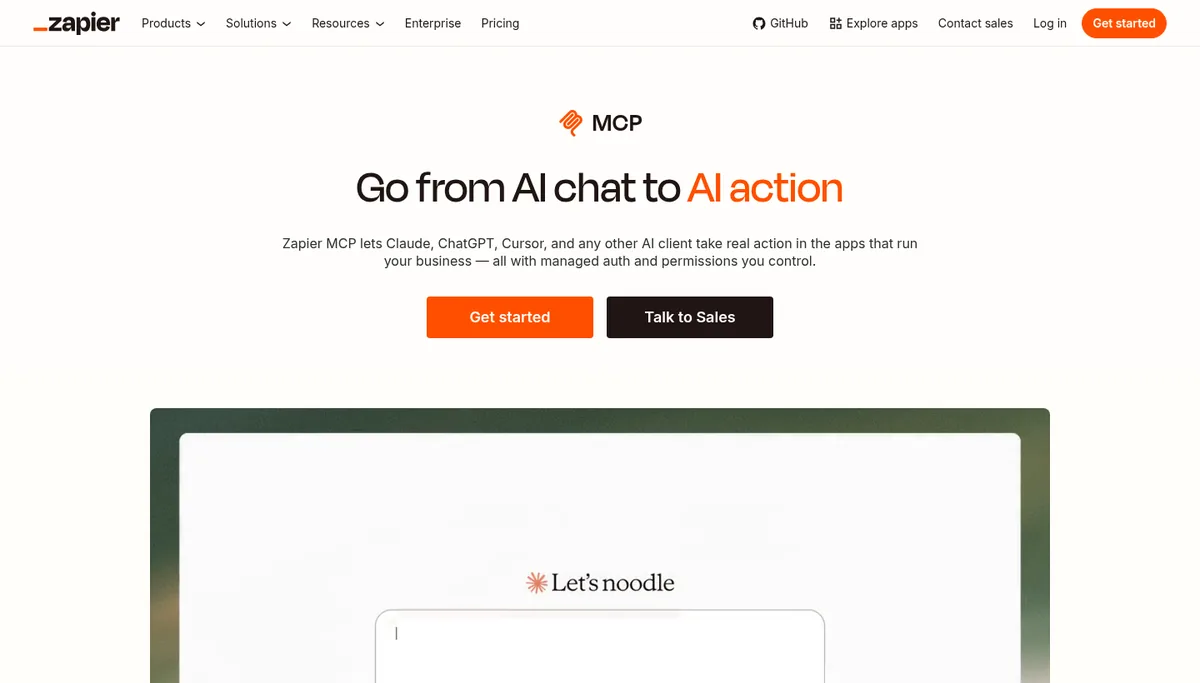
The best Zapier MCP alternatives in 2026 are Make, n8n, Composio, Pipedream, Activepieces, Workato, Arcade, and Gumloop, and the right one depends on whether your agents need breadth, self-hosting, or governance. Zapier MCP still has the widest catalog, but each successful tool call uses 2 tasks from the same pool your Zaps draw on.
That metering is the main reason teams search for Zapier MCP alternatives. An assistant that sends 1,000 messages or creates 1,000 records a month consumes 2,000 tasks, while the Zapier free plan includes 100. Others leave because Zapier MCP is closed source and hosted only, or because they already run Make, n8n, or Workato scenarios that agents could call directly.
This guide sits in our MCP coverage within agent protocols, next to our workflow automation coverage. We compared pricing, metering, catalogs, and live MCP endpoints on October 21, 2026. No vendor paid for placement or reviewed this page, per our editorial standards and disclosure policy.
TL;DR
- Composio and Arcade have the most generous free tiers. Composio includes 100,000 tool calls a month on its free Hobby plan, and Arcade includes 2,000 tool calls plus 2,000 auth events. If your agents mostly update CRM records, a vendor server may replace Zapier for that job, as our CRM MCP servers guide shows.
- Make and n8n fit teams that already automate there. Make turns active, on-demand scenarios into tools, and n8n exposes chosen workflows through one instance-level MCP server, including on self-hosted installs.
- Activepieces is the open source pick with a hosted option. Its MCP server is free on every plan, and only the run action tool costs 1 credit per call.
- Workato and Arcade lead on governance. Workato runs actions under the signed-in user’s identity, and Arcade can deploy in your VPC or fully air-gapped.
- Our endpoint check found one shared gap. All six hosted endpoints we probed supported dynamic client registration and PKCE, and none advertised client ID metadata documents yet.
Zapier MCP Alternatives at a Glance
Pick Composio or Arcade for cheap high-volume tool calls, Make or n8n to reuse workflows you already built, Activepieces to self-host, and Workato for governed enterprise actions. The table compares all eight on the facts buyers check first, from vendor pages and docs reviewed on October 21, 2026.
| Tool | Best for | Catalog | Self-host | Entry paid price |
|---|---|---|---|---|
| Make | Scenarios as agent tools | 3,500+ apps | No | Paid plans by credit volume |
| n8n | Self-hosted workflows | Workflows you expose | Yes | $20 a month (Starter, yearly) |
| Composio | High-volume tool calls | 1,500+ apps | Enterprise | $29 a month (Pro) |
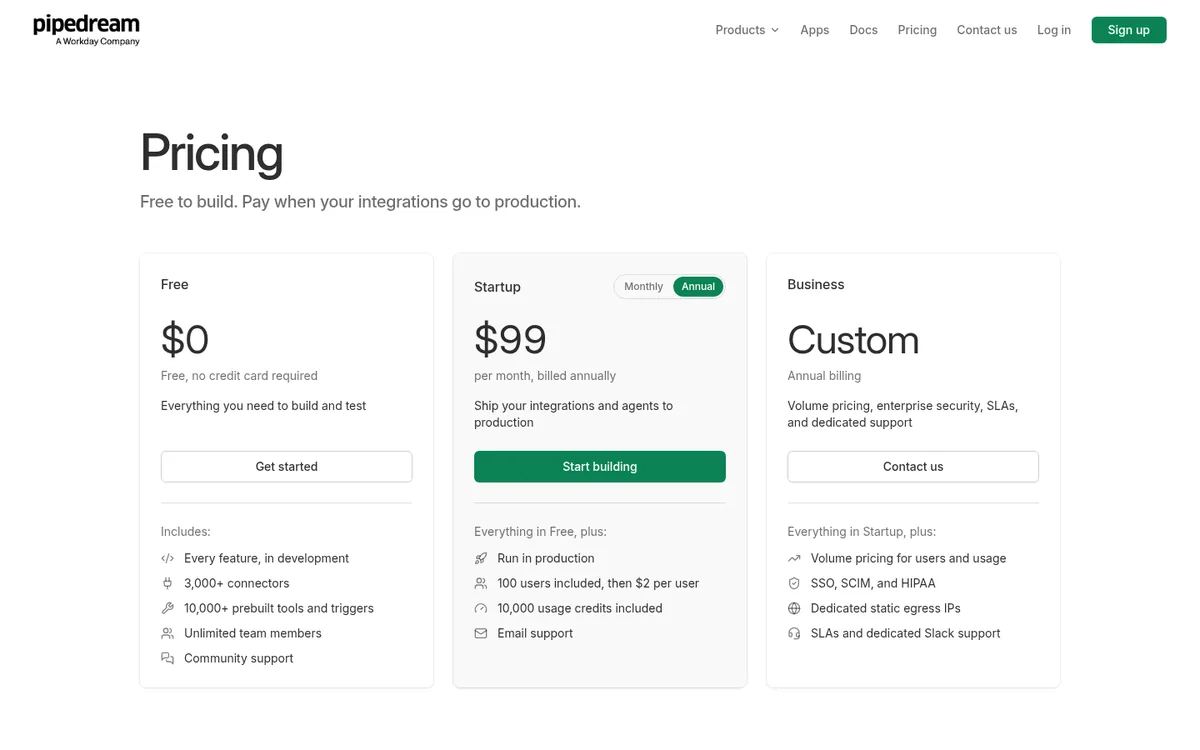
| Pipedream | Per-app MCP servers | 3,000+ APIs | No | $99 a month (Startup, yearly) |
| Activepieces | Open source automation | 768 apps | Yes | $20 a month (Plus) |
| Workato | Governed enterprise actions | 88 prebuilt servers | No | Not published |
| Arcade | Per-user agent auth | 8,000+ tools | Enterprise | $25 a month plus usage |
| Gumloop | Agents plus tool auth | Connected apps | No | $37 a month (Pro) |
Verdict: No single alternative matches Zapier’s 9,000+ apps, so choose by job. Composio and Arcade are cheapest per call, Make and n8n reuse existing automation, Activepieces and n8n can run on your own servers, and Workato fits companies that need every agent action tied to a named employee.
Why Teams Look Past Zapier MCP
Teams look past Zapier MCP mostly because of the task bill: every successful tool call costs 2 tasks, and those tasks come from the same allowance as Zap workflows. Failed calls are free and tool discovery costs nothing, per Zapier’s usage and billing docs, but batch requests add up fast.
Zapier’s own example shows the math: searching and updating 10 records counts as 11 tool calls, or 22 tasks. The Professional plan starts at $19.99 a month billed yearly on its pricing page, and sharing a server with teammates needs a Team or Enterprise plan, per its help center.
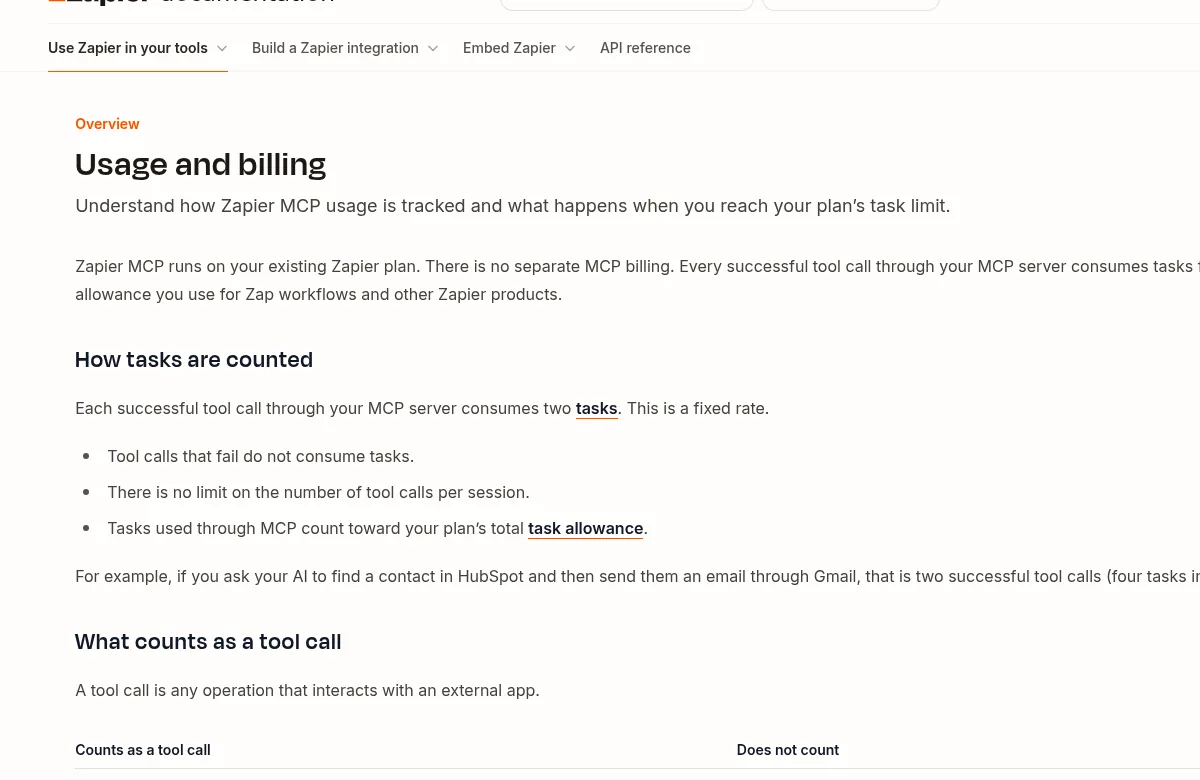
- Cost at volume: agents that loop over rows or records multiply tool calls, and each one uses 2 tasks.
- Hosting: Zapier MCP is closed source and hosted only, so it cannot run inside your network.
- Existing workflows: teams on Make, n8n, or Workato can expose the automation they already maintain.
- Developer control: product teams building agents for their own users often need per-user OAuth and an SDK.
How We Ranked These Zapier MCP Alternatives
We ranked each tool on four things a Zapier MCP user gives up or gains by switching: cost per agent action, catalog reach, hosting options, and access controls. We read each vendor’s pricing page, MCP docs, and metering rules on October 21, 2026, and probed every hosted MCP endpoint we could reach without an account.
- Cost per action: what 1,000 successful single-action tool calls consume on the vendor’s meter.
- Reach: how many apps or tools an agent can call without custom code.
- Hosting: whether you can self-host the MCP server or the engine behind it.
- Controls: OAuth support, scoping of tools per client or project, and audit logs.
What Our October 21 Endpoint Check Found
Every hosted MCP endpoint we probed rejected an unsigned request with HTTP 401 and supported dynamic client registration with PKCE, so any modern MCP client can sign in without a manual setup step. We sent one unauthenticated MCP initialize request to six shared endpoints on October 21, 2026 and followed each OAuth discovery path.
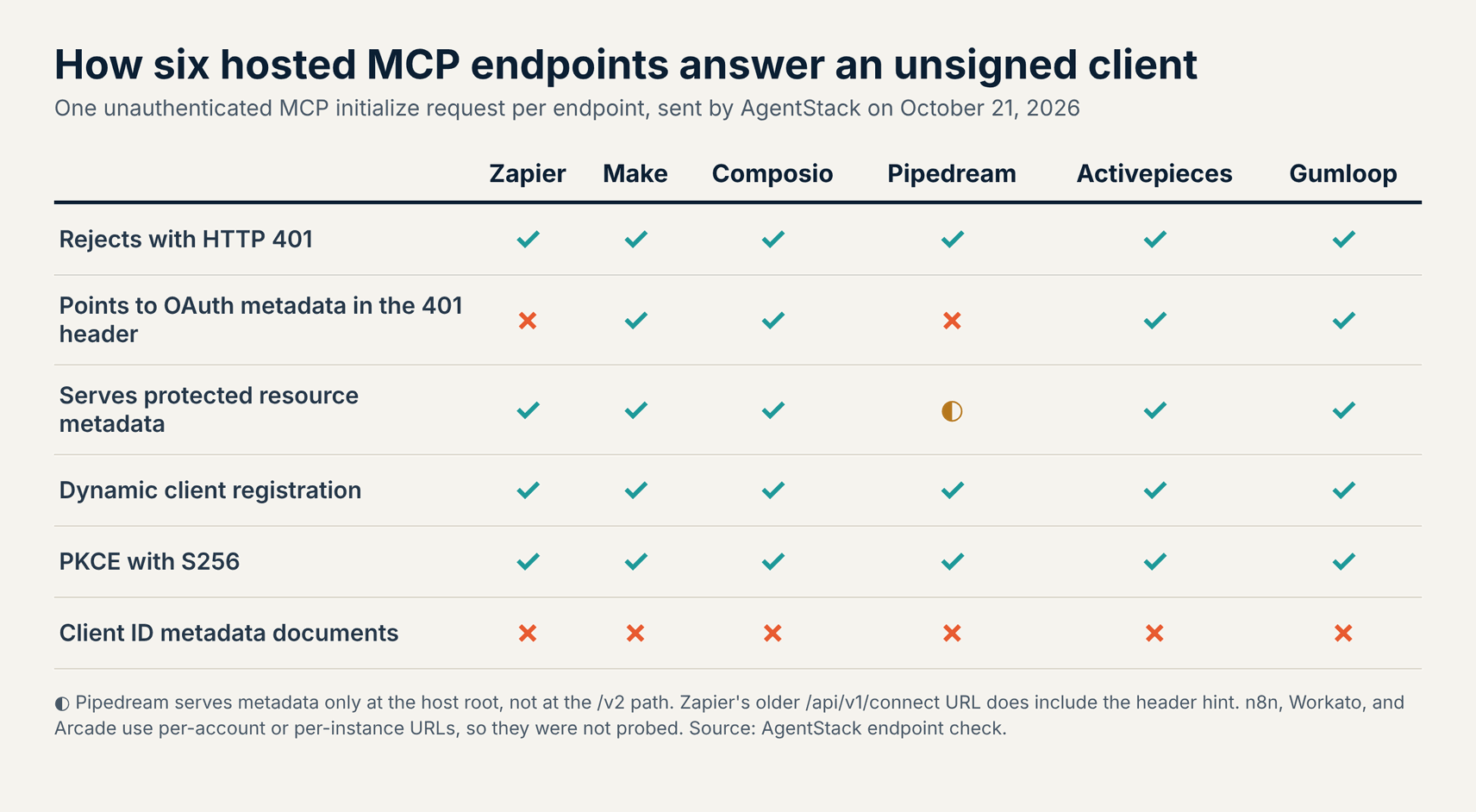
- Header hints: Make, Composio, Activepieces, and Gumloop named their protected resource metadata URL in the 401 header. Zapier’s current OAuth endpoint and Pipedream did not, so clients must fall back to well-known paths.
- Pipedream metadata: Pipedream served its metadata at the host root and returned a 404 at the path-specific location.
- Client registration: all six support dynamic client registration and S256 PKCE, matching the MCP authorization specification. None advertised client ID metadata documents.
- Not probed: n8n, Workato, and Arcade issue per-instance or per-account URLs, so there is no shared endpoint to test.
Dynamic registration lets any client register itself, so security teams should restrict which MCP clients may connect rather than rely on the vendor default. Our MCP security tools guide and MCP gateways guide cover the products that enforce those allowlists.
What 1,000 Agent Actions Cost on Each Platform
Composio and Arcade cover 1,000 agent actions a month on their free plans, while the same volume uses 2,000 Zapier tasks, which is 20 times the Zapier free allowance. We modeled one successful single-action tool call as one agent action and applied each vendor’s published meter on October 21, 2026.
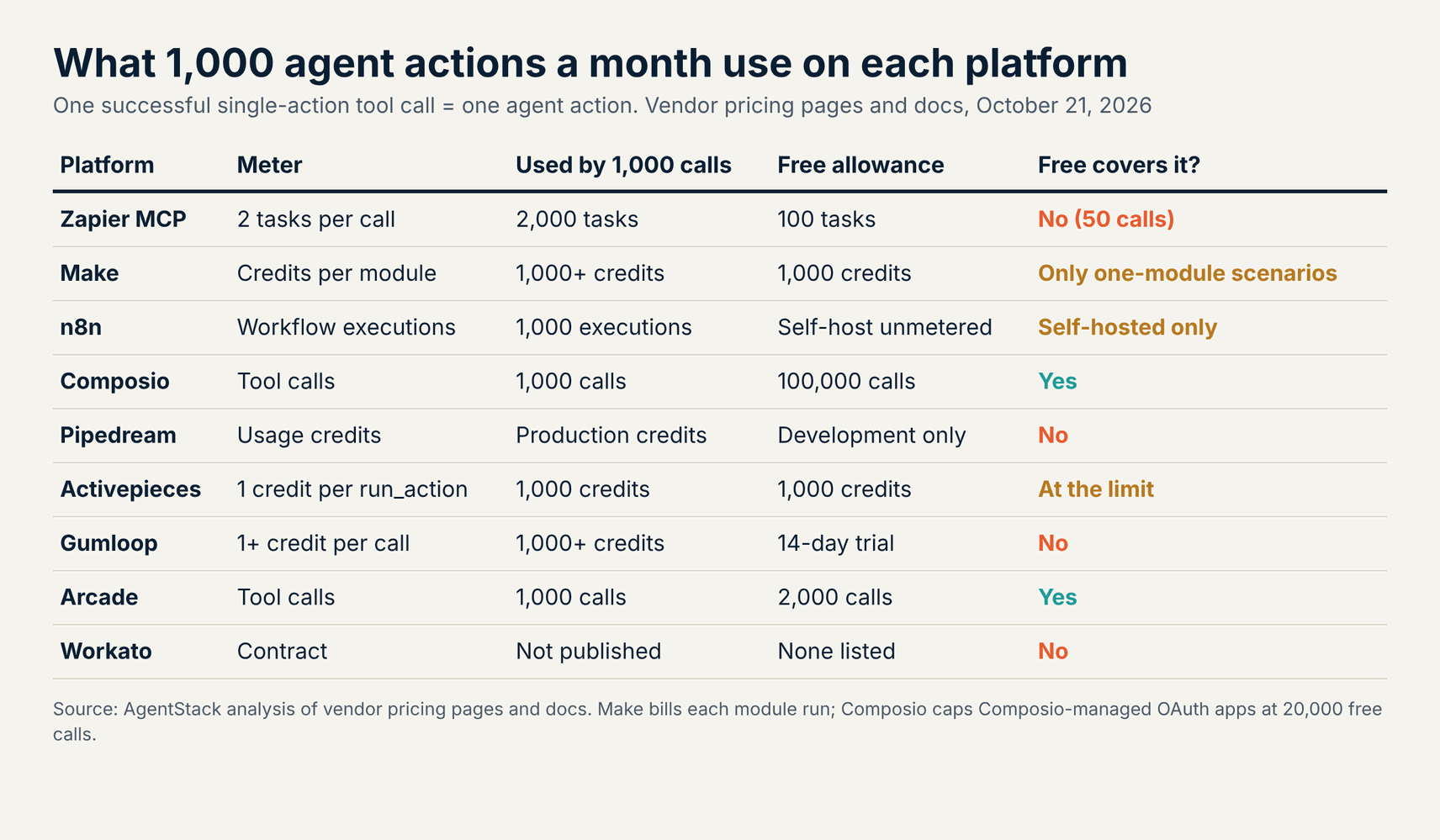
- Zapier MCP: 2,000 tasks, so the free plan covers 50 calls.
- Make and Activepieces: about 1,000 credits, the size of each free plan’s monthly allowance. Make bills every module in a scenario, per its credits guide.
- n8n: 1,000 workflow executions regardless of step count, or no metering at all on the self-hosted Community Edition.
- Pipedream, Gumloop, and Workato: no free production allowance, because Pipedream’s free tier is development only, Gumloop offers a 14-day trial, and Workato prices by contract.
1. Make: Best for Turning Visual Scenarios Into Agent Tools
Make is the closest like-for-like Zapier MCP alternative for teams that want visual, multi-step automations an agent can call by name. Any active scenario set to on-demand scheduling becomes a tool, with inputs and outputs you define, across more than 3,500 apps, per the Make MCP page.
Scopes control what a client can do. Scenario run scopes work on every plan, while management scopes, which let a client edit scenarios, connections, webhooks, and data stores, need a paid plan, per the Make help center. MCP toolboxes limit a client to selected scenarios, and only the OAuth flow can restrict access to one Make organization.
- Best for: Teams already building in Make that want agents to trigger tested scenarios instead of raw app actions.
- Pricing (October 2026): Included on every plan at no extra cost; you pay only the credits each scenario run uses. The Free plan includes 1,000 credits a month.
- Watch out for: Credits are billed per module, so a five-step scenario costs about five times as much per call as a one-step scenario.
2. n8n: Best for Self-Hosted Workflows Agents Can Run and Build
n8n is the strongest Zapier MCP alternative when the automation engine has to run on your own servers. Its instance-level MCP server gives each n8n instance one connection with central authentication, and only workflows you mark as available can be executed or changed, per the n8n docs.
Since March 2026, connected clients can also create and update workflows, according to n8n’s community announcement. One limit matters for security reviews: access is not scoped per client, so Claude and ChatGPT connected to the same account see the same set of exposed workflows.
- Best for: Engineering and operations teams that self-host and want agents to call, build, and debug workflows.
- Pricing (October 2026): MCP is included on all plans. Cloud Starter is $20 a month billed yearly for 2,500 executions, Pro is $50 for 10,000, and the Community Edition is free to self-host.
- Watch out for: The Sustainable Use License is not an OSI open source license, so check it before you embed n8n in a commercial product.
3. Composio: Best Free Tier for High-Volume Tool Calls

Composio is the cheapest Zapier MCP alternative per call: its free Hobby plan includes 100,000 tool calls a month, and meta tools such as tool search are free. One managed MCP endpoint connects Claude, Codex, Cursor, or ChatGPT to more than 1,500 apps, per the Composio homepage.
Past the free tier, the Pro plan costs $29 a month with a $29 usage credit, and extra tool calls cost $0.0003 each, per the Composio pricing page. Calls through Composio’s own shared OAuth apps count against a 20,000-call slice of the free allowance. Enterprise adds SSO, SCIM, customer-managed keys, and a BAA.
- Best for: Developers and power users whose agents make thousands of tool calls a month.
- Pricing (October 2026): Hobby is free with 100,000 tool calls and 50,000 trigger events a month; Pro is $29 a month plus usage; Enterprise is custom.
- Watch out for: Composio is built for developers first, so nontechnical staff may find setup harder than Zapier. Our Composio alternatives guide covers the reverse switch.
4. Pipedream MCP: Best for Per-App Servers Across 3,000+ APIs
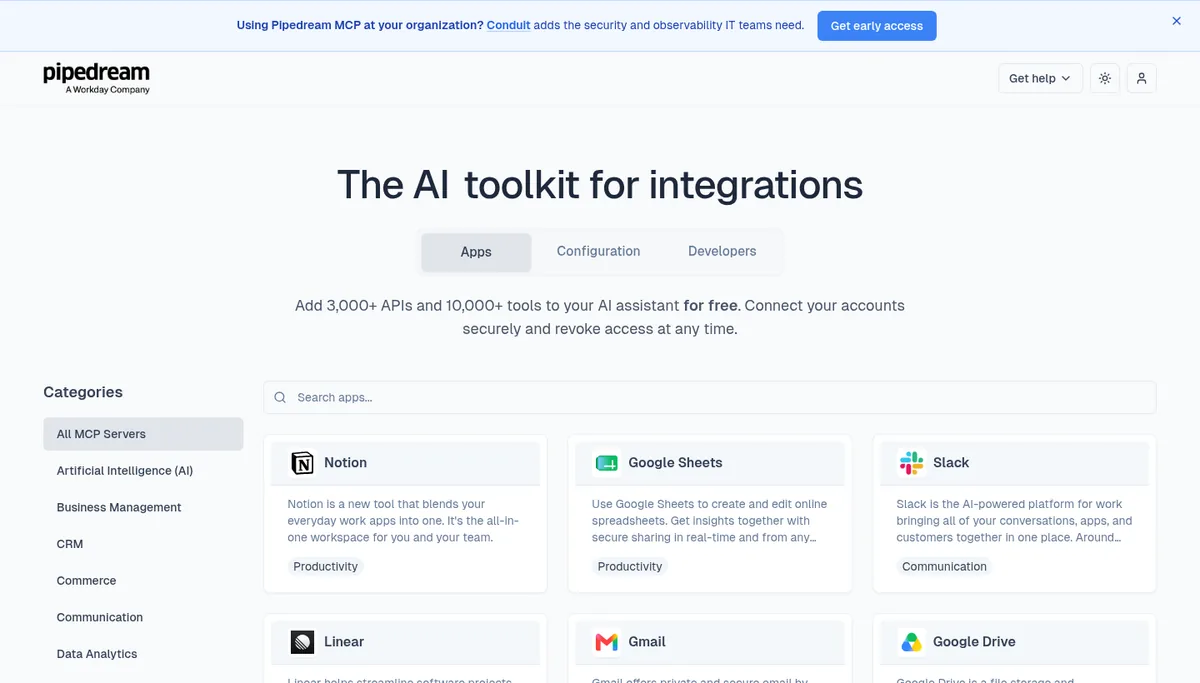
Pipedream gives each of its 3,000+ API integrations its own MCP server with managed OAuth, which suits agents that need deep coverage of a few apps. The Pipedream MCP directory lists more than 10,000 tools and is free for personal assistants, and the remote server supports both SSE and Streamable HTTP.
Workday signed a deal to buy Pipedream on November 19, 2025, per the Workday announcement, and the deal closed in December 2025. Developers embedding Pipedream in their own apps pay through Pipedream Connect, which is free in development and requires a paid plan for production users.
- Best for: Product teams that want per-user OAuth across a large API catalog without building token storage.
- Pricing (October 2026): Free in development; Startup is $99 a month billed yearly with 100 users and 10,000 usage credits, then $2 per user and $0.012 per credit; Business is custom.
- Watch out for: Roadmap decisions now sit with Workday, so ask how long standalone pricing and the free personal server will last.
5. Activepieces: Best Open Source Option With a Hosted MCP Server
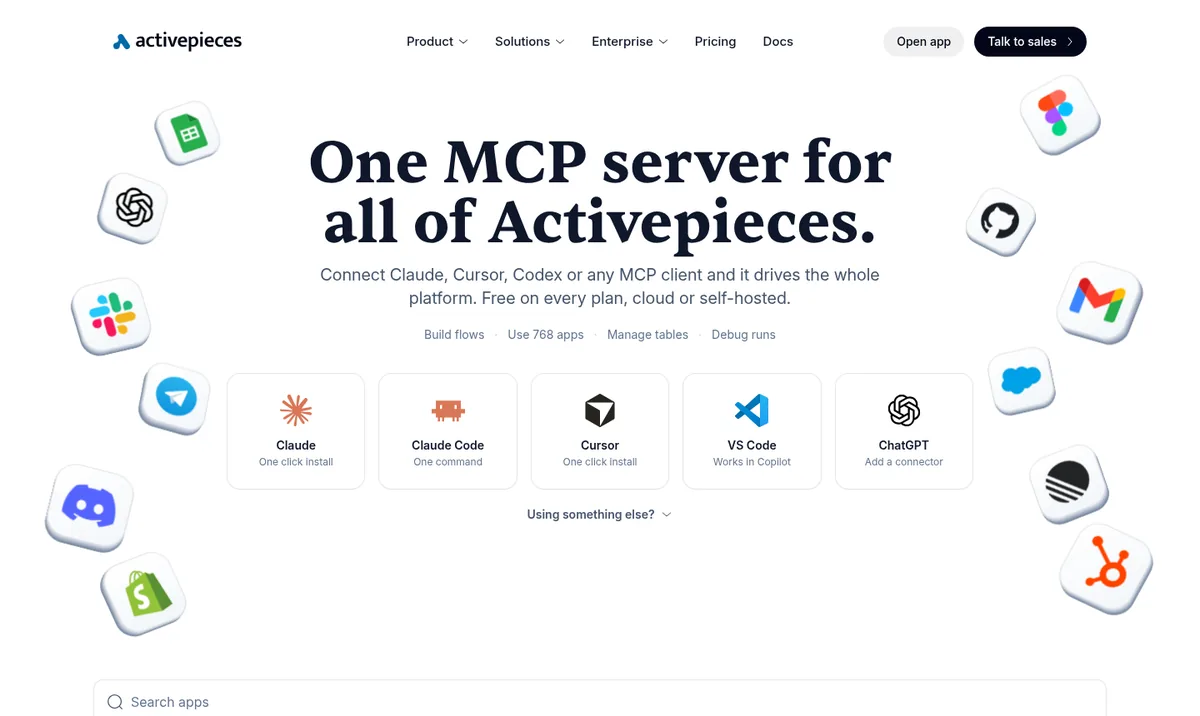
Activepieces is the best open source Zapier MCP alternative for teams that want a hosted start and the option to self-host later. One MCP server drives the whole platform, including flows, tables, and 768 apps, and it is free on every plan in the cloud or self-hosted, per the Activepieces MCP page.
MCP tools are free except the run action tool, which costs 1 credit per call, per the Activepieces docs. Tools are scoped to one project, connection secrets are never returned by any tool, and admins can switch whole tool categories on or off per project.
- Best for: Teams that want an MIT-licensed core, a no-code builder, and agent access without per-call surprises.
- Pricing (October 2026): Free with 1,000 credits a month; Plus is $20 a month for 10,000 credits; Team is $200 a month for 50,000 credits; extra credits cost $0.007.
- Watch out for: Audit logs, SCIM, and custom roles sit on the Ultimate plan, so smaller plans lack the controls a security team may expect.
6. Workato Enterprise MCP: Best for Governed Actions Under User Identity
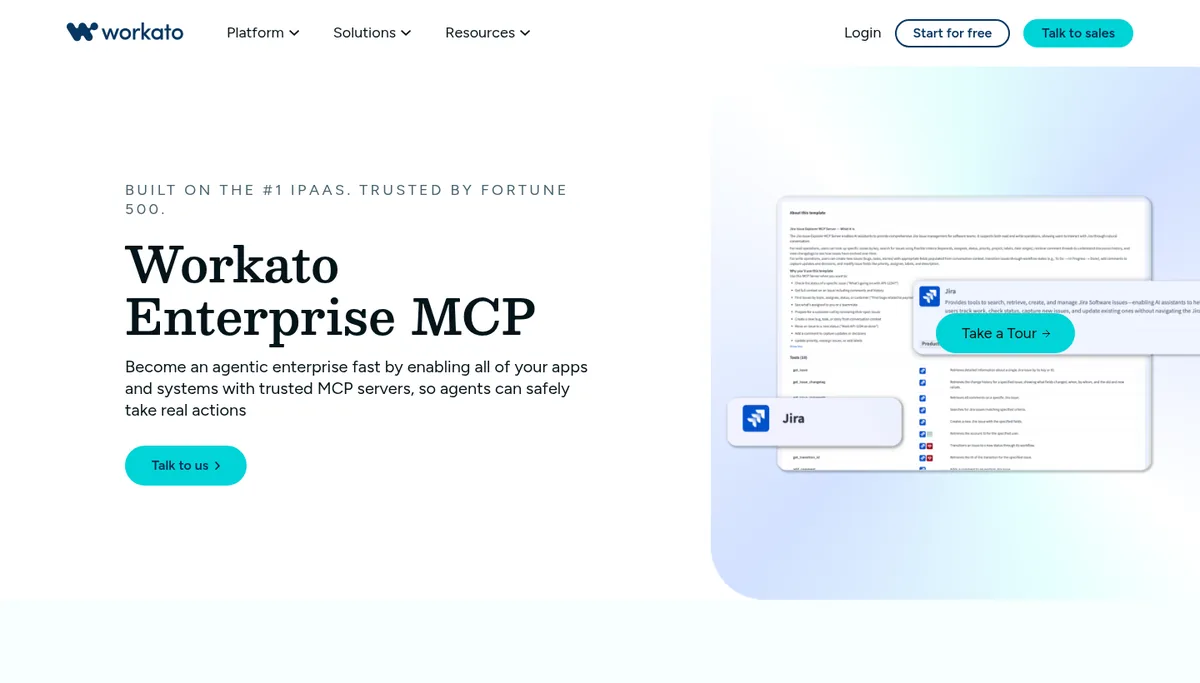
Workato Enterprise MCP fits companies that need every agent action to run under the signed-in employee, with role-based access and an audit trail. Its Verified User Access feature passes the authenticated user’s identity through to each action, per the Workato Enterprise MCP page.
Workato’s docs listed 88 prebuilt MCP servers on October 21, 2026, split into process servers such as employee offboarding, data servers for Snowflake and Databricks, and app servers from Airtable to Zoom, per its prebuilt server catalog. Existing Recipe Functions can also become MCP servers without new code.
- Best for: Large enterprises that already run Workato recipes and need governed agent access to HR, finance, and IT systems.
- Pricing (October 2026): Not published; Workato includes prebuilt MCP servers in its Business MCP edition and above, priced by quote.
- Watch out for: Expect a sales cycle and a platform commitment, which is heavy if you only need an assistant to post Slack messages.
7. Arcade: Best for Per-User Authorization in Production Agents
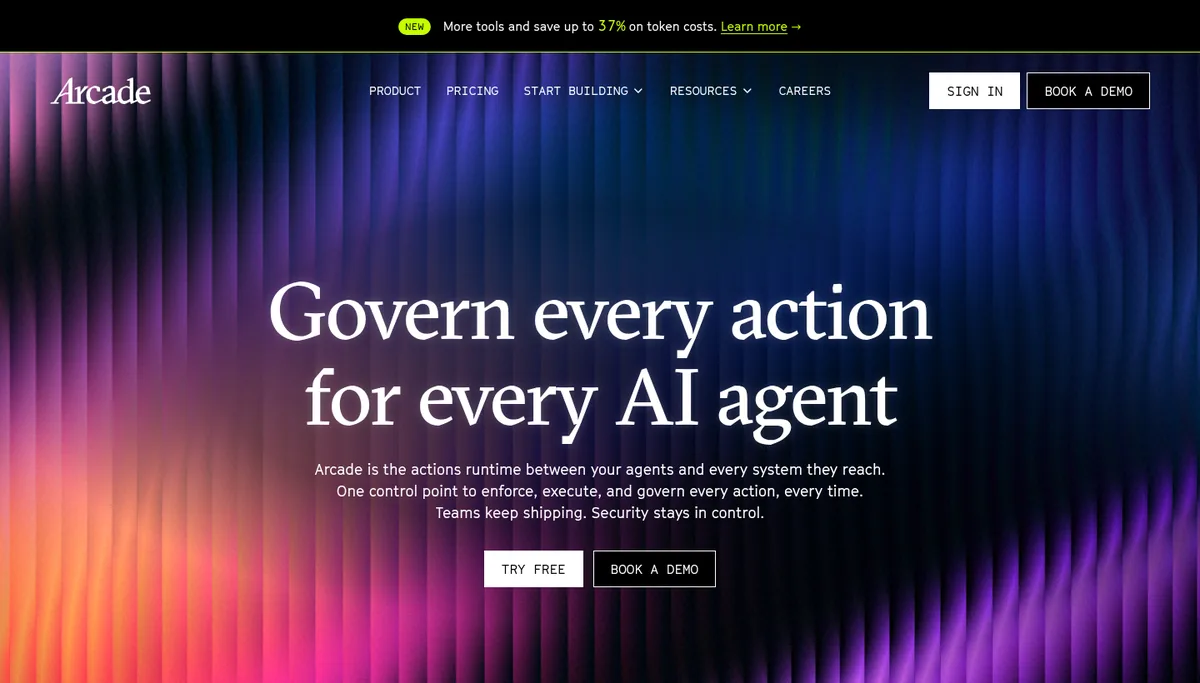
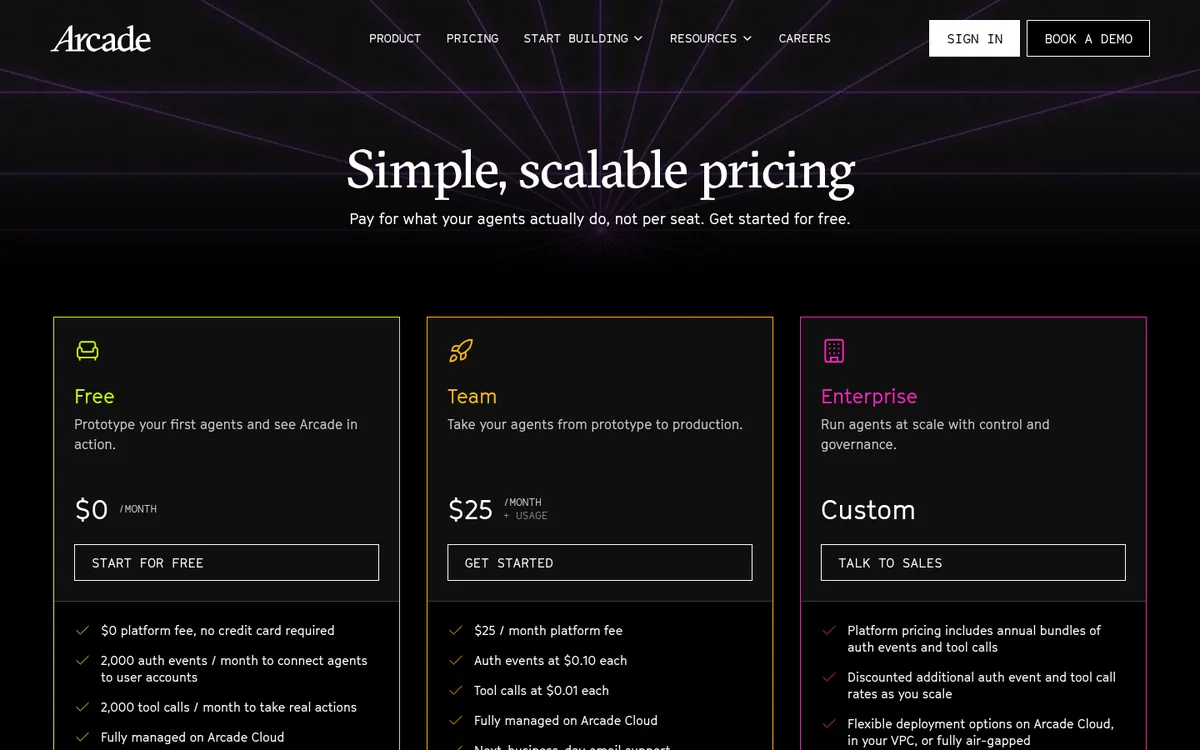
Arcade suits teams shipping agents to many users, because it handles each user sign-in, enforces policy on every action, and keeps tokens away from the model. The company calls itself an actions runtime and lists a catalog of more than 8,000 tools, per the Arcade homepage.
Developers build custom tools with the MIT-licensed arcade-mcp framework in Python or JavaScript. Enterprise customers can run Arcade on its cloud, in their own VPC, on premises, or fully air-gapped, which no hosted-only Zapier plan offers.
- Best for: Product teams that need agents to act as each end user across Google Workspace, Slack, Microsoft, and Salesforce.
- Pricing (October 2026): Free with 2,000 tool calls and 2,000 auth events a month; Team is $25 a month plus $0.01 per tool call and $0.10 per auth event; Enterprise is custom.
- Watch out for: Arcade is a developer platform, so staff who want a no-code builder should look at Make or Activepieces. See our Composio vs Arcade vs Nango comparison.
8. Gumloop: Best for Teams Running Agents and Tool Auth in One Place
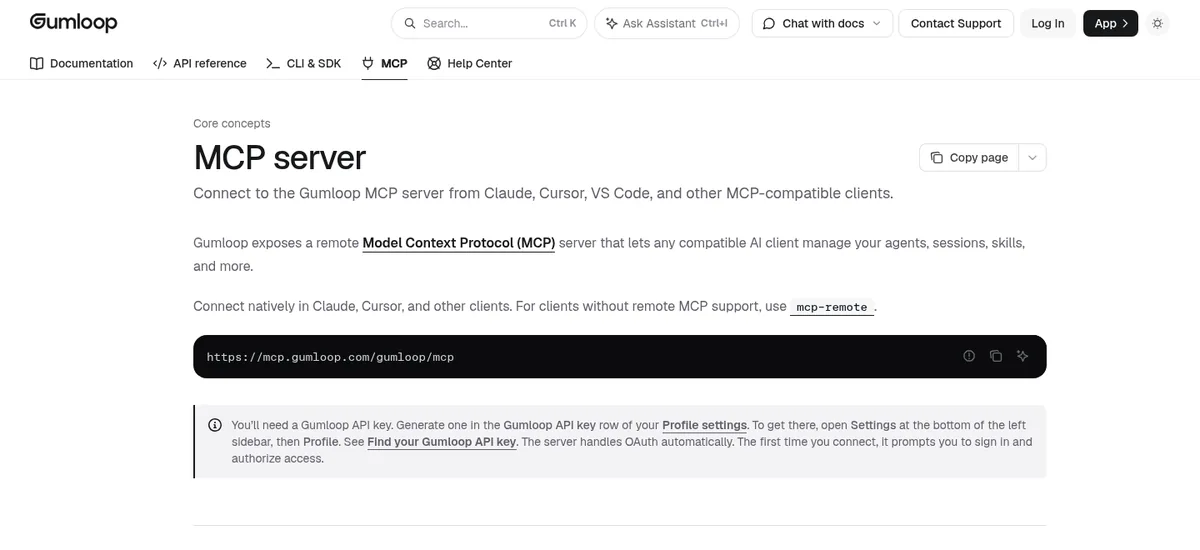
Gumloop works as a central auth layer: one remote MCP server with 46 tools lets Claude or Cursor call Gmail, Slack, Linear, and other connected apps through Gumloop. The same server manages Gumloop agents, sessions, skills, and audit logs, per the Gumloop MCP docs.
Pro costs $37 a month with 20,000 credits and one hosted MCP server, and Enterprise adds custom credit volumes, org-wide connector policies, and an optional virtual private cloud, per the Gumloop pricing page. An 8% orchestration fee applies on Pro, so model usage costs slightly more than the raw provider rate.
- Best for: Operations and go-to-market teams that build agents in Gumloop and want the same credentials available in Claude or Cursor.
- Pricing (October 2026): Pro starts at $37 a month with 20,000 credits after a 14-day trial; Enterprise is custom.
- Watch out for: There is no free plan after the trial, and the MCP server needs a Gumloop API key as well as OAuth sign-in.
Connect a Zapier MCP Alternative to Claude Code in One Command
Most hosted alternatives connect the same way, because they all support OAuth discovery. Run a quick probe first to confirm an endpoint asks for OAuth, then add it with claude mcp add and sign in when the browser opens, per the Claude Code MCP docs.
# 1. Confirm the endpoint asks for OAuth (expect HTTP 401 and a WWW-Authenticate header)
curl -si -X POST https://mcp.make.com \
  -H "Content-Type: application/json" \
  -H "Accept: application/json, text/event-stream" \
  -d '{"jsonrpc":"2.0","id":1,"method":"initialize","params":{"protocolVersion":"2025-06-18","capabilities":{},"clientInfo":{"name":"probe","version":"1.0"}}}' \
  | grep -i -E "^HTTP|www-authenticate"

# 2. Add it to Claude Code over Streamable HTTP, then run /mcp to sign in
claude mcp add --transport http make https://mcp.make.com
claude mcp add --transport http activepieces https://cloud.activepieces.com/mcp
Swap in the URL for your tool, and use your own instance address for n8n, which ends in /mcp-server/http. Treat any long-lived connection token like a password, and read our ToFu MCP tool bug study and FastMCP client RCE report before you connect untrusted servers.
Hosting, Auth, and Governance Compared
Hosting and identity decide whether an alternative passes a security review, so compare them before price. The table shows where each tool runs, whose credentials an action uses, and which controls ship by default, from vendor docs and pricing pages checked on October 21, 2026.
| Tool | Where it runs | Whose credentials | Notable controls |
|---|---|---|---|
| Make | Make cloud | Your Make connections | Scopes, toolboxes, org-limited OAuth |
| n8n | Cloud or self-hosted | Instance credentials | Per-workflow opt-in, SSO on Business |
| Composio | Cloud; self-host on Enterprise | Each connected account | Spend controls, SSO and SCIM on Enterprise |
| Pipedream | Pipedream cloud | Each end user | Per-project credentials, SSO on Business |
| Activepieces | Cloud or self-hosted | Project connections | Project scoping, tool category toggles |
| Workato | Workato cloud | The signed-in user | Verified User Access, audit logs |
| Arcade | Cloud, VPC, or air-gapped | Each end user | Policy per action, SSO, RBAC, audit logs |
| Gumloop | Cloud; VPC on Enterprise | Shared or personal connections | Agent-scoped connector policies, org-wide on Enterprise |
Verdict: Workato and Arcade are the only two that tie every action to an individual user by default. For self-hosting at low cost, n8n and Activepieces are the practical picks, and Make is the simplest hosted option for teams that already maintain scenarios.
Zapier MCP Alternatives We Left Off, and Why
We left off tools that solve a neighboring problem or that we could not verify from public pages. Several are worth a look if your use case differs from an assistant taking actions in business apps, and our agent integration platforms guide covers the embedded options.
- Nango, Merge Agent Handler, and Paragon: built for products embedding integrations for customers, covered in our Composio alternatives guide.
- Power Automate as an MCP server: we found third-party coverage of flows published as MCP tools but no general availability notice from Microsoft, so we left it off for now.
- Temporal and Inngest: durable execution engines for code-defined workflows. They do not replace a catalog of app actions.
- MCP gateways: products such as Kong and Red Hat’s gateway govern MCP traffic without supplying app actions. See Kong vs AWS AgentCore vs Docker and our Red Hat MCP Gateway report.
Which Zapier MCP Alternative Should You Choose?
The right pick depends on who uses the agent, where it must run, and how many actions it takes each month. Match your team to a profile below, then test with a real workflow, since metering differences only show up once an agent loops over records.
Individuals and small teams cutting task costs
- Start with Composio for 100,000 free tool calls a month, or Arcade for 2,000.
- Move scenario-heavy work to Make if you already pay for its credits.
- Use our MCP servers guide to find official servers for single apps.
Teams that must self-host
- Choose n8n if engineers will own the workflows and can accept its Sustainable Use License.
- Choose Activepieces if you want an MIT-licensed core and a no-code builder for business users.
- Put an MCP gateway in front of either one for logging and client allowlists.
Enterprises with HR, finance, and IT agents
- Shortlist Workato if your automation already runs on Workato recipes.
- Shortlist Arcade if your own engineers build the agents and need per-user authorization.
- Compare governance layers in our MintMCP vs Runlayer vs Lasso comparison.
Product teams embedding actions for customers
- Choose Pipedream for per-user OAuth across 3,000+ APIs at a fixed monthly platform fee.
- Choose Arcade or Composio if you want usage pricing and an SDK in your agent framework.
- Read our AI agent frameworks guide to check SDK support in your stack.
Frequently Asked Questions
How much does Zapier MCP cost?
Zapier MCP has no separate fee. Each successful tool call uses 2 tasks from your Zapier plan, failed calls use none, and tool discovery is free. The free plan includes 100 tasks a month, or 50 tool calls, and the Professional plan starts at $19.99 a month billed yearly as of October 2026.
What is the cheapest Zapier MCP alternative?
Composio is the cheapest for most volumes, with 100,000 free tool calls a month on its Hobby plan and $0.0003 per extra call on Pro. Arcade includes 2,000 free tool calls a month. Self-hosted n8n and Activepieces avoid per-call fees, though you pay for the servers and maintenance.
Is there an open source Zapier MCP alternative?
Yes. Activepieces has an MIT-licensed core and a built-in MCP server you can self-host for free. n8n is source available under its Sustainable Use License, and its Community Edition includes the instance-level MCP server. Both let you run the automation engine inside your own network instead of a vendor cloud.
Can Make or n8n replace Zapier MCP?
Yes, if your agents mainly trigger workflows you have already built. Make turns active, on-demand scenarios into MCP tools on every plan, and n8n exposes workflows you mark as available. Neither gives an agent ad hoc access to thousands of single app actions the way Zapier MCP does without building a workflow first.
Which Zapier MCP alternative is best for enterprises?
Workato Enterprise MCP is the strongest fit for companies already on Workato, because actions run under the signed-in user with audit trails. Arcade suits teams building their own agents and needing per-user authorization, with VPC and air-gapped deployment. Both price Enterprise by contract, so plan for a sales process.
Related Guides
Developers who mainly work in Claude Code can skip a hosted connector layer for many tasks. Our MCP servers for Claude Code guide lists 12 servers by workflow.
Read the MCP hub, agent protocols coverage, workflow automation coverage, no-code automation coverage, MCP explained, best MCP servers, MCP gateways, MCP security tools, agent integration platforms, Composio alternatives, Composio vs Arcade vs Nango, Kong vs AWS AgentCore vs Docker, Red Hat MCP Gateway GA, and ToFu MCP tool security bugs. Notes on how we work sit on editorial standards, disclosure, and contact.
The Bottom Line
Keep Zapier MCP if your agents need its 9,000+ apps at low volume, move to Composio or Arcade when task costs climb, and choose Make, n8n, or Activepieces when agents should call workflows you already trust. Workato is the pick when every action must carry an employee’s identity.
Before you switch, run a week of real agent traffic through your shortlist and compare the meter, not the plan price. Send corrections or tool suggestions through our contact page.